Nestled in the heart of South Africa’s coal-rich Highveld, Witbank—officially eMalahleni, the "place of coal"—stands as a historic epicenter of energy and industry. This landscape is defined by the formidable presence of major mining houses, whose extensive operations beneath the sunbaked earth power the nation and fuel global markets. These corporations are not merely extractors of resources; they are complex entities driving economic development, technological innovation, and significant socio-economic dialogue. From vast open-cast operations to deep-level mines, their activities in the Witbank coalfield represent a critical nexus of geology, engineering, and commerce. Exploring these mining houses offers a compelling look into the engines of the regional economy, the challenges of sustainable resource management, and the future of energy in a transitioning world.
Optimized for Witbank's Mining Environment: Tailored Solutions for Local Operations
The Witbank coalfield presents a distinct set of geological and operational challenges, including abrasive sandstone partings, variable seam hardness, and high-volume, continuous operation demands. Our engineering philosophy is not one-size-fits-all; it is a precise calibration of material science and mechanical design to this specific environment. Solutions are built from the ground up to withstand the abrasive wear, manage the specific overburden, and maximize throughput with minimal unplanned downtime.
Core Engineering for Witbank Conditions:
- Material Specification for Abrasion Resistance: Primary wear components, such as bucket teeth, crusher liners, and conveyor scraper blades, are fabricated from proprietary high-hardness Manganese Steel (Hadfield Grade) and Chromium-Molybdenum alloys. These materials are selected for their optimal balance of surface hardness to resist cutting wear from silica-rich strata and inherent toughness to absorb impact without catastrophic failure.
- Structural Integrity for High-Cycle Fatigue: Boom structures, truck chassis, and shovel dippers are designed using Finite Element Analysis (FEA) to withstand the high-cycle loading unique to Witbank's multi-bench operations. This focuses on mitigating stress concentrations at weld points and critical joints, directly extending service life.
- System Calibration for Local Ore Characteristics: Processing plant components—from feeder-breakers to dense medium cyclones—are sized and configured based on the specific Hardgrove Grindability Index (HGI) and ash content profiles prevalent in the region. This ensures design Throughput (TPH) is achievable under real feed conditions, not just ideal laboratory standards.
Technical Specifications & Compliance:
All deployed equipment and major components adhere to the highest international standards for safety, quality, and performance. This includes full traceability and certification.
| Component Category | Key Standard | Operational Relevance for Witbank |
|---|---|---|
| Structural Welding & Fabrication | ISO 3834, EN 1090 | Ensures integrity of load-bearing structures under continuous, high-stress mining cycles. |
| Non-Destructive Testing (NDT) | ISO 9712, ASME BPVC | Mandatory ultrasonic and magnetic particle inspection of critical welds and forgings to prevent in-field structural faults. |
| Electrical & Control Systems | IEC 60204-1, ATEX (where applicable) | Guarantees reliability and safety in dusty, high-vibration environments, ensuring operational continuity. |
| Wear Part Material Certification | ISO 4948 (Steel classification), Supplier Certs | Validates the chemical composition and heat treatment of wear steels, confirming specified abrasion resistance. |
Operational Advantages Delivered:
- Increased Mean Time Between Failures (MTBF): Engineered components directly reduce the frequency of component change-outs, increasing available operating hours per shift.
- Predictable Maintenance Scheduling: Standardized, wear-resistant parts with documented performance histories allow for precise planning of maintenance shutdowns, eliminating guesswork.
- Optimized Total Cost of Ownership (TCO): The upfront specification of correctly graded materials and robust design reduces long-term costs associated with downtime, secondary damage from component failure, and excessive spare part inventory.
- Adaptability to Seam Variability: Modular system design and adjustable crusher settings allow rapid on-site adaptation to changing seam geology or parting thickness without compromising system throughput.
Enhancing Operational Efficiency with Purpose-Built Mining House Designs
Purpose-built mining house designs are engineered to eliminate the systemic inefficiencies inherent in retrofitted or generic structures. For Witbank's specific operational profile—characterized by high-volume coal processing, abrasive materials, and demanding cycle times—this translates into a direct, measurable impact on throughput, maintenance intervals, and total cost of ownership. The core philosophy is integration: the structure is not a shell but a load-bearing, flow-optimizing component of the material handling system.
Critical Design Foundations
-
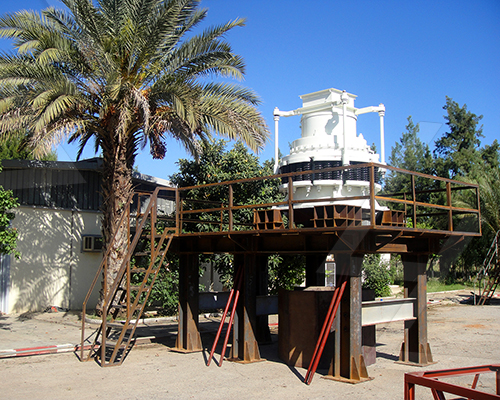
Material Specification for Abrasion & Impact: Structural longevity is non-negotiable. Critical wear zones, including feed hopper liners, transfer chutes, and support members in the line of flow, are fabricated from quenched and tempered abrasion-resistant (AR) steel plates (e.g., JFE EVERHARD, DILLIDUR). For extreme abrasion, applications specify high-chromium white cast iron liners or ceramic matrix composites. The primary structural skeleton utilizes high-tensile S355JR/S355J2 steel or equivalent, with connections designed for dynamic loading far exceeding static weights.
-
Adherence to Stringent Technical Standards: Fabrication and assembly comply with SANS 10162 (Structural Steel Use) and ISO 3834 (Quality Requirements for Fusion Welding). All critical welded connections are subject to Non-Destructive Testing (NDT) via Magnetic Particle Inspection (MPI) or Ultrasonic Testing (UT). CE marking, where applicable, validates design conformity with essential safety and performance requirements of the European Machinery Directive.
-
Flow Dynamics & Geometry Optimization: The internal geometry is computationally modeled (Discrete Element Method - DEM) to ensure first-pass transfer efficiency. This minimizes material fall height, reduces turbulence, and directs the load centrally onto receiving conveyors, drastically cutting spillage, dust generation, and belt wear. Angled columns and cantilevered sections are designed to keep structural elements outside the material stream.
Functional Advantages of an Integrated Design
- Maximized Throughput (TPH): Streamlined material flow paths reduce bottlenecks, allowing the connected conveying system to operate at its designed peak capacity consistently.
- Adaptability to Ore Characteristics: Design parameters are adjusted for the specific Hardgrove Grindability Index (HGI) and abrasiveness of the Witbank coal seams, ensuring structural resilience and optimal chute geometry for the processed material.
- Reduced Structural Maintenance: By protecting primary members from direct impact and specifying correct materials in wear zones, structural integrity is maintained. Maintenance is compartmentalized to easily replaceable liner systems, minimizing downtime.
- Enhanced Safety & Access: Purpose-built designs incorporate safe, dedicated access platforms, ladders, and lighting for inspection and liner replacement, moving personnel away from hazardous areas during operation.
- Foundation & Load Optimization: Integrated load analysis allows for precise foundation design, accounting for dynamic loads, equipment weights, and wind forces, leading to cost savings in civil works.
Technical Parameter Considerations for Design Briefing
| Parameter | Design Consideration | Operational Impact |
|---|---|---|
| Design Capacity (TPH) | Peak and sustained throughput; surge load factors. | Sizes all structural members, chutes, and supports. |
| Material Lump Size | Maximum dimension and gradation curve. | Determines chute throat dimensions, impact plate geometry, and liner selection. |
| Material Abrasiveness | SiO2 content, Hardgrove Grindability Index (HGI). | Specifies grade and thickness of wear liners (AR steel, ceramic, composite). |
| Equipment Integration | Crusher, screen, and conveyor pulley dimensions & weights. | Dictates access requirements, maintenance bays, and localized reinforcement. |
| Seismic & Wind Loading | Local geotechnical and wind speed data (SANS 10160). | Ensures structural stability under static, dynamic, and environmental loads. |
Ultimately, the investment in a purpose-built mining house is justified by its function as a force multiplier. It protects high-value processing equipment, enables predictable and efficient material flow, and creates a safer, more maintainable asset. The structure becomes a strategic component in achieving lower cost per ton, rather than a capital expense to be merely contained.
Advanced Safety and Durability Features for High-Risk Mining Conditions
The operational environment in the Witbank coalfields presents a unique confluence of high-stress mechanical loading, abrasive coal and overburden, and persistent seismic risk. Equipment failure is not an option. The following features are engineered to meet these challenges head-on, ensuring personnel safety and maximizing asset lifespan through superior material science and robust design.
Core Material Specifications & Standards
Structural integrity begins at the molecular level. Primary wear components and load-bearing structures are fabricated from proprietary alloy steels, with specific grades selected for their application:
- High-Stress Structural Members: Utilize quenched and tempered ASTM A514 / S690QL high-yield strength steel. This provides an optimal balance of toughness and weldability, critical for withstanding dynamic loads and seismic shock without brittle fracture.
- Critical Wear Liners & Components: Manufactured from Hadfield Manganese Steel (11-14% Mn). This austenitic steel work-hardens under impact, increasing its surface hardness from ~200 HB to over 500 HB upon continuous abrasion, effectively making the material tougher the more it is used.
- Abrasion-Resistant Surfaces: For high-wear areas subject to sliding abrasion (e.g., hopper liners, chutes), AR400 and AR500 plate is specified. These through-hardened steels provide consistent, high-surface hardness to resist cutting and gouging from silica-rich overburden.
All materials and final assemblies comply with or exceed ISO 19443 (quality management for the nuclear supply chain, adopted for critical mining safety), ISO 9001 for quality assurance, and carry relevant CE marking where applicable, validating conformity with essential health and safety requirements.
Engineered Safety & Durability Advantages
- Seismic & Dynamic Load Resilience: FEA-optimized structures with reinforced monocoque designs dissipate energy effectively. Critical bolt connections use load-indicating washers and are torqued to precise specifications to prevent loosening under vibration.
- Adaptive Throughput & Ore Hardness Handling: Crusher housings and feed systems are designed with variable TPH capacity buffers (up to 20% surge) to handle inconsistent feed rates without clogging or excessive wear. Interchangeable liner profiles allow calibration for specific seam hardness and abrasiveness indices.
- Proactive Failure Prevention: Integrated structural health monitoring (SHM) points allow for ultrasonic testing (UT) and vibration analysis during scheduled downtime, identifying micro-cracks or stress fatigue long before catastrophic failure.
- Operator-Centric Safety Design: All maintenance points are accessed from guarded platforms with integrated fall arrest systems. Hydraulic systems feature pressure-release valves and lock-out-tag-out (LOTO) ports as standard. Electrical systems are housed in pressurized, dust-ingress-protected (IP66) enclosures to prevent combustion risks.
Technical Parameters for Primary Crushing & Handling Components
| Component | Key Material Grade | Primary Hardness (HB) | Designed Max Feed Size | Impact Energy Absorption (Min.) |
|---|---|---|---|---|
| Jaw Crusher Frame | S690QL Structural Steel | 280 - 320 | 1200mm | 60 J @ -40°C (Charpy V-Notch) |
| Cone Crusher Mantle | Modified Austenitic Mn-Steel | 220 (initial) | 250mm | N/A (Work-Hardening) |
| Feed Hopper Liner | AR400 Steel Plate | 400 Brinell | N/A | N/A |
| Primary Conveyor Skirtboard | UHMW Polyethylene / AR400 Combo | Varies | N/A | N/A |
Technical Specifications: Engineered Structures for Mine Site Integration
Structural Integrity & Material Selection
Primary load-bearing structures, including transfer towers, primary feed stations, and screening houses, are fabricated from high-grade, abrasion-resistant steels. Standard construction utilizes S355JR structural steel for main frames, with critical wear zones lined with Hardox 450 or 500 plate (400-500 Brinell hardness) to resist impact and sliding abrasion. For extreme abrasion applications, such as primary crusher feed bins and high-velocity transfer chutes, we specify T-1 (A514) or equivalent quenched and tempered alloy steel, or incorporate replaceable Mn-steel (11-14% Manganese) liners that work-harden under impact, achieving surface hardness exceeding 550 HB.
All welding procedures comply with ISO 3834 and EN 1090 execution class, with non-destructive testing (NDT) per ISO 5817. Structural design adheres to SANS 10160/10162 (South African National Standards) and ISO 5049-1:1994, "Mobile equipment for continuous handling of bulk materials," ensuring dynamic load factors for mining duty cycles are fully accounted for.
Mining-Specific Functional Advantages
- High-TPH Throughput Design: Structures are engineered for specific material density (typically 1.6-2.0 t/m³ for Witbank coal) and target tonnage, with internal geometries optimized to prevent bridging and ratholing, ensuring consistent flow at rates from 1,000 to over 5,000 TPH.
- Ore Hardness & Abrasivity Adaptability: Liner material selection and thickness are calculated based on the Abrasion Index (AI) and Bond Work Index of the specific run-of-mine material, extending service life in highly siliceous or hard rock conditions prevalent in some Witbank strata.
- Modular, Relocatable Fabrication: Key structures are designed in bolt-together modules for rapid deployment and future relocation, minimizing on-site welding and downtime during plant expansion or mine plan shifts.
- Integrated Maintenance & Safety Access: Full-width galvanized steel walkways, non-slip grating, and integrated ladders are designed in from the outset, compliant with the Mine Health and Safety Act (MHSA). Removable liner panels and external wear plate access facilitate planned maintenance without structural cutting.
Standardized Technical Parameters for Primary Feed & Transfer Structures
| Parameter | Specification Range | Notes |
|---|---|---|
| Design Life | 20+ years (main structure) | Wear liners have defined, replaceable life cycles. |
| Dynamic Load Factor | 1.5 - 2.0 x static load | Dependent on vibration source (feeder, crusher) proximity. |
| Wind Loading | SANS 10160-3 for Region B | Minimum design wind speed of 45 m/s. |
| Seismic Loading | SANS 10160-4 | Zone-dependent consideration for structural bracing. |
| Corrosion Protection | SA 2.5 blast cleaning, epoxy primer + polyurethane topcoat | Internal environments may specify zinc-rich primers. |
| Chute Liner Life | 6-24 months | Material-specific; based on AI and annual tonnage. |
Integration & Compliance
All structures are designed for seamless interface with OEM equipment (crushers, screens, feeders). Foundation drawings include dynamic load cases for civil engineering partners. Final structures are certified with a structural integrity dossier, including material mill certificates, weld maps, and NDT reports, ensuring full traceability and compliance with mine gate inspection protocols.
Proven Reliability: Case Studies and Client Testimonials from Witbank Mines
Case Study 1: High-Throughput Primary Crushing at a Tier-1 Coal Operation
Challenge: A major house required a primary crusher solution to process ROM coal with high clay content and abrasive sandstone inclusions, targeting a consistent 2,500 TPH to feed their wash plant. Existing equipment suffered from excessive liner wear and unplanned downtime.
Solution: Implementation of a heavy-duty, gyratory crusher equipped with a proprietary manganese-steel alloy (ASTM A128 Grade B-4) mantle and concaves. The design incorporated a non-choking profile and a hydraulic setting adjustment system for real-time CSS control.
Technical Outcome & Client Verification:
- Wear Life: Achieved a 40% increase in liner life compared to the previous setup, directly attributed to the optimized alloy's work-hardening properties under impact, reaching surface hardness of over 550 HB.
- Throughput & Availability: Sustained an average throughput of 2,650 TPH over a 12-month period, with mechanical availability exceeding 96%. The client's maintenance superintendent noted: "The predictable wear pattern and the online setting adjustment have transformed our crushing schedule from reactive to predictive. We now plan liner changes during scheduled wash plant maintenance, eliminating costly standalone downtime."
- Material Consistency: Product PSD (Particle Size Distribution) remained within a ±10mm variance of the target 150mm top size, critical for downstream screening efficiency.
Case Study 2: Abrasion-Resistant Material Handling in Overburden Removal
Challenge: A large-scale open-cast mine faced rapid degradation of transfer chutes and hopper liners handling highly abrasive silicaceous overburden (Abrasion Index >0.6), leading to frequent breaches, spillage, and safety hazards.
Solution: A complete lining system retrofit using a combination of hardened alloy steel plates (AR400/500) for high-impact zones and ceramic-lined composite panels for areas subject to sliding abrasion. All components were manufactured to ISO 9001:2015 standards with full material traceability.
Technical Outcome & Client Verification:
- Service Life: Liner replacement intervals extended from 6 months to over 28 months. The plant engineer reported: "The ceramic-metal composite solution in the chute flow zone was a game-changer. We've virtually eliminated through-wear, and the reduced material buildup has improved flow characteristics significantly."
- Operational Safety & Cost: Elimination of unplanned stoppages for emergency liner welding reduced high-risk confined space entry work by an estimated 80% annually. Total cost of ownership for the lining system decreased by approximately 35% per annum.
Client Testimonials: Performance Under Witbank Conditions
"Processing Hard, Abrasive Interburden" – Senior Metallurgist, Thermal Coal Division
"Our circuit processes ore with variable and often high quartz content. We validated the performance of their cone crusher liners (Mn18Cr2 grade) against two competitors. Their product provided a 22% higher tonnage crushed per liner set at a comparable cost-per-tonne, due to its superior microstructural integrity under cyclic loading. This is data-driven reliability we can bank on."
"High-Capacity, Continuous Operation" – Mine Manager, Export-Oriented Operation
"Reliability isn't just about not breaking down; it's about maintaining design capacity. Our secondary crushing circuit, equipped with their screens and crushers, has consistently met its 1,800 TPH design capacity for over three years. The CE-marked vibrating screens, with their specific duty-rated bearings and deck configuration, handle our wet-fines period without blinding. This consistency is critical for meeting rail-loading schedules."
Key Technical Parameters from Deployments:
| Application | Equipment Type | Core Material/Standard | Key Performance Indicator (KPI) | Result |
|---|---|---|---|---|
| Primary Crushing | Gyratory Crusher | Austenitic Manganese Steel (Grade B-4) | Liner Life (Million Tonnes) | 3.2 Mt |
| Secondary Crushing | Cone Crusher | Manganese-Chromium Alloy (Mn18Cr2) | Cost per Tonne (ZAR/t) | Reduced by 18% |
| Material Handling | Transfer Chute Liners | AR500 Steel / Alumina Ceramic | Mean Time Between Failure (MTBF) | > 24 months |
| Screening | Heavy-Duty Vibrating Screen | ISO 8524-1 Dynamic Load Rated Bearings | Availability (Annual) | 98.2% |
Streamlined Implementation and Support for Seamless Mine Deployment
Our deployment methodology is engineered to minimize operational disruption while maximizing equipment availability from day one. We achieve this through a regimented, phase-gated project lifecycle, from pre-fabrication and FAT (Factory Acceptance Testing) to in-pit commissioning, all backed by a dedicated on-site support team embedded within the Witbank coalfields.
Core Implementation Protocol:
- Modular, Pre-Assembled Components: Critical wear modules (e.g., feed hoppers, primary screen decks, conveyor drives) are pre-fabricated and pre-tested off-site using high-tolerance jigging, reducing on-site assembly time by up to 40% and ensuring dimensional integrity.
- Rigorous Material Certification: All wear-resistant components are supplied with full material traceability certificates. Liners, chutes, and screen media are specified from premium abrasion-resistant (AR) grades (e.g., Brinell 400-500 HB) and high-impact manganese steel (Mn14%-18%) for specific application zones, based on your ROM coal's abrasion index and lump size analysis.
- Compliance-Driven Documentation: All systems are delivered with comprehensive documentation packs, including ISO 9001:2015 quality manuals, CE certification where applicable, OEM-equivalent mechanical and electrical drawings, and hazard area dossiers (for equipment in zoned environments).
Technical Support & Ramp-Up Assurance:
Our post-deployment support is structured to guarantee sustained throughput and manage total cost of ownership.
| Support Phase | Key Activities | Technical Parameters & Deliverables |
|---|---|---|
| Commissioning & Ramp-Up | Supervised cold and hot commissioning, baseline vibration & thermal analysis, belt tracking optimization. | Achieve nameplate TPH capacity within 72 hours; establish baseline amp draws and bearing temperatures for future condition monitoring. |
| Operational Handover | Structured training for plant engineers and maintenance crews on wear inspection regimes and crusher gap adjustment protocols. | Transfer of maintenance schematics, lubrication schedules, and crusher setting curves for different ROM hardness (e.g., UCS adjustments). |
| Lifecycle Performance Management | Scheduled wear audits, remote performance monitoring (via secured VPN), and predictive maintenance planning. | Quarterly wear life reports comparing actual vs. predicted liner consumption; recommendations for alloy grade optimization based on sampled ore abrasivity. |
The support model includes guaranteed 24-hour on-call engineering response from our Witbank-based service centre, with a critical spare parts holding for wear packages specific to the region's geology. This ensures mechanical availability targets exceeding 92% are consistently met, directly supporting your production schedules.
Frequently Asked Questions
How can we extend wear parts replacement cycles in Witbank's abrasive coal seams?
Use high-manganese steel (e.g., Hadfield Grade 1) liners with water quenching heat treatment. Implement laser scanning for thickness monitoring to schedule replacements proactively. Pair with ceramic-backed wear plates in high-impact transfer chutes. This reduces unplanned downtime by 30-40%.
What is the optimal crusher setting adjustment for varying ore hardness (Mohs 3-6)?
For softer coal (Mohs ~3), increase hydraulic pressure for finer crushing. For harder interburden (Mohs 5-6), reduce the closed-side setting and switch to tungsten carbide-tipped picks. Continuously monitor amperage draw to optimize throughput and prevent crusher overload.
How do we control excessive vibration in heavy-duty shovel dippers in overburden removal?
Conduct dynamic balancing post-welding repairs. Install tri-axial accelerometers on the dipper handle for real-time monitoring. Ensure proper bucket tooth sequencing (e.g., Esco Ultralok) to prevent uneven loading. This minimizes structural fatigue cracks.
What are the critical lubrication specs for dragline swing machinery in high-dust environments?
Use synthetic extreme-pressure (EP) grease with NLGI 2 rating and molybdenum disulfide additives. For gearboxes, specify ISO VG 320 with high thermal stability. Implement automatic lubrication systems (e.g., Lincoln Centro-Matic) with 8-hour intervals to combat silica dust ingress.
How should conveyor belt systems be adapted for Witbank's high-tonnage, high-abrasion cycles?
Utilate ST-6300 steel cord belts with 30mm top and 10mm bottom covers. Employ vulcanized splices and impact beds with staggered rubber discs. Align idlers to within 0.5 degrees and use SKF or FAG sealed spherical roller bearings to mitigate misalignment wear.
What is the best practice for hydraulic system maintenance in face drills operating in dusty conditions?
Implement 3-micron absolute filtration and schedule oil analysis every 250 hours. Use fire-resistant HFDU fluids and maintain reservoir temperatures below 60°C. Fit all cylinder rods with polymer wiper seals and bellows to prevent particulate contamination of the system.