Nestled within the industrial heartland of India, Faridabad has emerged as a pivotal hub for engineering excellence, particularly in the realm of crushing machinery. The city's landscape is dotted with pioneering jaw crusher manufacturers who combine decades of metallurgical expertise with cutting-edge innovation. These industry leaders are not merely fabricating equipment; they are engineering robust, high-performance solutions that form the backbone of the nation's infrastructure, mining, and construction sectors. By prioritizing precision engineering, durability, and operational efficiency, Faridabad's manufacturers deliver crushers built to withstand the most demanding applications. Choosing a partner from this distinguished cluster means investing in reliability, backed by a deep understanding of material science and a commitment to driving productivity for projects across the globe.
Dominating Hard Rock Crushing: How Our Faridabad Jaw Crushers Maximize Your Quarry Output
Our Faridabad-built jaw crushers are engineered for primary crushing dominance in the most abrasive hard rock quarries. The core of their performance lies in a material science-led design, translating directly to maximized throughput (TPH) and reduced operational cost per ton.
Engineering for Uncompromising Duty
- Critical Component Integrity: The jaw plates and cheek plates are cast from premium, high-grade manganese steel (Mn14Cr2, Mn18Cr2, or higher). This ensures optimal work-hardening under impact, developing a continually renewing wear-resistant surface that extends service life in granite, basalt, and iron ore applications.
- Robust Structural Design: The crusher frame is a heavy-duty, stress-relieved fabrication from high-yield strength steel plate. This provides the foundational rigidity to withstand cyclical high-stress loading without fatigue, ensuring long-term frame alignment and bearing integrity.
- Precision Kinematics: An optimized nip angle and aggressive crushing chamber geometry are calculated for efficient bite and reduction. This minimizes slabby product and promotes a consistent, well-graded output for downstream processing.
Operational Advantages That Drive Output
- High Capacity-to-Footprint Ratio: Our designs prioritize a deep, symmetrical crushing chamber and a powerful, efficient elliptical stroke to achieve higher TPH within a compact plant layout.
- Adaptable Particle Size Control: A hydraulic toggle adjustment system allows for quick, safe CSS changes under load, enabling rapid product sizing adjustments to match changing feed or product specifications without downtime.
- Enhanced Uptime & Serviceability: Key components like bearings are oversized for their duty and are easily accessible. Split-design housings and strategically placed service points reduce mean time to repair (MTTR).
Technical Specifications & Compliance
All machinery is designed, manufactured, and tested to stringent international standards, including ISO 9001 for quality management and CE marking for conformity with EU safety, health, and environmental requirements. Performance is validated against documented duty parameters.
| Model Reference | Approx. Feed Opening (mm) | Max. Feed Size (mm) | CSS Range (mm) | Capacity Range (TPH)* | Recommended Motor Power (kW) |
|---|---|---|---|---|---|
| JC-36 | 900 x 650 | 550 | 75 - 200 | 150 - 380 | 110 - 132 |
| JC-42 | 1050 x 800 | 700 | 100 - 250 | 250 - 600 | 160 - 200 |
| JC-48 | 1200 x 1000 | 850 | 125 - 300 | 400 - 900 | 250 - 315 |
*Capacity is indicative and varies based on material density, hardness (e.g., Mohs scale, UCS), feed gradation, and CSS setting.
Mining-Specific USP Summary
- Hard Rock Proven: Components are selected and hardened specifically for compressive strengths exceeding 250 MPa.
- Throughput-Optimized Design: Chamber dynamics and drive inertia are balanced to maximize volumetric throughput of blasted feed.
- Predictable Wear Management: Standardized, reversible jaw plate profiles allow for full utilization of wear material and predictable maintenance scheduling.
Precision Engineering for Unmatched Durability: The Core Components That Reduce Your Maintenance Costs
Precision engineering in jaw crushers is not an abstract concept; it is a quantifiable investment in operational longevity and cost control. The primary wear components—the jaw plates, toggle plates, and main frame—are engineered to withstand specific, punishing duty cycles. This engineering directly translates to reduced unscheduled downtime, lower parts consumption, and predictable maintenance intervals.
Material Science & Metallurgy: The Foundation of Durability
The selection and treatment of materials are critical. Jaw plates are not simply "hard steel"; they are precision-cast from high-grade manganese steel (Mn-14, Mn-18, or Mn-22% as per application). This austenitic manganese steel work-hardens under impact, increasing its surface hardness in service while retaining a tough, shock-absorbing core. This characteristic is essential for adapting to varying ore hardness (from abrasive granite to tough basalt) without catastrophic failure.
For structural components like the main frame and pitman, high-strength, low-alloy (HSLA) steel is employed. This provides an optimal strength-to-weight ratio, resisting fatigue and deformation under cyclical loading. Critical bearings are selected to ISO standards, with dynamic load ratings calculated to exceed the crusher's peak forces, ensuring reliability over thousands of hours.
Core Components & Their Engineered Advantages
-
Jaw Plates (Fixed & Movable):
- Profile Optimization: Computer-modeled crushing chamber profiles and tooth designs maximize nip angle and reduce slabby feed, promoting efficient breakage and minimizing wear.
- Reversible Design: Many plates are designed to be reversible, effectively doubling service life before replacement is required.
- Segmented Options: For larger crushers, segmented jaw plates allow for replacement of only the worn sections, significantly reducing consumable costs.
-
Toggle Plate & Beam:
- Safety Function: Engineered as the crusher's mechanical fuse, the toggle plate is designed to fracture in the event of an uncrushable material ingress, protecting the main frame and drive from catastrophic damage.
- Precision Machining: The toggle seat and ends are machined to exact tolerances to ensure consistent stroke and crushing action, preventing off-center wear.
-
Main Frame & Pitman Assembly:
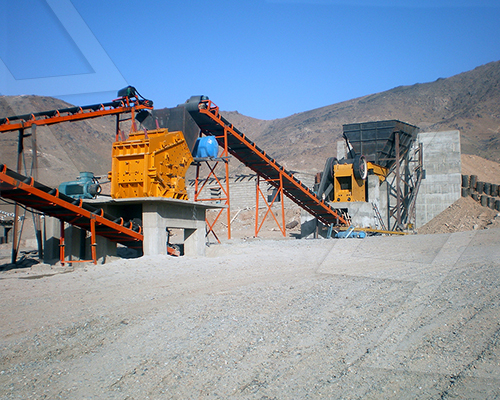
- Stress-Relieved Fabrication: The main frame is not merely welded; it undergoes post-weld heat treatment (stress relieving) to eliminate internal stresses that lead to crack propagation.
- Rigidity: A rigid, non-distorting frame maintains bearing alignment and ensures consistent discharge setting, critical for product gradation control.
Technical Specifications & Performance Integration
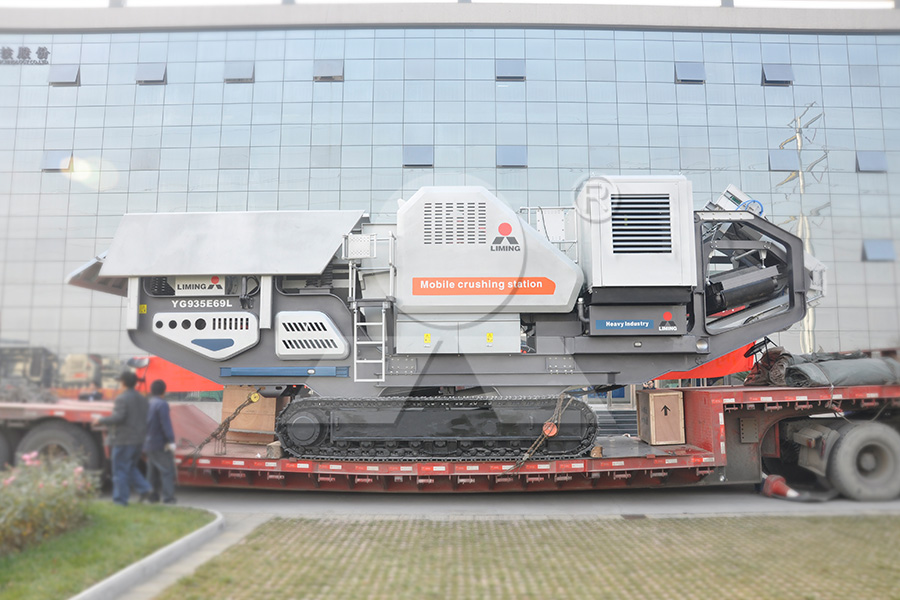
Durability is meaningless without performance. These components are engineered in concert to deliver specified capacity and product size. The following parameters are core to the design:
| Component | Key Engineering Parameter | Direct Impact on Operation & Cost |
|---|---|---|
| Jaw Plates | Manganese Grade (Mn-14, Mn-18, etc.), Tooth Profile (Wavy, Corrugated, Straight) | Determines optimal feed material hardness (abrasiveness vs. impact), wear life, and product shape. |
| Shaft & Bearings | Bearing Type (Spherical Roller), ISO Dynamic Load Rating (C/P ratio) | Defines maintenance interval, reliability under shock load, and overall mechanical uptime. |
| Drive System | Flywheel Mass, Sheave Dimensions | Ensures consistent crushing energy (TPH capacity) and smooth power transmission, reducing motor and belt stress. |
| Discharge Setting | Adjustment Mechanism (Shim or Hydraulic) | Precision and stability of the setting directly control product top size and crusher throughput. |
Adherence to international standards like ISO 21873 (for mobile crushers) and CE marking for safety are baseline requirements. The true engineering distinction lies in the application-specific calibration of these components—matching plate metallurgy to the target ore's abrasion index, calculating bearing life for the required annual tonnage, and designing the chamber geometry to achieve the desired TPH without overstressing the system. This precision is what separates a durable asset from a recurring cost center.
Optimized Crushing Chambers for Superior Material Reduction: Achieving Consistent Product Gradation
The crushing chamber is the core of any jaw crusher, where material reduction is physically governed. Its geometry—defined by the nip angle, chamber depth, and the profile of the jaw plates—is not a one-size-fits-all design. Leading manufacturers in Faridabad engineer these chambers based on feed material characteristics and desired product specifications. Optimization is achieved through advanced kinematic simulations and empirical data from field applications, ensuring efficient breakage and controlled particle flow.
Material & Construction for Demanding Applications
Chamber longevity and performance under load are dictated by material selection. Standardized use of premium ASTM A128 Grade B3/B4 Manganese Steel (12-14% / 18-21% Mn) for jaw plates provides essential work-hardening properties, increasing surface hardness under impact to combat abrasion. For highly abrasive or extreme-duty applications, such as crushing granite or iron ore, proprietary TIC (Titanium Carbide) alloy inserts are welded onto critical wear zones, extending service life by a factor of 2-3. All structural chamber components, including the main frame and pitman, are fabricated from high-strength, low-alloy (HSLA) steel with normalized stress-relieving to withstand cyclical fatigue loads, complying with ISO 9001:2015 and CE standards for structural integrity.
Functional Advantages of an Optimized Chamber
- Controlled Nip Angle: A carefully calculated angle (typically between 19-23 degrees) ensures optimal grip on feed material, preventing slippage and promoting efficient crushing from the top of the chamber, directly increasing throughput (TPH).
- Enhanced Stroke & RPM Synergy: The chamber geometry is tuned to the crusher's kinematics—the stroke at the feed opening and the eccentric shaft RPM—to maximize the inter-particle compression and attrition within the chamber, improving reduction ratios.
- Gradation Consistency: A deep, symmetrical chamber design allows for progressive material reduction as it travels downward, minimizing slabby or elongated product shapes and ensuring a consistent, well-graded output critical for downstream processes.
- Adaptability to Ore Hardness: Chamber profiles and plate corrugations are varied for material type. Aggressive, deep corrugations are used for hard, abrasive rock (e.g., basalt, quartzite), while smoother profiles may be specified for softer, sticky materials to prevent packing.
Technical Parameters & Chamber Selection
Selection depends on primary application goals: maximum tonnage or precise shaping. The table below outlines typical chamber profiles and their correlated outputs for a mid-range model.
| Chamber Profile Designation | Primary Application | Optimal Feed Material | Expected Output Gradation Characteristic | Approx. Capacity vs. Standard Chamber* |
|---|---|---|---|---|
| Deep-Crushing / Quarry | High Reduction Ratio, Shaping | Hard Abrasives (Granite, Trap Rock) | Cubic, Well-Graded | -5% to +0% |
| Aggressive / Mining | Maximum Throughput (TPH) | Medium-Hard Ore (Iron Ore, Copper Ore) | Slightly More Elongated, Coarser | +10% to +15% |
| Universal / Recycled | Versatility, Contaminant Tolerance | Demolition Concrete, Asphalt | Variable, Controllable via CSS | Baseline |
*Capacity comparison assumes identical crusher size and closed-side setting (CSS).
Achieving consistent product gradation is a direct function of maintaining the designed chamber geometry over time. This necessitates not only robust initial design but also a wear management strategy, where periodic jaw plate rotation and timely replacement are critical to sustaining the optimized nip action and throughput.
Advanced Safety and Operational Features: Protecting Your Investment and Workforce in Demanding Environments
Advanced crusher safety is engineered, not added. It begins with the fundamental design philosophy of integrating protection into the machine's core mechanics and material composition. Leading manufacturers in Faridabad build to global standards (ISO 9001, CE marking) with protocols for hazardous environments, ensuring structural integrity and operational reliability under extreme cyclic loading.
Core Safety-By-Design Mechanisms
- Non-Contact Tramp Iron Protection: Hydraulic overload protection systems automatically release the toggle mechanism to pass uncrushable material, preventing catastrophic shaft, bearing, or frame damage. This is superior to shear-pin designs, allowing quick reset without component replacement.
- Integrated Lock-Out/Tag-Out (LOTO) Points: Factory-fitted, standardized isolation points for the main drive and hydraulic system enable safe, compliant maintenance as per global mine safety protocols.
- Guarding & Access: Full-perimeter, fixed guards for all rotating drives and flywheels. Maintenance platforms with non-slip grating and standardized handrails provide safe access for wear part inspection and replacement.
- Dust Containment & Suppression: Sealed housings and strategically placed connection points for dry fog or water spray systems mitigate respirable crystalline silica (RCS) exposure, a critical compliance and workforce health requirement.
Operational Features for Uptime & Control
Operational intelligence directly protects your investment by maximizing throughput (TPH) and minimizing unplanned downtime. Key features include:
- Hydraulic Gap Adjustment (HGA): Allows precise CSS adjustment under load or while stationary via a push-button control system. This enables real-time product gradation changes and automatic compensation for wear on jaw dies.
- Wear Part Material Science: The choice of jaw plate material is application-critical. Standard offerings include:
- 14% Manganese Steel (Mn14): For standard abrasion resistance.
- 18% Manganese Steel (Mn18): The industry benchmark for general-purpose hard rock crushing, offering optimal work-hardening capability.
- Martensitic Alloy Steels & TIC Inserts: For highly abrasive feeds (e.g., quartzite, taconite). Titanium carbide (TIC) welded inserts provide extreme wear resistance, often tripling service life in abrasive applications.
- Modular Frame Design: Utilizes finite element analysis (FEA)-optimized, fabricated steel frames. This design offers superior fatigue resistance over cast frames and allows for easier transport and installation in remote sites.
- Real-Time Condition Monitoring Pockets: Integrated sensor ports for continuous monitoring of bearing temperature and vibration, enabling predictive maintenance and avoiding secondary damage from component failure.
Technical Specifications for Demanding Duty
Selecting a crusher requires matching its engineered capabilities to your specific material profile and output goals.
| Feature | Technical Parameter & Impact |
|---|---|
| Crushing Chamber Design | Deep, symmetrical chamber with aggressive nip angle for high reduction ratios and reduced bridging. |
| Drive & Power | High-inertia flywheels and large crusher sheaves maintain consistent RPM under load, ensuring optimal TPH across varying feed. |
| Bearing Specification | Spherical roller bearings on the main eccentric shaft, sized for heavy-duty service and equipped with labyrinth seals for contamination exclusion. |
| Adaptability | Capability to handle unconfined compressive strengths (UCS) from 150 MPa (soft limestone) to over 350 MPa (hard granite/iron ore). |
Technical Specifications and Customization Options: Tailoring Jaw Crushers to Your Specific Site Requirements
The core engineering of a jaw crusher determines its operational lifespan and cost-per-ton efficiency. Faridabad-based manufacturers leverage advanced material science and modular design principles to build machines that are not just purchased, but precisely specified for your mineralogy and site constraints.
Critical Technical Specifications & Material Selection
The following parameters form the non-negotiable foundation of your crusher specification. These are not generic figures but are calculated based on your feed analysis and required product gradation.
| Parameter | Engineering Consideration & Customization Impact |
|---|---|
| Feed Opening & Gape | Determines maximum feed size. Customizable to accept oversized run-of-mine (ROM) material directly from the primary blast, reducing pre-crushing needs. |
| Crushing Capacity (TPH) | Net throughput under actual load conditions, not ideal lab settings. Calculated based on material density, crushability (Wi), and desired reduction ratio. |
| Power Rating (kW/HP) | Directly correlates to torque and crushing force. Overspecifying ensures sustained performance under tramp metal events and peak loads without stalling. |
| Main Frame Construction | Fabricated from high-strength, low-alloy (HSLA) steel plate with normalized stress relief. Custom reinforcements are integrated for abrasive or high-impact applications. |
| Jaw Die Material | Standard is 18-22% Manganese Steel (Mn-18/22). For highly abrasive silica or granite, premium alloys like Mn-14Cr2 or TIC insert-backed dies are specified to extend wear life by 40-60%. |
| Eccentric Shaft | Forged from EN-24/34CrNiMo6 equivalent alloy, precision machined and ultrasonically tested. Bearing journals are custom-sized to accommodate higher radial loads from tougher ores. |
| Toggle Plate | Acts as a safety shear pin. Can be specified in varying tensile strengths to protect the mechanism from uncrushables at a predetermined load threshold. |
Site-Specific Customization & Functional Advantages
Beyond the base specifications, true integration into your circuit is achieved through configurable options. These are not accessories but essential modifications for reliability.
- Drive Configuration: Choice between direct V-belt drive from standard industrial motors or hydraulic drive systems for precise closed-side setting (CSS) adjustment and overload protection via pressure release.
- Feeding Interface: Custom hopper extensions, vibrating grizzly feeder (VGF) pre-screens, or apron feeder mounting pads are engineered to match your loading equipment, eliminating spillage and bridging.
- Dust & Fines Mitigation: Integrated water spray systems with solenoid control for dust suppression, or full positive-pressure air seal kits for dry processing circuits to meet environmental compliance.
- Mobility & Foundation Requirements: Stationary designs with custom base frame designs for monolithic concrete foundations, or skid-mounted and trailer-mounted configurations for semi-permanent or multi-site operations.
- Control & Automation Readiness: Pre-wired panels with PLC interfaces for integration into plant-wide SCADA systems. Options include automatic CSS adjustment via hydraulic rams and real-time condition monitoring sensors for bearings and temperature.
- Output Discharge Optimization: Adjustable discharge chutes with wear liners, and custom conveyor boot lengths to ensure clean material transfer without plugging or backflow.
Compliance & Testing Standards
Machines are designed, fabricated, and performance-tested against stringent international standards. This includes ISO 9001:2015 certified quality management in fabrication, CE marking for essential health and safety requirements, and design validation per ISO 21873 for mobile units. Final factory acceptance testing (FAT) involves running the crusher with comparable material to verify rated capacity and power draw.
Proven Performance and Local Support: Why Faridabad Manufacturers Deliver Reliable Crushing Solutions
Faridabad's position as a leading hub for jaw crusher manufacturing is not accidental. It is the result of a deep-seated industrial ecosystem that combines rigorous engineering with unparalleled local supply chain integration. This synergy translates directly into crushers that offer exceptional field reliability and operational cost-efficiency.
Engineering Foundations: Material and Build Integrity
The core reliability of a jaw crusher begins with its wear components. Faridabad manufacturers leverage extensive metallurgical expertise, typically utilizing:
- High-Grade Manganese Steel (Mn14, Mn18, Mn22): These are not generic materials. Specific grades are selected for jaw plates, cheek plates, and toggle seats based on the target application's abrasiveness and impact severity. Mn18 is a common standard for general hard rock, while Mn22 is specified for highly abrasive feed like quartzite or granite.
- Alloy Steel Castings for Structural Frames: Critical components like the main frame, swing jaw, and pitman are often fabricated from high-strength, low-alloy (HSLA) steel or robust cast steel, ensuring structural integrity under cyclical loading.
- Precision Machining and Heat Treatment: Key bearing seats, toggle housings, and shaft interfaces undergo precision machining. Subsequent heat treatment processes like induction hardening or tempering stabilize the microstructure, preventing premature failure and ensuring dimensional stability.
Technical Standards and Performance Validation
Compliance is a baseline; performance under load is the benchmark. Equipment from established Faridabad builders adheres to and often exceeds recognized standards.
- Design Standards: Crushers are engineered per ISO 21873 (Building construction machinery and equipment) and carry CE marking where applicable, confirming conformity with EU safety, health, and environmental protection directives.
- Performance Certification: Reputable manufacturers provide certified test reports for critical parameters like bearing temperature rise, vibration levels, and actual throughput (TPH) with defined feed material.
- Mining & Quarry-Specific Design Features:
- Adaptability to Ore Hardness: Crusher geometry (nip angle, chamber depth) and kinematics are calculated for specific compressive strength ranges (e.g., 200-350 MPa for limestone, 250+ MPa for basalt).
- High Capacity in Rough Terrain: Designs prioritize high volumetric throughput (TPH) without compromising on robustness, with heavy-duty roller bearings and oversized shafts to handle shock loads from uncrushable material.
- Ease of Maintenance: Features like hydraulic toggle adjustment systems, grease-purged labyrinth seals, and accessible wear part change-out points reduce downtime—a critical factor in continuous mining operations.
The Critical Advantage: Integrated Local Support
The geographical concentration of manufacturing, ancillary suppliers, and engineering talent in Faridabad creates a decisive support advantage unavailable through distant international suppliers.
| Support Aspect | Technical & Operational Benefit |
|---|---|
| On-Demand Technical Consultation | Direct access to design engineers for application review, ensuring crusher selection (e.g., Blake or Overhead Eccentric) matches feed size, desired product gradation, and moisture content. |
| Rapid Wear & Spare Parts Logistics | Local foundries and machining units enable guaranteed availability of genuine jaw plates, toggle plates, and bearings, drastically reducing inventory holding costs for the end-user. |
| Field Service & Erection Supervision | Skilled technicians can be deployed swiftly for commissioning, operational training, and in-situ troubleshooting, minimizing production losses. |
| Reverse Engineering & Customization | Proximity allows for efficient modification of existing crushers for new duties or the fabrication of custom-sized units for specialized plant layouts. |
This integrated model ensures that the crusher delivered is not merely a piece of equipment, but a supported system. Performance is proven in the field across Indian mining and aggregate sectors, where equipment is subjected to sustained, high-demand operations. The local engineering ethos focuses on over-design in critical areas—bearing capacity, frame rigidity, and wear material volume—to guarantee longevity and predictable maintenance cycles, ultimately delivering a lower total cost of ownership.
Frequently Asked Questions
What is the optimal replacement cycle for jaw crusher wear parts in abrasive conditions?
For high-silica or basalt ores, expect 90-120 days for jaw plates made of premium Mn-14% or Mn-18% steel. Cycle depends on feed size, throughput, and proper work-hardening. Monitor plate thickness; replace at ~60% wear to protect the crusher body. Using cross-corrugated profiles can extend life by 15-20%.
How do manufacturers ensure crusher adaptability to varying ore hardness (Mohs 5-8)?
Adjustable hydraulic settings for the toggle and wedge system are critical. For harder ores (Mohs 7+), reduce CSS and increase eccentric shaft speed. The frame must be stress-relieved, and jaws should be cast from modified ZGMn13Cr2 alloy for optimal work-hardening against high compressive strength.
What specific vibration control measures are integrated into heavy-duty jaw crusher design?
Foundations require reinforced concrete with epoxy grouted anchor bolts. The crusher itself uses dynamically balanced flywheels and machined mounting surfaces. High-capacity, multi-stage Nord-Lock washers on all major fasteners and anti-vibration pads under the motor base are essential to prevent harmonic resonance and structural fatigue.
Which lubrication system and bearing specifications are recommended for 24/7 operation?
A centralized, automated grease system (e.g., Bijur or Lincoln) feeding to the main bearings is non-negotiable. Specify premium spherical roller bearings (SKF or FAG) with C4 clearance for thermal expansion. Oil bath lubrication for the pitman bearing with high-viscosity EP gear oil (ISO VG 320) ensures stable operation under shock loads.
How is the crushing chamber geometry optimized for different product gradations?
Chamber design is a function of nip angle, stroke, and toggle plate kinematics. For finer output, a steeper chamber with a longer parallel zone is used. Engineers optimize the feed opening-to-depth ratio and employ 3D kinematic simulation to ensure efficient particle-on-particle crushing and minimize slabby product.
What are the critical checks during commissioning to prevent premature failure?
Verify main frame alignment with laser, ensuring ≤0.2mm/m tolerance. Confirm proper pre-load on all bearings and belt tension. Perform a no-load run to check for abnormal vibration (<7mm/s RMS). Finally, conduct a staged load test, monitoring amperage draw and hydraulic pressure on the adjustment system.