In today's fast-paced construction and infrastructure sectors, the demand for high-grade manufactured sand is at an all-time high. Securing a reliable source begins with investing in the right equipment at the core of your production line: a top-tier construction sand making machine. This pivotal piece of technology is not merely a purchase; it is a strategic commitment to operational efficiency, superior product consistency, and long-term profitability. The quest for the best quality machine involves navigating a landscape of advanced engineering, robust materials, and innovative crushing principles designed to transform raw feed into perfectly graded, cubical aggregates. For discerning buyers seeking a solution that balances unparalleled performance with enduring durability, understanding the key features of leading models is the essential first step toward optimizing your output and securing a decisive competitive edge.
Maximize Construction Efficiency: How Our Sand Making Machine Delivers Superior Output for Your Projects
The core engineering principle of our sand making machine is the precise conversion of high kinetic energy into controlled particle-size reduction. This is not a generic crusher; it is a purpose-built system engineered to transform raw, hard feed material into premium, specification-grade construction sand with maximum operational efficiency and minimal waste. Superior output is a direct function of material integrity, mechanical design, and process intelligence.
Material & Construction Integrity: The Foundation of Durability
Machine longevity under constant abrasive and impact load is non-negotiable. Our design specifies metallurgical solutions for each wear component:
- Impeller & Flow Channel Liners: Fabricated from ultra-high-chromium alloy cast iron (Cr26, Cr27+). This material delivers a minimum hardness of 60 HRC, offering optimal resistance to the continuous micro-cutting and gouging abrasion from silica and hard ores.
- Critical Wear Parts (Tip Cavity Wear Plates): Utilize multi-element alloy steels (Ni-Cr-Mo compositions) for an optimal balance of surface hardness and core toughness, resisting crack propagation under high-impact conditions.
- Mainframe & Bearing Housing: Constructed from heavy-duty, normalized steel plate with robotic welding and stress-relief treatment to prevent fatigue failure and ensure permanent alignment.
Technical Standards & Design Certification
All machines are designed, manufactured, and tested to international mechanical and safety standards, providing a verifiable baseline for performance and safety.
- ISO 9001:2015: Governs the entire quality management system from sourcing to final testing.
- CE Marking: Full compliance with EU Machinery Directive 2006/42/EC for health, safety, and environmental protection.
- Dynamic Rotor Balance: Performs to ISO 1940-1 G6.3 standard or better, a critical factor in reducing vibration, bearing load, and ensuring smooth operation at high rotational speeds.
Functional Advantages for Maximized Project Output
- High-Capacity Throughput: Engineered for consistent TPH (Tons Per Hour) output. Models range from 70-650 TPH, with capacity directly correlated to installed power (90kW - 500kW) and optimized feed size/distribution.
- Superior Particle Shape Control: The deep-rock-on-rock crushing principle within the vortex chamber produces cubical, well-graded sand with low flakiness index. This enhances concrete strength, reduces binder demand, and improves workability.
- Adaptability to Feed Material: Capable of processing a wide range of ore hardness (Mohs 7-9) and abrasiveness, from granite, basalt, and river pebbles to limestone and recycled concrete aggregate (RCA). The machine's adjustable rotor speed and cascade feed system allow for real-time tuning to feed characteristics.
- Low Operational Cost per Ton: Direct drive transmission (V-belt or fluid coupling options) eliminates gearbox maintenance. The modular design of wear parts allows for quick replacement and reduces downtime. High material utilization (conversion rate) minimizes waste.
- Moisture Tolerance: The crushing process is less sensitive to material moisture content compared to cone crushers, reducing the risk of clogging and maintaining output in varying conditions.
Key Performance Parameters
The following table outlines the core technical specifications for our primary series. Specific model selection requires analysis of your feed gradation, desired product size, and moisture content.
| Model Series | Max Feed Size (mm) | Capacity Range (TPH) | Motor Power (kW) | Rotor Diameter (mm) | Typical Product Size (mm) |
|---|---|---|---|---|---|
| VSI-700 | 45 | 70 - 140 | 180 - 250 | 700 | 0-5, 5-10, 10-20 |
| VSI-850 | 55 | 150 - 280 | 2x220 - 320 | 850 | 0-5, 5-10, 10-20 |
| VSI-1100 | 60 | 300 - 500 | 400 - 500 | 1100 | 0-5, 5-10, 10-20 |
Mining-Specific USP: Process Integration & Control
Efficiency extends beyond the machine itself. Our systems are designed for seamless integration into your plant.
- Cascade Feed System: Maximizes rock-on-rock crushing by ensuring the rotor is optimally charged, improving reduction ratio and wear life.
- Hydraulic Lid Lifter & Maintenance Arm: Enables safe, rapid access to the crushing chamber for inspection and part changeover, turning hours of downtime into minutes.
- Vibration Monitoring Ports: Integrated sensor mounts allow for continuous condition monitoring, enabling predictive maintenance and preventing catastrophic failure.
Ultimately, superior output is measured in consistent, on-spec sand production, reduced total cost of ownership, and project schedule adherence. Our engineering provides the deterministic performance required to meet these objectives.
Built to Last: The Durable Design and Low-Maintenance Advantages of Our High-Quality Sand Maker
The core of a reliable sand making operation is a machine engineered for endurance under continuous, high-impact stress. Our sand makers are not merely assembled; they are precision-built from the ground up with material science and mechanical integrity as the primary design criteria. This results in a system that maximizes uptime, minimizes operational costs, and delivers a consistent return on investment through a lifecycle measured in decades, not years.
Foundational Durability: Material Science and Construction
The critical wear components are the defining factor in machine longevity. We utilize proprietary, high-chromium alloys and advanced manganese steel (Mn13, Mn18) formulations for impact plates, anvils, and rotor tips. These materials are selected for their exceptional work-hardening properties; they become harder under repeated impact, effectively extending service life significantly over standard materials. Key structural components, such as the main bearing housing and base frame, are fabricated from high-tensile steel plate with robotic welding and stress-relief annealing to prevent fatigue failure and maintain alignment under maximum load.
Engineering for Minimal Intervention
The design philosophy prioritizes accessibility and serviceability to transform necessary maintenance from a prolonged downtime event into a swift, standardized procedure.
- Modular Wear Part Design: Key wear components are designed as interchangeable modules. This allows for rapid replacement without extensive disassembly, often measured in hours rather than shifts.
- Centralized Lubrication System: An automated, programmable grease lubrication system ensures optimal bearing health, eliminates manual greasing points, and prevents both under- and over-lubrication.
- Hydraulic or Mechanical Opening Mechanism: The rear housing or upper frame utilizes a hydraulic assist system, allowing a single operator to safely open the machine for inspection and maintenance of the crushing chamber.
- Rotor Integrity: The rotor is a dynamically balanced, monolithic casting or a welded design with replaceable wear plates. It is engineered to maintain its balance throughout its service life, ensuring smooth operation and protecting shaft and bearings from vibration-induced damage.
Performance Built on Standards
Every machine is designed, manufactured, and tested to exceed international standards for safety and performance (CE, ISO). Durability is quantified not just in material specs, but in operational parameters that directly affect your bottom line:
| Parameter | Advantage | Operational Impact |
|---|---|---|
| Bearing Specification | Oversized, high-precision spherical roller bearings with L10 life calculation > 50,000 hours. | Sustains high radial and axial loads from variable feed, ensuring reliability under the most demanding conditions. |
| Rotor Tip Speed | Precisely calibrated for optimal impact energy (70-90 m/s typical range). | Maximizes crushing efficiency and particle shape control for a given power input, reducing cost per ton. |
| Adaptability to Feed | Robust design accepts variable feed sizes and compositions, including high-silica or abrasive ores. | Consistent performance with less-than-ideal feed, reducing the need for perfect pre-screening and increasing plant flexibility. |
| TPH Consistency | Engineered to maintain rated throughput (e.g., 200-600 TPH models) throughout the wear cycle. | Predictable production output for plant scheduling and reliable aggregate supply. |
This combination of superior materials, intelligent service-focused design, and engineered performance metrics ensures our sand maker is a capital asset that secures your production line against unplanned downtime and protects your operational expenditure. The result is a lower total cost of ownership and a predictable, high-quality sand output over an extended service life.
Precision Engineering for Consistent Grain Size: Achieving Optimal Sand Quality with Advanced Technology
Precision in sand particle distribution is not an outcome of chance but a direct result of engineered control over the crushing dynamics. Modern high-quality sand making machines achieve this through a synergy of robust material science, intelligent design, and calibrated operational parameters. The core objective is to produce sand with a consistent, cubical grain shape and a controlled gradation curve that meets strict ASTM C-33 or equivalent international standards for concrete and asphalt production.
The foundation of this precision lies in the wear components. The rotor, anvils, and feed tube are subjected to extreme abrasive forces. Premium machines utilize high-chromium alloys (e.g., Cr26, Cr30Mo) for impact plates and wear-resistant manganese steel (Hadfield steel) for components subject to high-impact shock. These materials are not merely "hard"; their metallurgical composition is engineered for work-hardening upon impact, increasing surface hardness during operation while retaining a tough, shock-absorbing core to prevent catastrophic fracture.
Key Functional Advantages for Grain Control:
- Optimized Rock-on-Rock vs. Rock-on-Iron Crushing: Advanced rotor and cascade feed system design directs material into the crushing chamber to maximize particle-on-particle impact. This autogenous process produces a more cubical product with fewer elongated or flaky grains, reducing the need for downstream shaping.
- Precise Rotor Speed & Feed Rate Synchronization: Variable Frequency Drive (VFD) control of the rotor allows real-time adjustment of tip speed (typically 55-85 m/s). This enables operators to fine-tune the fracture mechanics for different parent rock hardness (from limestone at ~3 Mohs to granite at ~7 Mohs) and incoming feed size, directly influencing the output gradation.
- Hydraulic Lid & Adjustment Systems: Hydraulically assisted access to the crushing chamber and adjustable anvils or rock shelves allow for rapid changes to the crushing gap and chamber geometry. This is critical for maintaining target size distribution as wear parts degrade, ensuring consistency throughout the wear life.
- Intelligent Automation & Monitoring: Integrated PLC systems monitor amp draw, vibration, bearing temperature, and feed rates. Automated safety shutdowns protect the machine, while data trends allow for predictive maintenance, preventing unexpected downtime that leads to off-spec product runs.
For operations requiring specific, repeatable outputs, the relationship between machine configuration and product specification is quantifiable. The following parameters are critical for sizing and selection:
| Technical Parameter | Influence on Sand Quality & Production | Typical Specification Range (for a Mid-Capacity Unit) |
|---|---|---|
| Rotor Diameter & Width | Determines the kinetic energy imparted to particles; directly correlates with capacity (TPH) and the maximum feed size. | Diameter: 1000 - 1400 mm, Width: 1000 - 1800 mm |
| Maximum Feed Size | Dictates the primary rock size the machine can accept, impacting the stage of crushing (tertiary/quaternary). | 45 - 80 mm |
| Throughput Capacity (TPH) | Rated output in metric tons per hour of finished sand product, dependent on material density and abrasiveness. | 100 - 350 TPH |
| Motor Power | Provides the energy for particle acceleration and fracture; under-powering leads to poor shape and low yield. | 250 - 500 kW |
| Output Size Range | The adjustable spectrum of final product, typically defined as the percentage passing specific sieve sizes. | 0 - 5 mm (with primary yield in the 0-3mm sand range) |
| Wear Part Life Index | A comparative metric (e.g., tons of abrasive granite per set of wear parts) indicating operational cost and consistency longevity. | Highly alloyed parts: 30,000 - 60,000+ MT for granite |
Compliance with international standards such as ISO 9001 for quality management and CE marking for EU health, safety, and environmental directives is a baseline. The true engineering standard is demonstrated in field performance: maintaining a product fineness modulus within a ±0.1 tolerance over a full wear cycle, while achieving a particle shape index with >85% cubical content, is the definitive measure of a precision sand making machine. This level of consistency reduces cement paste demand in concrete mixes, directly contributing to higher compressive strength and more economical, durable construction materials.
Cost-Effective Sand Production: Reducing Operational Expenses Through Energy-Efficient Performance
The primary economic advantage of a high-grade sand making machine is not its initial price point, but its total operational cost over a 15-20 year lifecycle. Energy consumption and component wear are the two dominant variables. Superior engineering directly targets these through material science, precision mechanics, and intelligent system design, transforming energy input into maximum saleable output with minimal waste.
Core Engineering Principles for Operational Economy:
- Advanced Material Science in Wear Parts: The crushing chamber's wear resistance defines maintenance intervals and material contamination. Machines utilizing high-chromium or tungsten-titanium alloy composite wear plates, and rotors with ceramic-lined tips or specially heat-treated martensitic steel, exhibit dramatically extended service life. This reduces downtime for replacements and maintains consistent product gradation.
- Optimized Rock-on-Rock & Rock-on-Iron Principles: A well-calibrated machine uses the formed material bed within the crushing chamber for autogenous wear protection. The majority of size reduction occurs through particle-on-particle impact, minimizing direct wear on metal components and improving energy efficiency compared to direct metal-to-rock contact.
- Precision Bearing & Drive Train Assembly: High-capacity, ISO 281-rated spherical roller bearings, paired with precisely machined rotor assemblies and dynamically balanced components, minimize vibrational energy losses and mechanical stress. This ensures a higher percentage of motor output is directed toward productive crushing rather than overcoming internal friction.
- Adaptive Crushing Chamber Geometry: A chamber profile engineered for optimal material cascade and impact angles ensures efficient transfer of kinetic energy. This design reduces "dead zones" and recirculation load, allowing the machine to achieve target TPH (Tons Per Hour) at a lower installed power rating compared to less refined designs.
Technical Parameters Influencing Energy Efficiency:
| Parameter | Impact on Operational Cost | Engineering Standard / Consideration |
|---|---|---|
| Motor Power vs. Actual Throughput | Measures true efficiency. A machine achieving 250 TPH with a 315kW motor is more efficient than one requiring 400kW for the same output. | Evaluate specific energy consumption (kWh per ton of final product). |
| Maximum Feed Size & Hardness Adaptability | Ability to process larger, harder feed (e.g., granite, basalt) without pre-crushing stages reduces overall plant energy use. | Defined by rotor diameter, feed tube design, and material of wear components. Look for specifications like "Feed size up to 65mm" and "Suitable for abrasive index >0.6". |
| Closed Rotor vs. Open Rotor Design | Closed rotors provide higher throughput for abrasive materials and offer better wear part life, reducing long-term part replacement costs. | Selection depends on feed material abrasiveness and required product shape. Closed rotor is standard for highly abrasive applications. |
| Automated Control & Monitoring Systems | Prevents energy waste from under-loading or over-loading. VFD (Variable Frequency Drive) compatibility allows motor speed adjustment to match feed conditions. | Integration with PLC systems for real-time monitoring of power draw, bearing temperature, and vibration (ISO 10816). |
Ultimately, cost-effective sand production is an engineering outcome. It is achieved by specifying a machine whose design prioritizes the conversion of electrical and kinetic energy into a precisely graded aggregate, while its construction—from alloy grades to bearing tolerances—is engineered to resist the operational cost drivers of wear and downtime. The most economical machine in a quarry setting is the one that maintains its rated capacity and product specification with the lowest sustained input of energy and replacement parts.
Technical Specifications and Customization Options: Tailoring the Machine to Your Specific Construction Needs
The core of a high-performance sand making machine lies in its precise engineering and material integrity. Our machines are built to the ISO 9001:2015 quality management standard and carry CE certification, ensuring design and manufacturing rigor for global operations.
Core Technical Specifications & Material Science
The following parameters define the baseline performance envelope. Specific models are engineered around these critical dimensions.
| Parameter | Specification Range | Notes |
|---|---|---|
| Feed Size | ≤50 mm | Optimized for secondary/tertiary crushing of pre-screened feed from jaw or cone crushers. |
| Capacity (TPH) | 60 - 580 TPH | Throughput varies based on material density, feed gradation, and moisture content. Capacities are certified for granite (bulk density ~1.6 T/m³). |
| Rotor Speed | 1,500 - 2,200 rpm | Electronically controlled variable frequency drives (VFD) allow precise tuning for product gradation and wear optimization. |
| Drive Power | 132 kW - 440 kW | Direct-drive configurations eliminate transmission losses and V-belt maintenance. |
| Weight (Machine Only) | 12.5 T - 26 T | Robust construction for dampening vibration and absorbing high-impact loads. |
Material & Wear Component Engineering
- Impeller & Wear Parts: The heart of the machine utilizes a layered material strategy. The rotor core is fabricated from high-strength, low-alloy (HSLA) steel for structural integrity. Critical wear components—impeller shoes, anvils, and feed tubes—are cast from Grade III High-Chromium Cast Iron (26-30% Cr). This provides optimal abrasion resistance for processing granite, basalt, and ferroalloy ores with compressive strengths exceeding 250 MPa.
- Cascade & Feed Cylinder: The internal lining employs a modular manganese steel (Mn14, Mn18) system. This material work-hardens under impact, continually renewing its wear surface and significantly extending service life in high-abrasion applications.
- Bearing Assembly: Utilizes oversized, life-rated spherical roller bearings housed in a split, labyrinth-sealed chamber. This design allows for efficient heat dissipation and prevents contaminant ingress, critical for 24/7 mining and aggregate production cycles.
Key Functional Advantages
- Rock-on-Rock & Rock-on-Iron Configurations: A single machine can be configured for maximum reduction (rock-on-iron) or for superior abrasive wear resistance and cubical product shape (rock-on-rock).
- Hydraulic Lid Opening & Adjustment: Full access to the crushing chamber for wear part inspection and replacement is achieved within hours, not days. Hydraulic adjustment of the cascade ring allows for precise control of product gradation without shutdown.
- Moisture Tolerance: The patented airflow management system within the crushing chamber mitigates material buildup, allowing for effective processing of feeds with higher moisture content than conventional crushers, reducing pre-drying requirements.
Customization for Specific Construction & Mining Needs
Customization is not aesthetic; it is a recalibration of machine geometry and components to match your feed material and product specification.
- Feed Material Analysis: We require a detailed analysis of your feed stock—Petrographic analysis, Los Angeles Abrasion (LAA) value, and Silicon Dioxide (SiO₂) content—to specify the optimal wear material grade and machine kinematics.
- Product Gradation Targets: The machine's internal geometry (crushing chamber angles, cascade curve, rotor diameter/width ratio) can be modified to prioritize yield in specific product fractions (e.g., 0-3mm for plaster sand or 3-6mm for concrete sand).
- Drive & Control Integration: Options include:
- VFD Systems: For soft start and real-time rotor speed optimization.
- Automated Lubrication Systems: Centralized greasing for bearings and hydraulics.
- PLC Integration: Full sensor suite (vibration, temperature, bearing monitoring) with output for plant-wide SCADA control.
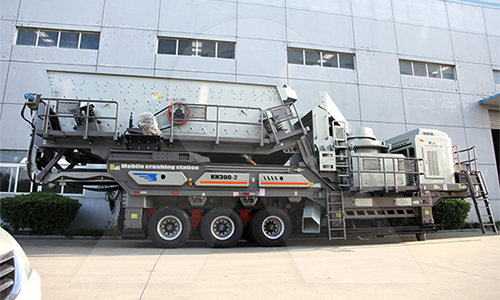
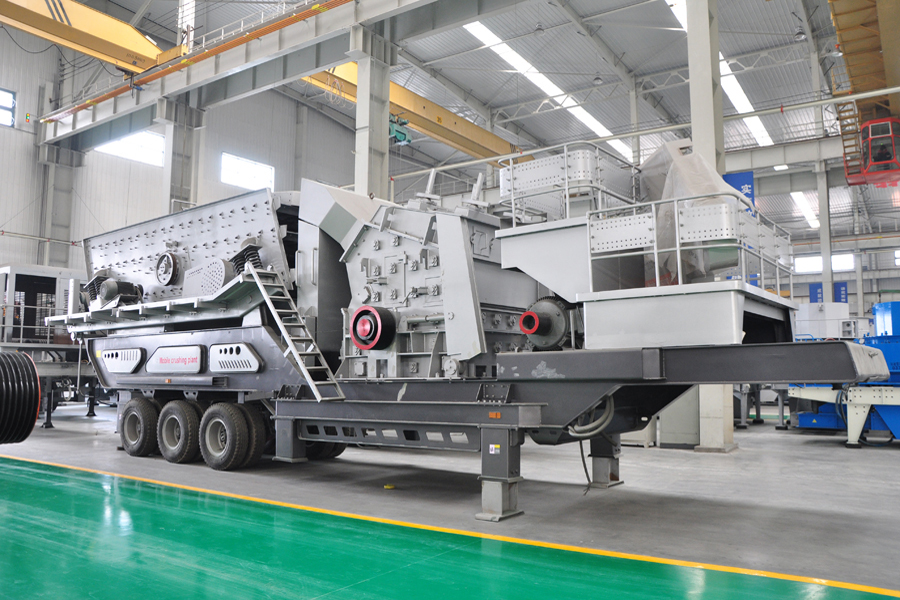
- Mobility & Foundation Requirements: Units can be engineered for stationary heavy-duty foundations or integrated into semi-mobile skid or trailer-mounted plants, with structural reinforcements calculated for dynamic loads.
Proven Reliability and Support: Why Industry Leaders Trust Our Sand Making Machines for Sale
Our machines are engineered not for the average application, but for the extremes of continuous, high-tonnage mineral processing. Trust is earned through demonstrable performance under load, backed by a support philosophy that treats your operational uptime as our critical metric.
Engineering for Uninterrupted Operation: The Core Technical Principles
Reliability is designed in from the material level upward. We reject generic castings in favor of application-specific metallurgy.
- Wear Component Superiority: Critical wear parts like impellers, anvils, and feed tubes are fabricated from proprietary, high-chrome alloys or manganese steel (Mn18Cr2, Mn22Cr2) with optimized heat treatment. This provides an optimal balance of hardness for abrasion resistance and toughness to withstand impact fatigue from high-hardness ores (up to 9 Mohs).
- Structural Integrity: The main bearing housing is a single, heavy-duty cast or fabricated steel unit, ensuring perfect alignment and protecting the high-capacity, spherical roller bearings from operational stresses and contaminant ingress.
- Intelligent Wear Management: The cascading material feed system and adjustable, self-aligning wear segments are designed to ensure even wear distribution and allow for quick, partial replacements without full disassembly, minimizing maintenance downtime.
Quantifiable Performance and Standards Compliance
Performance is measured against international benchmarks for both safety and quality.
- Certified Design & Safety: All machines are CE marked, complying with the EU Machinery Directive 2006/42/EC for health and safety. Our quality management system is ISO 9001:2015 certified, ensuring consistency from procurement to final assembly.
- Capacity & Adaptability: Our rotor designs and crushing chamber geometries are optimized for specific duty classes. Capacities are guaranteed for defined material densities (e.g., 1.6 t/m³ for granite) and feed sizes, with throughputs (TPH) ranging from 70 to 640+ TPH in our standard series. Machines can be configured for rock-on-rock or rock-on-steel crushing modes to suit the required product shape and wear cost profile.
Technical Specifications: Core Models for High-Abrasion Applications
The following table outlines key parameters for our flagship series designed for processing hard, abrasive aggregates like granite, basalt, and iron ore.
| Model | Max. Feed Size (mm) | Throughput* (TPH) | Installed Power (kW) | Rotor Diameter (mm) | Primary Crushing Mode |
|---|---|---|---|---|---|
| VSI-850 | 45 | 180 - 320 | 2x250 | 850 | Rock-on-Rock / Rock-on-Steel |
| VSI-1050 | 50 | 280 - 480 | 2x315 | 1050 | Rock-on-Rock / Rock-on-Steel |
| VSI-1300 | 55 | 400 - 640 | 2x400 | 1300 | Rock-on-Rock / Rock-on-Steel |
*Throughput range is for granite (density ~1.6 t/m³, compressive strength 150-200 MPa). Actual capacity varies based on feed gradation, moisture, and required product shape.
The Support Partnership: Beyond the Machine Delivery
Our commitment is to your long-term cost-per-ton efficiency. This is operationalized through a structured support framework.
- Precision Application Engineering: Our technical team conducts a pre-sale material analysis review, providing a projected wear life and performance forecast for your specific feed stock.
- Global Parts & Service Network: A strategically located inventory of genuine wear parts ensures availability. Our service engineers are trained in predictive maintenance protocols, vibration analysis, and rotor dynamic balancing.
- Performance Optimization Guarantee: We provide detailed operational manuals and on-site training to ensure your crew achieves published performance metrics. Post-installation audits are conducted to verify machine operation within optimal parameters.
Frequently Asked Questions
What is the typical wear cycle for key components like the rotor and anvils?
High-chrome alloy or premium 27% manganese steel anvils typically last 600-800 hours in abrasive granite. For consistent output, implement predictive maintenance using wear sensors. Rotor rebuilds are needed every 2,000-3,000 hours; ensure the design allows for on-site hardfacing to minimize costly replacements.
How does the machine adapt to different material hardness (e.g., limestone vs. granite)?
A quality machine features a hydraulic or mechanical adjustment for the crushing gap, allowing real-time optimization for materials from Mohs 3 (limestone) to 7 (granite). The rotor speed should be variable frequency-controlled; lower speeds for harder, abrasive ores to reduce wear and excessive vibration.
What vibration control measures are critical for stable long-term operation?
Foundation must be a monolithic reinforced concrete mass. The machine itself requires precision-dynamic balancing of the rotor assembly to ISO G2.5 standard. Use high-resilience vibration dampers (e.g., LORD or Vibro-Insulator brands) and continuous monitoring with accelerometers to prevent structural fatigue and bearing failure.
What are the lubrication system requirements for the main bearings?
Centralized, automatic grease lubrication (e.g., Lincoln or SKF systems) is non-negotiable. Specify high-temperature, extreme pressure (EP) lithium complex grease. Bearings must be SKF or FAG spherical roller types, with temperature sensors providing real-time alerts to prevent thermal runaway and catastrophic seizure.
How is the final product shape and gradation controlled?
Cubical product shape is achieved through optimal rock-on-rock or rock-on-anvil crushing in the chamber. Precise gradation control comes from adjustable cascade or screen bypass systems, and optionally an integrated air classifier. Consistent feed size and rate are paramount for maintaining specification.
What is the expected energy consumption per ton of sand produced?
For hard abrasive rock (e.g., granite), expect 1.8-2.2 kWh per ton for a well-optimized vertical shaft impact (VSI) crusher. Key factors are a high-efficiency motor (IE4 class), optimal rotor tip speed (55-70 m/s for granite), and minimal system pressure drop in the crushing chamber.