When planning a construction or landscaping project in the Fredericksburg, VA area, selecting the right foundational material is paramount to ensuring durability and longevity. For many professionals and discerning homeowners, crusher run gravel stands out as an indispensable, versatile aggregate. This blend of coarse stone and fine stone dust compacts to create an exceptionally stable and solid base, ideal for driveways, walkways, and paver installations. Sourcing high-quality crusher run gravel locally not only guarantees a reliable product but also supports efficient logistics and cost-effectiveness for your project. Understanding the specific applications and benefits of this material is the first step toward a successful build, making an informed purchase a critical decision for any site preparation in the region.
Achieve Superior Stability: Why Crusher Run is the Go-To Base for Fredericksburg Landscaping
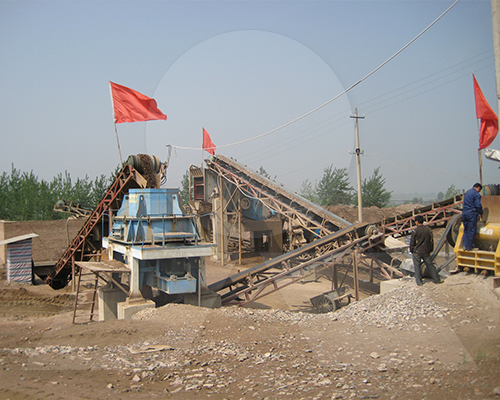
Crusher run gravel, specifically engineered as a graded aggregate base (GAB), provides a mechanically stable foundation unmatched by singular-sized aggregates. Its performance in Fredericksburg's variable clay-rich soils and freeze-thaw cycles is a function of its precise particle size distribution and interlocking angularity. The material is produced by crushing durable, high-hardness ore (typically granite, trap rock, or limestone) in a primary jaw crusher, followed by secondary crushing. The resulting blend contains fractured particles ranging from fine dust ("fines") up to a specified top size (commonly 1" to 1.5"), which is then uniformly graded.
Core Engineering Advantages:
- Particle Interlock & Shear Strength: The angular, mechanically fractured particles create a dense, interlocking matrix under compaction, providing exceptional shear strength and load distribution, critical for preventing rutting and settlement under vehicular loads.
- Optimal Gradation & Proctor Density: The controlled blend of coarse and fine particles allows for near-optimal Proctor density achievement with standard vibratory compaction. The fines effectively fill voids between larger stones, eliminating internal movement and creating a semi-permeable, rigid slab.
- Consolidation & Drainage: Unlike clay subgrades, which retain water and become plastic, a properly installed crusher run base facilitates controlled lateral drainage while consolidating into a unified mass, protecting overlying pavers or asphalt from hydrostatic pressure and frost heave.
Technical Specifications & Material Integrity:
Production relies on heavy-duty crushing equipment, such as Mn-steel (11-14% Manganese) jaw crushers and cone crushers with high-chrome blow bars, capable of processing abrasive feed material with a compressive strength exceeding 250 MPa. This ensures the resulting aggregate possesses high fracture faces and minimal flat or elongated particles, which are detrimental to stability.
| Parameter | Specification | Relevance to Fredericksburg Applications |
|---|---|---|
| Gradation (Typical) | Meets VDOT / ASTM D2940 | Ensures compliance with local civil engineering standards for base courses. |
| Top Size | 1" or 1.5" | Provides necessary bearing capacity for driveways, parking pads, and heavy-use pathways. |
| Fines Content (Passing #200 sieve) | 8-12% | Critical for binding and compaction; excessive fines reduce permeability, insufficient fines compromise cohesion. |
| Los Angeles Abrasion Loss (ASTM C131) | < 40% | Indicates long-term durability and resistance to breakdown under cyclic loading. |
| Plasticity Index (PI) of Fines | Non-plastic | Essential for preventing clay-like expansion and contraction with moisture changes in local soils. |
Operational & Long-Term Value:
From a mining and processing standpoint, crusher run is a high-yield product with a high throughput (TPH) rate, as it utilizes the full spectrum of crushed material without wasteful screening out of fines. This efficiency translates to cost-effectiveness for large-scale projects. Its inherent adaptability to various ore hardness levels means a consistent, high-performance product can be sourced locally from Virginia quarries. The installed base acts as a long-term structural asset, mitigating differential settlement and reducing maintenance cycles for overlying surfaces. For engineered stability in landscape construction, its predictable performance under load and environmental stress makes it the definitive technical choice.
Tailored for Virginia Soil: How Our Crusher Run Gravel Prevents Erosion and Settling
Virginia's diverse geology, from the clay-heavy soils of the Coastal Plain to the rocky, weathered profiles of the Piedmont, presents unique challenges for sub-base stability. Standard aggregate can fail through migration into subsoil or inadequate load distribution, leading to costly settling and erosion. Our crusher run gravel is engineered at the material level to form a permanent, mechanically stable matrix that interlocks with the native soil profile.
Core Material & Manufacturing Specifications:
- Source Material & Hardness: Quarried from Virginia formations with high compressive strength (typically > 25,000 PSI). Processed through primary and secondary crushing stages using Mn-steel (11-14% Manganese) alloy jaws and cones, ensuring high fracture faces for optimal interlock.
- Gradation Control: Precisely engineered particle size distribution (PSD) is critical. Our blend adheres to a modified ASTM D2940/D2940M specification, optimized for Virginia conditions:
- Coarse Fraction (1.5" - #4 Sieve): Provides the structural skeleton and lateral stability.
- Fine Fraction (#4 Sieve - Fines): Comprises crushed stone dust and natural fines, filling voids and creating a dense, non-draining matrix that binds under compaction.
- Binding Mechanism: Upon proper compaction, the angular, fractured particles mechanically lock (keying). The fines act as a binder, reducing pore space and forming a semi-permeable layer that mitigates water infiltration—the primary driver of subgrade softening and erosion.
Functional Advantages for Erosion & Settling Prevention:
- Mechanical Stabilization: The angular, multi-faceted particles create a high-friction, interlocking grid that resists lateral movement and shear forces from traffic and water flow.
- Density & Compaction: Achieves Proctor densities exceeding 95% standard, forming an impermeable barrier that prevents upward migration of clay subsoil and downward infiltration of surface water.
- Load Distribution: The graded particle structure efficiently distributes point loads across a wider area of the subgrade, preventing differential settling and rut formation.
- Frost Heave Mitigation: The reduced permeability minimizes water retention within the base layer, directly addressing a key factor in frost-induced heave and subsequent spring thaw weakening.
Technical Parameters for Specification:
| Parameter | Specification | Test Method / Relevance |
|---|---|---|
| Maximum Particle Size | 1.5 inches (37.5mm) | Controls workability and layer thickness. |
| Fines Content (Passing #200 Sieve) | 8% - 12% (by weight) | Critical for binding; optimized to avoid dusting or mud creation. |
| California Bearing Ratio (CBR) | 80% - 100% (Estimated on well-compacted subgrade) | Indicates high bearing capacity relative to crushed stone standard. |
| Los Angeles Abrasion Loss | < 35% | ASTM C131; ensures long-term durability and resistance to breakdown under traffic. |
| Plasticity Index (PI) of Fines | Non-Plastic | Prevents clay-like swelling/shrinking with moisture changes. |
Deployment Protocol: For optimal performance, place material on a stable, proof-rolled subgrade. Compact in lifts not exceeding 8 inches loose depth using a vibratory plate compactor (for small areas) or a smooth-drum roller. Achieve final compaction at or near optimum moisture content to activate the fines' binding properties. This engineered approach transforms crusher run from simple aggregate into a geotechnical solution tailored to the specific demands of Fredericksburg and Virginia's soil mechanics.
Precision-Graded for Durability: The Technical Composition of Our Crusher Run Aggregate
Our crusher run aggregate is engineered from a primary deposit of high-quartzitic granite, selected for its superior compressive strength (>250 MPa) and low absorption rate. The material is processed through a primary jaw crusher fitted with Terex® JW55 jaws (high-grade manganese steel, 18-21% Mn) to handle the extreme abrasion (Ai > 0.45) of the source rock. Secondary reduction occurs in a cone crusher with alloy mantle and concave liners, calibrated to produce a tightly controlled particle size distribution (PSD) that is the foundation of its structural integrity.
The final product is a precisely graded blend of coarse aggregate and fines, meeting and exceeding Virginia Department of Transportation (VDOT) #21B and ASTM D2940 specifications. The interlocking angularity of the crushed particles, combined with the optimal percentage of crusher dust (fines), creates a mechanically stable matrix that locks under compaction, eliminating voids and providing a non-migratory, high-load-bearing base.
Key Functional Advantages:
- Optimal Gradation Curve: Our PSD is engineered to follow the Fuller-Thompson curve for maximum density, ensuring minimal particle segregation and uniform compaction across the lift.
- High-Angular Fracture Faces: The crushing process produces highly angular, fractured particles that provide superior interlock and shear strength compared to rounded gravels.
- Calibrated Fines Content: The precisely controlled 8-12% passing the #200 sieve acts as a binding agent, filling voids and creating a semi-impermeable, cementitious effect when compacted.
- Exceptional Durability Index: Aggregate soundness testing (ASTM C88) shows low weight loss (<2%), indicating exceptional resistance to freeze-thaw cycles and weathering in the Mid-Atlantic climate.
Technical Production Parameters
| Parameter | Specification | Standard / Equipment Implication |
|---|---|---|
| Source Rock UCS | 250 - 280 MPa | Quartzitic Granite (High Hardness, Low Friability) |
| Primary Crushing | Jaw Crusher, TPH: 600-750 | Manganese Steel Jaws (18-21% Mn) for High Abrasion |
| Product Gradation | VDOT #21B / ASTM D2940 | Controlled via CSS on Cone Crusher & Precision Screening |
| Los Angeles Abrasion Loss | ≤ 25% | ASTM C131; Exceeds Standard Base Course Requirements |
| Plasticity Index (PI) of Fines | Non-Plastic (NP) | Ensures stability and prevents clay-induced heaving or softening. |
The aggregate's performance is validated through ISO 9001:2015 certified quality control, with continuous sieve analysis and periodic Proctor testing (ASTM D698) to guarantee consistent optimum moisture content and maximum dry density for field compaction. This technical composition ensures the material performs predictably under dynamic loads and harsh environmental conditions, providing a durable, long-lasting foundation for driveways, road bases, and heavy-use platforms.
Local Sourcing for Consistent Quality: Fredericksburg-Delivered Gravel You Can Trust
Local sourcing is not a logistical convenience; it is a fundamental quality control parameter. For crusher run gravel, the geological provenance of the parent material dictates its final engineering properties. Sourcing from established, local quarries within the Fredericksburg region ensures a consistent lithology—typically granite, gneiss, or trap rock from the Piedmont province—which is critical for predictable compaction density, angularity, and frost resistance.
The crushing process itself is where technical superiority is determined. Trusted local suppliers utilize primary and secondary crushing circuits equipped with modern, high-wear components. This directly impacts gradation consistency and particle shape.
- Wear Part Metallurgy: Premium jaws, cones, and impactor blow bars are fabricated from high-grade, heat-treated alloys (e.g., T-400 or similar manganese steel variants). This ensures sustained crushing geometry, preventing the production of off-spec, elongated, or flaky particles that compromise interlock.
- Circuit Calibration: Advanced plants feature closed-loop screening and automated adjustment systems on cone crushers to maintain the target blend of coarse aggregate, fines (stone dust), and granular fill. This guarantees the "well-graded" specification essential for optimal compaction and load-bearing capacity.
- Quality Assurance Protocols: Reputable local operations adhere to ASTM D2940 / D2940M (Standard Specification for Graded Aggregate Material For Bases or Subbases for Highways or Airports) and provide mill test reports. Proximity allows for direct audit of their quality control processes, from face sampling to stockpile management.
The operational advantages of a localized, technically-advanced supply chain are quantifiable.
| Parameter | Localized, High-Spec Advantage | Impact on Your Project |
|---|---|---|
| Gradation Consistency | Tight control over crusher settings and screen decks ensures every load meets the specified blend of sizes (e.g., 1.5" to fines). | Predictable compaction density, reduced settlement, and uniform permeability. |
| Particle Fracture Integrity | Use of high-tonnage, modern crushers with proper chamber geometry and alloy wear parts produces highly fractured, cubical particles. | Superior mechanical interlock and shear strength for stable sub-bases and driveway surfaces. |
| Fines Composition | Fines are generated from the same parent rock, not外来 dust or clay. They are angular and act as a binding agent, not a lubricant. | Optimal plasticity index for compaction, reducing the risk of washboarding or rutting. |
| Contaminant Control | Shorter, controlled supply chain from pit to plant to customer minimizes risk of foreign material (clay, organic matter) contamination. | Eliminates weak points and potential for failure in the aggregate matrix. |
| Responsive Service | Direct access to plant managers and QC personnel enables rapid resolution of technical queries and ensures specification alignment. | Engineering certainty and project timeline integrity. |
Specifying locally quarried and processed crusher run gravel from a technically proficient supplier is an engineering decision. It mitigates geotechnical risk by ensuring material uniformity, optimal particle morphology, and traceability back to a known geological source. This translates to structural longevity and reduced lifecycle cost for paving, foundation, and drainage applications.
Easy Installation and Long-Term Value: Maximize Your Project's ROI with Crusher Run
Crusher Run gravel is engineered not merely as an aggregate, but as a foundational system. Its inherent mechanical interlock and fines content create a self-compacting, semi-permeable matrix that delivers immediate structural stability and long-term integrity, directly impacting your project's lifecycle cost and return on investment.
Core Engineering Advantages:
- In-Situ Consolidation: The well-graded particle size distribution, from coarse aggregate down to limestone dust, allows for optimal compaction with minimal mechanical effort. It achieves a near-theoretical maximum density under standard vibratory plate compaction, forming a monolithic layer resistant to shear failure and differential settlement.
- Superior Load Distribution: The angular, fractured faces of the crushed limestone—a product of primary jaw or impactor crushing—create a high-friction, interlocking structure. This effectively transfers point loads across a wider area, reducing subgrade stress and preventing rutting under repeated traffic (e.g., H20 highway loading or consistent industrial forklift traffic).
- Permeability Control: The ~10-15% fines content fills void spaces, creating a capillary break that mitigates water migration while still allowing for drainage, reducing frost heave potential and subgrade softening—a critical factor in Virginia's climate.
Technical Specifications & Long-Term Value Drivers:
| Parameter | Specification / Performance Characteristic | Impact on ROI |
|---|---|---|
| Gradation | Meets VDOT & ASTM D448 #26 or #357 specifications for Crusher Run. | Ensures regulatory compliance and predictable engineering performance. |
| Abrasion Resistance | Derived from high-calcium limestone with typical LA Abrasion loss < 40%. | High resistance to particle degradation under traffic, maintaining surface integrity and reducing fugitive dust. |
| Bearing Capacity | California Bearing Ratio (CBR) values typically exceed 80-100% when properly compacted. | Provides a stable platform for pavers, concrete slabs, or asphalt, preventing costly sub-base failures. |
| Installation Efficiency | Can be placed and compacted in a single lift under most conditions, with minimal proof-rolling required. | Reduces labor time, equipment fuel consumption, and project schedule delays. |
Critical Equipment & Material Science Considerations: The long-term value of your Crusher Run is predicated on the quality of its production. Specify material processed through modern, ISO-certified crushing plants utilizing high-chrome or manganese steel (Mn14, Mn18) wear parts in secondary and tertiary cones. This ensures a consistent, cubical fracture and minimizes the generation of deleterious, elongated or flaky particles that compromise compaction and shear strength. Plants with advanced screening technology deliver precise gradation control, guaranteeing the optimal fines-to-aggregate ratio for maximum density.
Operational ROI Calculation: The true cost is not per ton, but per ton-year of service. The initial marginal premium for certified, high-quality Crusher Run is offset by: eliminated costs of future regrading, reduced weed suppression measures, extended lifespan of overlying surfaces, and avoidance of premature sub-base rehabilitation. For mining, quarry, or heavy industrial applications, its adaptability to various ore hardness levels (as a haul road or staging area material) and high TPH placement rate make it the most time-efficient and durable solution for maintaining site accessibility and logistics flow.
Frequently Asked Questions
What is the typical wear cycle for crusher run gravel jaw plates in Fredericksburg's granite?
Expect 60,000-90,000 tons for high-manganese steel (Mn14%) plates processing granite (~Mohs 7). Cycle halves for abrasive quartzite. Monitor plate thickness; replace at 60% wear. Use OEM-proven grades like Terex® J-1170's XT720 alloy for optimal work-hardening against abrasion.
How do I adjust a cone crusher for varying aggregate hardness in VA?
For harder stone (e.g., gneiss), increase hydraulic pressure to maintain a tighter closed-side setting (CSS), ensuring proper particle size. For softer material, reduce pressure to prevent over-crush and excessive wear. Always verify CSS with calibration shims and monitor amp draw for real-time load feedback.
What vibration mitigation is critical for a stationary gravel crusher setup?
Isolate the primary crusher with high-mass inertia bases and anti-vibration pads (e.g., Lord® mounts). Ensure precise rotor balancing and laser alignment of driveshafts to within 0.002 inches. Excessive vibration indicates unbalanced hammers, worn bearings, or foundation issues requiring immediate spectral analysis.
Which lubrication system is best for crusher bearings in high-dust environments?
Use a centralized, automated grease system (e.g., Lincoln® AutoLube) with NLGI #2 lithium-complex EP grease. For cone crusher main shafts, specify ISO VG 320 synthetic oil with dedicated, sealed filtration. Sample oil quarterly for spectrometric wear metal analysis to predict bearing (SKF, Timken®) failure.
How does feed size variability impact crusher run production and wear?
Oversize feed causes bridging and mantle stress, accelerating wear on upper concaves. Undersize reduces throughput and causes liner packing. Implement strict pre-screening (e.g., 6" grizzly) and use a load-controlled feeder. An erratic feed pattern is the primary cause of uneven liner wear and reduced tonnage.
What are the key maintenance checks for crusher drive systems?
Daily: Check V-belt tension and sheave alignment. Weekly: Inspect coupling spiders for wear and lubricate with moly-disulfide grease. Monthly: Perform laser shaft alignment and thermal imaging on motor bearings. Misalignment is the leading cause of premature drive failure and costly unplanned downtime.