South Africa's mining industry, a cornerstone of the nation's economy and a global leader in mineral wealth, is entering a new era of innovation and growth. This dynamic landscape presents unparalleled opportunities for skilled professionals ready to drive the future of resource extraction. Whether your expertise lies in geology, engineering, metallurgy, or mine management, connecting with the right opportunity is paramount. This expertly curated selection of vacancies is designed to bridge that gap, offering a strategic overview of roles that match ambition with impact. From established giants in the Witwatersrand to burgeoning operations across the Northern Cape, we provide a focused gateway to positions where your skills will be valued and your career can truly advance. Discover your next pivotal role in shaping the bedrock of South Africa's prosperity.
Navigate South Africa's Mining Job Market with Confidence
Success in South Africa's mining sector requires a precise alignment of technical expertise with operational demands. The market values professionals who understand not just the role, but the material science and engineering principles that underpin modern, efficient mining.
Core Technical Competencies for Key Roles
- Plant & Maintenance Engineers: Beyond general maintenance, expertise in wear material selection is critical. Specify experience with high-chrome white iron for slurry pumps or Mn-steel (11-14% Manganese) for crusher liners in high-impact applications. Understanding ASTM A128 or AS2074 Grade H1A specifications for these alloys is a tangible asset.
- Metallurgists & Process Engineers: Vacancies demand proficiency in optimizing recovery circuits for specific ore bodies. Highlight direct experience with variables like ore hardness (BWI/AWI), slurry density, and reagent chemistry. Knowledge of ISO 9001 quality management systems within a processing context is often a prerequisite.
- Section Engineers & Mine Overseers: Operational leadership must be grounded in technical planning. Demonstrate competency in fleet management based on payload (tonnes) and pass-matched capacities, and a working knowledge of ground control standards and ventilation on demand (VOD) systems.
- Geologists & Rock Engineers: Differentiate yourself with specialized knowledge. For geologists, this could mean geostatistical modeling software proficiency. For rock engineers, direct application of Q-system or RMR classifications and support design for deep-level or bord-and-pillar operations is key.
Decoding Job Specifications: The Technical Parameters
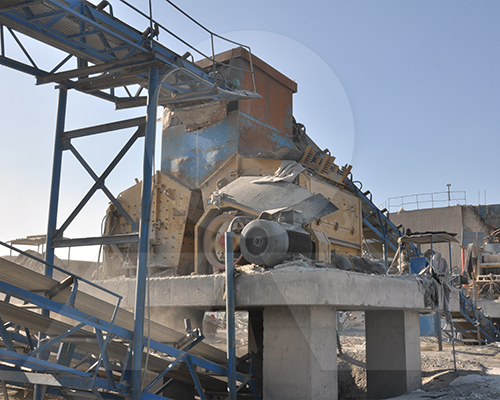
A job description's requirements often contain coded technical benchmarks. Interpreting these correctly is crucial.
| Term / Phrase in Vacancy | Technical Translation & What to Highlight |
|---|---|
| "Experience with high-tonnage processing" | Direct involvement with circuits rated for 1,500+ TPH (Tonnes Per Hour). Mention specific equipment (e.g., SAG mills, cone crusher models) you have operated or optimized. |
| "Optimize plant availability" | Proven use of reliability-centered maintenance (RCM) principles, vibration analysis (ISO 10816), and strategic spares management to achieve >90% plant availability. |
| "Manage refractory ore bodies" | Experience with specific pre-treatment or alternative lixiviant processes (e.g., bio-oxidation, pressure oxidation) for sulphide or telluride ores. |
| "Ensure compliance" | Working application of MHSA regulations, ISO 14001 environmental standards, and CE-marked equipment directives in a South African context. |
Strategic Application Approach
Tailor your application to reflect these technicalities. Replace generic statements with quantified, material-specific achievements. For example, instead of "improved crusher throughput," specify "Increased cone crusher throughput by 15% through liner profile optimization and CSS adjustment for an ore with UCS of 250 MPa." This demonstrates a concrete, transferable skill.
The confidence to navigate this market comes from speaking its inherent engineering language. By foregrounding this technical acumen, you position yourself not just as a candidate, but as a direct contributor to operational integrity and productivity.
Why Our Platform Delivers Superior Mining Career Opportunities
Our platform is engineered for the technical professional. We move beyond generic job listings to provide a curated interface between qualified candidates and operations where specific engineering competencies directly impact plant throughput and asset integrity.
Technical Recruitment Precision
We mandate that client companies provide detailed technical specifications for each role. This ensures you can match your expertise against the actual material and mechanical demands of the position.
- Material & Metallurgical Focus: Vacancies specify wear material requirements—whether for crusher liners, mill components, or slurry pumps. You will see calls for expertise in managing Hadfield Mn-steel (11-14% Mn) for impact resistance, or knowledge of ASTM A532 Class III Type Ni-Cr alloys for abrasion-dominated environments.
- Equipment & Process Parameters: Listings detail the equipment you will be responsible for, including critical performance metrics. This includes mill dimensions (SAG/Ball), crusher chamber configurations, conveyor belt specifications (PIW rating, cover grade), and target throughput (TPH) for the circuit.
- Ore Body & Geotechnical Context: We include the ore characteristics relevant to the role, such as abrasion index (Ai), Bond Work Index (BWi), and silica content. Understanding whether you will be processing a soft, clay-rich ore or a hard, abrasive conglomerate is fundamental to role suitability.
- Standards & Compliance Rigor: Positions requiring design, inspection, or procurement will explicitly mention the governing standards. This includes ISO 9001 for quality management, ISO 14001 for environmental systems, CE marking for equipment, and specific application standards like ISO 21873 for mobile crushers or SANS/ISO for structural steelwork.
Operational Intelligence for Candidates
We provide the operational context that defines career impact. The following table contrasts the level of detail we surface versus a standard job board.
| Parameter | Standard Job Listing | Our Platform's Detail |
|---|---|---|
| Plant Role Scope | "Manage processing plant." | "Optimize secondary crushing circuit (2 x Cone Crushers, 750kW each) to achieve 2,500 TPH of -50mm product from UG2 ore." |
| Maintenance Focus | "Oversee maintenance team." | "Lead mechanical integrity program for flotation cell banks (160m³ cells), focusing on impeller wear life and shaft alignment to ISO 1940-1 G6.3 balance standards." |
| Project Objective | "Lead capital projects." | "Execute tailings thickener upgrade project: specification and commissioning of 45m diameter high-rate thickener to increase underflow density to 68% w/w solids." |
Industry-Specific Advantages
- Direct Interface with Technical Management: Our process facilitates direct engagement with hiring managers from engineering, processing, and maintenance departments, bypassing generalized HR filters.
- Vacancies Sourced from Operational Critical Paths: Roles are identified from actual operational bottlenecks, expansion projects (BFS/DFS stages), and asset lifecycle plans, ensuring positions are mission-critical and offer clear scope for impact.
- Focus on Longevity & Specialization: We prioritize opportunities from operations investing in technical career paths, continuous improvement (Kaizen/Lean Six Sigma), and advanced condition monitoring (vibration analysis, thermography), supporting sustained professional development.
Access Real-Time Vacancies Tailored to Your Mining Expertise
Our platform's vacancy-matching algorithm is engineered to parse the technical specifications of a role, aligning them with your documented expertise in material science and operational parameters. This ensures you are notified only of positions where your technical proficiency is a direct match for the operational challenge.
Core Technical Matching Parameters:
- Material & Wear Expertise: Roles are indexed by required knowledge in wear-resistant materials, such as specific manganese steel (Mn13, Mn18) grades for liners, or chromium-molybdenum alloys for grinding media. Your profile's material science keywords trigger precise matches.
- Equipment & Process Specifications: Vacancies are tagged with equipment-centric data: mill TPH (tonnes per hour) capacity, crusher feed sizes, conveyor belt specifications (PIW, cover grades), and target particle size distributions for processing plants.
- Geological & Ore Body Alignment: The system cross-references your experience with ore hardness (Bond Work Index, UCS), abrasiveness (AI, Cerchar Index), and mineralogy (e.g., sulfide vs. oxide processing) to connect you with relevant projects.
- Standards & Certification Requirements: Mandatory certifications (e.g., GCC Mines & Works, ISO 9001/45001 auditing) and adherence to technical standards (SANS, ISO, CE marking for equipment) are primary filters in the matching logic.
Technical Specification Table for Matched Vacancies:
| Parameter Category | Specific Data Points Exposed in Listing |
|---|---|
| Plant & Equipment | Primary Crusher Type & Gap Setting (mm), SAG/Ball Mill Dimensions & Drive Power, Flotation Cell Volume (m³), Screen Deck Aperture & Mesh Type. |
| Process Metrics | Design TPH, Target Recovery Rate (%), Product Grade Specification, Tailings Density (sg), Water Recycling Capacity. |
| Maintenance Focus | Planned Maintenance Schedule adherence (%), Mean Time Between Failure (MTBF) targets, OEM vs. aftermarket component specifications. |
| Project Context | Mine Lifecycle Stage (Greenfield, Expansion, Care & Maintenance), Reserve Grade, Overburden Characteristics, Planned Annual Tonnage. |
This granular approach moves beyond job titles. It functions as a technical sieve, ensuring your background in managing a 500 TPH carbon-in-leach circuit or specifying ISO 21873-compliant mobile crushers is matched with the vacancy that explicitly requires it. The system provides the technical context, allowing you to assess fit based on engineering fundamentals before application.
Streamline Your Application with Advanced Matching Technology
Our proprietary matching engine analyzes your technical profile against vacancy requirements with a precision that standard keyword filters cannot achieve. It evaluates the alignment of your documented expertise with the specific material and operational demands of each role.
Core Technical Evaluation Parameters:
- Material & Metallurgy Specifications: Cross-references your experience with equipment and component grades, such as wear-resistant Mn-steel liners (e.g., Hadfield Grade), high-strength alloy steels for ground support, or specific abrasion-resistant plate certifications.
- Process & Compliance Standards: Matches your proficiency with relevant technical standards (ISO 9001, ISO 14001, CE marking for equipment) and mine-specific safety protocols (MOSH, OHSAS 18001).
- Operational Parameters: Correlates your hands-on experience with critical plant metrics, including throughput (TPH) capacities for crushing and milling circuits, ore hardness (BWI, Ai), and recovery rates for processing roles.
| Matching Dimension | Technical Criteria Example | Application Impact |
|---|---|---|
| Equipment Proficiency | Crusher models (e.g., Jaw CJ615, Cone CH860), LHD capacity (e.g., 10-ton), drill rig type (e.g., rotary, DTH). | Validates operational familiarity with the specific machinery listed in the vacancy. |
| Process Knowledge | Comminution circuits, bulk material handling systems, paste fill plant operation, tailings management. | Assesses fit for process control, maintenance, or plant superintendent positions. |
| Material Science Application | Knowledge of polymer-based screen panels, tungsten carbide hardfacing, or high-alumina ceramic linings for specific abrasion zones. | Identifies candidates with specialized knowledge for maintenance, procurement, or engineering roles. |
The algorithm prioritizes roles where your technical skill set shows a high-probability fit, reducing application scatter and increasing the relevance of each submission. This targeted approach ensures your credentials are reviewed for positions that genuinely match your capabilities.
Trusted by Mining Professionals: Our Verification and Support Process
Our verification process begins with a technical audit of each vacancy. We validate the operational and engineering specifications provided by the client against industry benchmarks to ensure role requirements are accurate and materially complete.
Technical Vacancy Verification Protocol:
- Equipment & Material Specifications: We confirm the machinery and material grades cited (e.g., Komatsu 930E haul trucks, Sandvik DD422i jumbos, specific wear-resistant Mn-steel alloy plates for liners). Vague references to "heavy machinery" are escalated for precise clarification.
- Process & Capacity Parameters: Listings for plant roles require verified throughput (TPH), circuit type (e.g., SAG mill ball mill configuration), and ore characteristics (hardness/abrasiveness index). Operational targets must be grounded in feasible metallurgical recovery rates.
- Compliance & Standards: Mandatory certifications (ISO 9001, ISO 45001, CE marking for equipment) and non-negotiable statutory requirements (DMRE tickets, GCC certification) are identified and explicitly stated.
- Site Condition Realism: We assess the alignment between the stated experience requirements and the actual site conditions, such as deep-level seismic risks, high ambient temperatures, or specific metallurgical processing challenges like refractory ore.
Candidate Support & Technical Alignment:
Our consultants, with direct industry operational experience, provide pre-application support focused on technical alignment.
| Support Focus Area | Specific Action & Deliverable |
|---|---|
| CV Technical Review | Highlighting quantifiable achievements (e.g., "improved crusher availability by 8%," "managed ROM pad operations for 80k TPM") and ensuring correct terminology for plant processes, equipment models, and safety protocols. |
| Role-Specific Briefing | Providing context on the operation's known technical challenges, dominant ore body, and primary equipment fleet to enable informed candidate questions and demonstrate operational awareness. |
| Specification Clarification | Acting as an intermediary to obtain precise answers from the client on technical ambiguities in the job description before application submission. |
This rigorous, engineering-led methodology ensures that every vacancy listed is a substantiated, executable role, and that each candidate's application is technically precise and contextually informed.
Take the Next Step: Apply to High-Value Mining Positions Today
To secure a high-value position, your application must demonstrate a command of the operational and material science parameters that define modern mining efficiency. Hiring managers prioritize candidates who articulate their experience through quantifiable technical specifications and adherence to international standards.
Technical Application Focus Areas:
- Comminution & Material Wear: Detail your experience with equipment selection and performance based on ore characteristics (e.g., Bond Work Index, abrasion index). Specify familiarity with wear-resistant materials such as high-chrome white iron for slurry applications or ASTM A514 Mn-steel for impact crushing.
- Process Plant Optimization: Highlight direct involvement with throughput (TPH) increases, recovery rate improvements, or tailings density management. Reference specific circuits (e.g., flotation, DMS, leaching) and control systems.
- Mechanical Integrity & Standards: Cite hands-on application of inspection and maintenance protocols aligned with ISO 9001 (Quality), ISO 45001 (Safety), and relevant CE or SANS standards for equipment certification.
- Geotechnical & Ground Support: For engineering roles, specify design experience with ground support systems, including bolt types (e.g., resin-grouted, friction-lock) and mesh tensile strength, tailored to rock mass rating (RMR) classifications.
Position-Specific Parameter Table:
When applying, anchor your expertise with data. Use the following framework to structure your achievements:
| Role Category | Key Technical Parameters to Quantify | Relevant Material/Standard Reference |
|---|---|---|
| Plant/Process Engineer | Throughput (TPH), recovery yield (%), pump specs (head, flow), P&ID development, tailings density (sg). | ISO 9001, ASTM A532 for abrasion-resistant alloys, slurry pipeline wear rates. |
| Maintenance Superintendent | Mean Time Between Failures (MTBF), component life (hours), rebuild standards, non-destructive testing (NDT) methods. | ISO 55001 (Asset Management), OEM tolerances, welding procedures (AWS D1.1). |
| Mine Planning Engineer | Reserve grade (g/t, %), strip ratio, equipment utilization (%), drill & blast pattern design. | JORC/SAMREC codes, fleet management system data, hydraulic shovel dipper capacity (yd³). |
| Section 54 & 55 Appointments | Legal liability management, risk assessment (MHI), incident frequency rates (LTIFR), compliance audit trails. | Mine Health & Safety Act (Act 29 of 1996), ISO 45001, mandatory code of practice adherence. |
Proceed to apply only to vacancies where your documented expertise aligns with the core technical demands. Prepare to discuss your career narrative through the lens of these parameters, providing concrete examples of problem-solving, specification adherence, and measurable contributions to plant availability or resource efficiency.
Frequently Asked Questions
How do I optimize wear parts replacement cycles in high-abrasion mining environments?
Use high-manganese steel (e.g., Hadfield Grade 1) liners with water-quenching heat treatment. Implement predictive maintenance via laser scanning for liner thickness. Synchronize replacements with planned shutdowns to minimize downtime. Properly torqued, grade 10.9 bolts are critical to prevent premature failure.
What machinery adjustments are needed for varying ore hardness (Mohs 5-8)?
For harder ores (Mohs 7-8), increase hydraulic pressure on crushers by 10-15% and reduce the closed-side setting. Fit tungsten carbide-tipped drill bits. For softer ores, prioritize feed rate and adjust crusher cavity profiles to prevent packing. Always verify motor amp draw stays within 95% of FLA.
How is excessive vibration controlled in large rotary equipment like ball mills?
Conduct laser shaft alignment to within 0.05mm tolerance. Dynamically balance the mill shell and charge. Inspect and replace spherical roller bearings (prefer SKF or FAG) at first sign of increased vibration frequency (≥12 mm/s RMS). Ensure foundation grouting is intact and torque anchor bolts to spec.
What are critical lubrication protocols for heavy-duty mining excavators and haul trucks?
Use only OEM-specified synthetic greases and oils. For swing circle bearings, apply high-pressure lithium complex grease weekly via centralized systems. Monitor oil spectrography for ferrous wear particles >15 ppm. Maintain hydraulic oil temperature below 82°C with clean, dry air breathers on reservoirs.
How do I ensure hydraulic system reliability in extreme temperature fluctuations?
Implement ISO 4406 18/16/13 cleanliness code with desiccant breathers and offline filtration. Use high VI (Viscosity Index) hydraulic oil (e.g., ISO VG 46). Adjust system pressure compensators seasonally and insulate lines. Regularly test accumulator pre-charge pressure to maintain within 90% of nominal.
What is the best practice for conveyor belt splice maintenance in high-tonnage operations?
Use only certified, hot-vulcanized splices with RMA Grade M-24/N rubber. Ensure splice angle is precisely 22°. Monitor for cord exposure and track misalignment. Keep splice area clean and inspect tensioning idlers weekly; replace lagging when wear exceeds 3mm.