Antimony mining relies on a relatively compact but specialized set of equipment, largely determined by the ore type (sulfide, oxide, or complex) and the mining method (underground vs. open-pit). In practice, the majority of global antimony comes from underground operations in China, Russia, and Tajikistan, so the equipment list skews heavily toward that method. The core stages—drilling, blasting, loading, hauling, crushing, grinding, flotation, and smelting—use standard hard-rock machinery, but the unique metallurgy of stibnite (Sb₂S₃) and the toxicity of antimony dust impose specific choices in ventilation, dust collection, and gravity separation that are not common in base-metal mines.
Underground extraction equipment. For narrow-vein deposits (the typical geometry for antimony), handheld or jumbo drills are used for blast-hole drilling. Pneumatic jackleg drills (e.g., Atlas Copco BBC series or equivalent) remain common in small-to-medium mines because they are cheap, easy to maintain, and fit in 1.5–2.5 m wide stopes. In larger operations, single-boom hydraulic drill jigs (e.g., Sandvik DD311) are used for development drifts. Blasting uses ammonium nitrate/fuel oil (ANFO) or emulsion explosives, initiated with electronic or non-electric detonators. After blasting, mucking is done with electric or diesel LHDs (load-haul-dump units) in the 1–3 yd³ class (e.g., Caterpillar R1300G or Eimco 911). Ore is then hauled to the shaft or ramp via underground trucks (e.g., 10–20 t class, such as Sandvik TH430) or, in older mines, via rail-mounted Granby cars. For hoisting, a typical skip hoist with a Koepe or drum winder is used; the headframe and hoist are standard steel or concrete structures, not antimony-specific.
Crushing and grinding. Run-of-mine ore (typically 200–400 mm) is reduced in a primary jaw crusher (e.g., Metso C80 or equivalent) to about 100–150 mm, followed by a secondary cone crusher (e.g., Symons 4¼ ft or HP200) to 20–30 mm. Grinding is usually done in a ball mill (e.g., 2.4 m × 3.6 m) in closed circuit with a hydrocyclone, producing a flotation feed of 65–75% passing 75 µm. Some operations with coarse-grained stibnite use a rod mill instead of a ball mill to minimize over-grinding, because stibnite is soft and brittle, and slimes (fine particles) are difficult to float. The grinding circuit is standard, but the mill liners and media are chosen to avoid iron contamination, which can depress antimony flotation.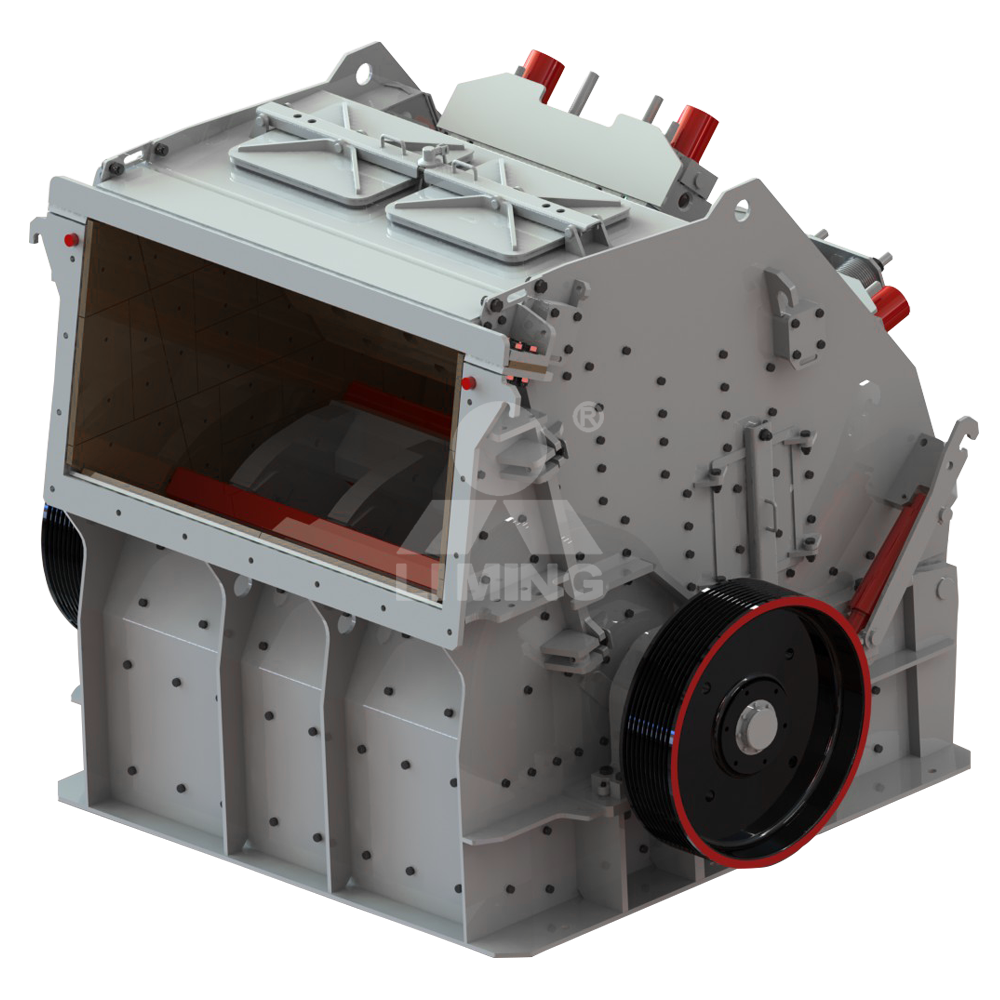
Gravity concentration (pre-concentration). Because stibnite has a high specific gravity (4.6) and is often coarsely intergrown, many mines install a gravity circuit before flotation. This typically includes a jig (e.g., Denver or IHC jig) for the 5–20 mm fraction and a shaking table (e.g., Wilfley 800) for the 0.5–5 mm fraction. In Chinese operations, a spiral classifier or a dense media cyclone (using ferrosilicon as the medium) is sometimes used for pre-concentration, rejecting 30–50% of the waste rock before grinding. This is a key economic step because antimony ore grades are often low (1–3% Sb), and gravity pre-concentration reduces downstream energy and reagent costs.
Flotation equipment. The flotation circuit is the heart of antimony recovery for sulfide ores. Standard mechanical flotation cells (e.g., Denver DR, Outotec OK, or Xinhai SF) are used, arranged in rougher, scavenger, and cleaner banks. Cell sizes range from 4 m³ to 30 m³ depending on throughput. The key reagents are lead nitrate (activator), sodium ethyl xanthate or butyl xanthate (collector), and pine oil or MIBC (frother). The pH is typically maintained at 6–7 with sodium carbonate. For oxide ores (cervantite, valentinite), flotation is much harder and often requires sulfidization with sodium sulfide (Na₂S) before xanthate addition. In some plants, a flotation column (e.g., Jameson or Microcel) is used for the cleaning stage to improve grade, but mechanical cells dominate. The flotation concentrate typically grades 30–50% Sb and is then dewatered in a thickener and a vacuum drum filter or plate-and-frame filter press..jpg)
Smelting and refining equipment. The concentrate is smelted in a reverberatory furnace, a blast furnace, or a rotary kiln, depending on the scale and the ore type. For high-grade sulfide concentrates (>30% Sb), a reverberatory furnace with a volatilization–condensation system is standard. The furnace is heated by coal or gas, and the stibnite decomposes to Sb₂O₃ vapor, which is then condensed in a series of cooling pipes and baghouse filters to produce crude antimony trioxide. For lower-grade material or oxide ores, a blast furnace with a shaft charge (concentrate, coke, and iron scrap) is used; the iron reacts with sulfur to form a matte, and metallic antimony is tapped from the bottom. The crude metal (about 95–98% Sb) is then refined in a reverberatory or induction furnace with a sodium nitrate–sodium carbonate flux to remove arsenic, lead, and iron. The final product is cast into 25 kg ingots using a casting machine. Off-gas treatment is mandatory: a baghouse with a PTFE membrane filter and a wet scrubber (using caustic soda) captures SO₂ and antimony dust, which is recycled to the furnace.
Ventilation and dust control (critical). Antimony and its compounds are toxic (ACGIH TLV: 0.5 mg/m³ for Sb), so underground mines use forced-air ventilation with axial fans (e.g., 30–60 m³/s capacity) and auxiliary fans with vent bags for dead-end headings. Dust suppression at crushers, screens, and transfer points uses water sprays with a surfactant. In the mill, all dust-generating points (crusher discharge, mill feed, flotation reagent mixing) are connected to a dry dust collector (e.g., a pulse-jet baghouse) or a wet scrubber. Personal protective equipment (PAPR respirators) is standard for workers in the smelter area.
Support and auxiliary equipment. This includes a compressed air system (screw or reciprocating compressors, 7–10 bar) for drills and pneumatic tools, a mine dewatering system (submersible pumps and settling tanks), a workshop with a lathe and welding equipment for maintenance, and a small assay laboratory with an XRF analyzer or atomic absorption spectrometer for grade control. For open-pit operations (rare, but present in Bolivia and South Africa), the equipment is conventional: hydraulic excavators (e.g., 30–50 t class), rigid dump trucks (e.g., 40–60 t class), and a wheel loader for stockpile management.
In summary, no single piece of equipment is unique to antimony mining, but the combination of gravity pre-concentration, a carefully controlled flotation circuit with lead nitrate activation, and a volatilization–condensation smelting system defines the antimony flowsheet. The equipment is standard hard-rock machinery, but the process design and the dust/ventilation engineering are what make antimony mining distinct.