Quarry and mining engineering in Bendigo, Australia, is a mature but niche sector defined by its historical hard-rock gold legacy and its current focus on extractive materials for construction and infrastructure. The region’s engineering practice is not centered on large-scale open-pit metalliferous mining, but rather on the operational management of hard-rock quarries (granite, bluestone) and the remediation of historical deep-lease gold workings. The professional demand is stable, driven by state-level infrastructure spending (e.g., Big Build projects) and local council road maintenance, rather than by speculative mineral exploration. Consequently, engineering roles here emphasize geotechnical stability, blast management, and environmental compliance over resource estimation or metallurgy.
The engineering workforce in Bendigo is anchored by a small number of established firms and government bodies. Key employers include the City of Greater Bendigo (for quarry licensing and pit rehabilitation), VicRoads/Department of Transport (for aggregate supply contracts), and private operators like Holcim or Boral, which run hard-rock quarries within a 50km radius of the city. Unlike Perth or the Hunter Valley, there is no fly-in-fly-out culture; engineers typically reside locally. The Bendigo TAFE and La Trobe University’s Bendigo campus supply a pipeline of civil and mining graduates, but senior roles are often filled by professionals relocating from Melbourne (a 90-minute commute) or from the now-dormant gold mines in Stawell or Ballarat.
A defining technical challenge in this region is the interaction between active quarrying and historical underground workings. The Bendigo goldfield (1850s–1910s) left a network of thousands of shallow shafts and deep mine voids beneath the urban and peri-urban areas. Modern quarry engineers must conduct pre-blast risk assessments using historical mine plans held by the Geological Survey of Victoria, and in some cases, grout or backfill old workings before blasting to prevent subsidence. This is a specialized skill not required in most Australian quarry operations. For example, the Strathfieldsaye quarry expansion project (2019–2021) required a detailed void-mapping program using borehole cameras and ground-penetrating radar, a process documented in the Victorian Extractive Industry Rehabilitation reports.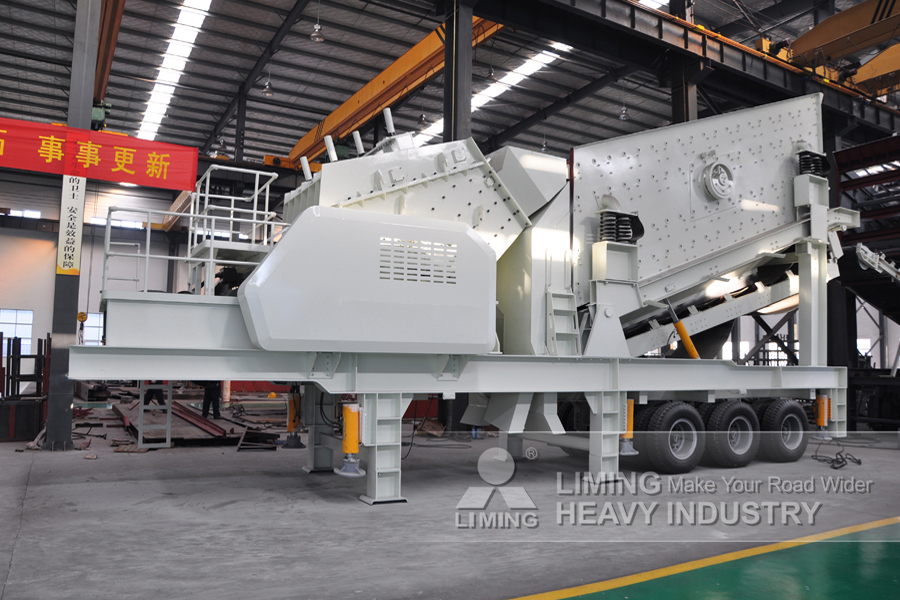
Regulatory pressure is the single largest driver of day-to-day engineering work. The Extractive Industries (Rehabilitation) Act 1991 (Vic) mandates that all quarries have a five-year rehabilitation plan, and the local authority (City of Greater Bendigo) enforces strict dust and vibration limits due to residential encroachment. Engineers spend a significant portion of their time on noise monitoring (using real-time blast seismographs), water management (sediment ponds), and progressive rehabilitation—re-shaping pit walls and re-vegetating with native species. A notable case is the closure and rehabilitation of the old Eaglehawk quarry (2022), where engineers had to stabilize a 40m high face adjacent to a primary school, requiring a combination of rock bolting and mesh drapery.
The economic outlook for this sector is moderate but not stagnant. The Victorian government’s $90 billion infrastructure pipeline (2024–2030) guarantees demand for hard rock aggregate, particularly for the North East Link and suburban rail loop projects, which source materials from central Victorian quarries. However, the local industry faces two structural constraints: (1) a shortage of experienced drill-and-blast engineers, as most graduates prefer FIFO roles in Western Australia; and (2) increasing community opposition to new quarry permits, forcing companies to optimize existing sites rather than open new ones. This means the engineering work is shifting toward higher-yield extraction methods (e.g., vertical crater retreat in hard rock) and mobile crushing plants to reduce haulage distances..jpg)
In summary, a quarry and mining engineer in Bendigo is less a miner and more a geotechnical risk manager and environmental compliance officer. The work is technically demanding but geographically stable, with a clear career path in local government or mid-tier extractive companies. The key professional skills are not in resource estimation or mine planning software (like Vulcan or Surpac), but in slope stability analysis (Rocscience), blast vibration control, and Victorian environmental law. For an engineer seeking a lifestyle-oriented career with predictable hours and a direct impact on local infrastructure, Bendigo offers a viable, if unglamorous, niche. For those seeking high-reward mineral exploration or large-scale open-pit operations, it is the wrong location.