In the dynamic world of mineral processing, acquiring reliable equipment without the premium of a new price tag is a strategic advantage for many operations. Used gold crushers represent a compelling entry point and a savvy capital investment for projects ranging from small-scale artisanal mining to larger, budget-conscious ventures. These pre-owned machines—including robust jaw crushers, efficient cone crushers, and versatile impactors—offer the essential first step in liberating precious metal from ore. While due diligence regarding maintenance history and wear is paramount, a well-vetted used crusher can deliver exceptional value and performance. This guide explores the key considerations, potential benefits, and practical insights for navigating the market of used crushing equipment, empowering you to make an informed decision that strengthens your operation's foundation and bolsters its bottom line.
Maximize Your Gold Recovery with Proven, Cost-Effective Machinery
Recovering gold from ore is a process governed by material science and mechanical efficiency. The primary function of a crusher in this circuit is to liberate gold particles from host rock through size reduction, creating optimal surface area for downstream processes like gravity separation or leaching. The cost-effectiveness of a used machine is not defined by its initial price alone, but by its remaining service life, wear part economics, and sustained throughput.
Core Technical Considerations for Used Gold Crushers
- Wear Part Metallurgy: The abrasiveness of gold-bearing quartz veins demands specific alloys. Look for crushers fitted with, or capable of accepting, high-grade manganese steel (Mn14, Mn18) liners and jaws. These alloys work-harden under impact, developing a hardened surface layer that resists abrasion while maintaining a tough, shock-absorbing core. Inferior steel will rapidly degrade, altering crusher geometry and causing a catastrophic drop in efficiency and product gradation.
- Capacity & Circuit Integration: Throughput (TPH) must align with your overall plant feed rate. A mismatched crusher creates a bottleneck or inefficient energy use. Jaw crushers serve as robust primary units, handling large feed (up to 750mm) and producing a coarse product for secondary crushing. Cone crushers are precision secondary/tertiary machines, providing a consistent, cubical product essential for high gold recovery in gravity circuits.
- Design for Maintenance: Proven designs from established OEMs prioritize serviceability. Hydraulic adjustment systems (for setting CSS) and tramp release chambers protect the machine from uncrushables and allow quick clearing of blockages, minimizing downtime. A simple, accessible design for liner changes is critical for operational cost control.
- Verified Condition & Documentation: The value of a used crusher is in its documented history. Prioritize units with available service records. Key inspection points include the integrity of the main frame (check for cracks or welds), the condition of the shaft and bearings, and the remaining life in wear parts. Certification to international standards (ISO, CE) on the manufacturer's plate indicates original design integrity.
Functional Advantages of Proven Used Machinery
- Immediate Deployment: Eliminates the lead time associated with new equipment manufacturing and shipping.
- Depreciation Advantage: The steepest depreciation curve has passed, offering a superior capital cost-to-performance ratio.
- Proven Performance: In-service history in comparable applications (hard rock, alluvial) validates the machine's reliability and output specifications.
- Parts & Knowledge Availability: Equipment from major manufacturers ensures ongoing access to wear parts, rebuild kits, and industry-wide operational expertise.
Technical Parameters: Primary vs. Secondary Crushers
The selection between crusher types is fundamental to circuit design.
| Parameter | Jaw Crusher (Primary) | Cone Crusher (Secondary/Tertiary) |
|---|---|---|
| Primary Function | Coarse size reduction, run-of-mine ore. | Precision crushing, producing fine, uniform feed for recovery units. |
| Typical Feed Size | Up to 750mm (dependent on model). | Up to 250mm (dependent on model). |
| Product Size (CSS) | 100mm - 250mm. | 10mm - 40mm. |
| Key Wear Parts | Fixed & movable jaw dies, cheek plates. | Mantle, concave liners, bowl liner. |
| Operational Strength | High robustness, handles variable feed. | Excellent particle shape control, high efficiency in closed-circuit. |
Final Engineering Assessment: A strategic used equipment purchase requires a forensic evaluation of the machine's condition against the specific demands of your ore body (hardness, abrasion index, moisture content). The optimal used gold crusher delivers predictable, sustained throughput with controlled operational costs, directly maximizing the efficiency and profitability of your recovery process.
How Our Refurbished Crushers Deliver Unmatched Efficiency in Ore Processing
Refurbished crushers achieve operational parity with new units through a rigorous, engineering-led process. The core value proposition is not merely cost savings, but the delivery of a machine with proven reliability and performance specifications validated under actual load. Our refurbishment protocol systematically addresses wear, metallurgy, and system integration to ensure unmatched efficiency in gold ore processing circuits.
Core Engineering & Material Science Protocol
Every crusher undergoes complete disassembly for foundational assessment. Critical wear components—mantles, concaves, jaw dies, and liners—are evaluated against original equipment manufacturer (OEM) dimensional tolerances. Worn components are not simply replaced; they are upgraded based on a forensic analysis of the previously processed ore's abrasion index and silica content.
- Metallurgical Upgrades: Standard manganese steel (Mn14, Mn18) is often superseded by premium grades (Mn22, T-400) or application-specific alloys for enhanced work-hardening capability and impact resistance. This extends service life in highly abrasive gold ores, particularly in quartz-rich deposits.
- Bearing & Drive System Rebuild: Main shaft bearings are replaced with certified, high-capacity units. Gears are inspected via magnetic particle testing. Drive alignment is recalibrated to OEM specifications to eliminate parasitic power loss and prevent premature failure.
- Hydraulic & Adjustment System Overhaul: Hydraulic cylinders are re-sleeved, and seals are replaced with high-temperature compounds. The clamping and adjustment systems are rebuilt to ensure rapid, precise CSS (Closed Side Setting) changes for consistent product gradation.
Performance Validation & Mining-Specific Calibration
Post-refurbishment, performance is not assumed; it is quantified. Each machine is test-run and its output analyzed against key mining metrics.
| Performance Parameter | Validation Method | Operational Impact |
|---|---|---|
| Throughput (TPH) | Load simulation & power draw analysis. | Guaranteed throughput within 5% of OEM-rated capacity for specified ore density (typically 1.6 t/m³ for gold ore). |
| Product Size Distribution | Sieve analysis of crushed material from test run. | Ensures optimal P80 for downstream grinding circuit efficiency, maximizing gold liberation. |
| Power Efficiency (kWh/t) | Measurement of installed power vs. achieved throughput. | Directly impacts operating cost; rebuilt drives and proper alignment restore original efficiency. |
| Adaptability to Ore Hardness | Component selection based on UCS (Uniaxial Compressive Strength) data. | Crusher configuration—from liner profile to shaft speed—is tailored for competent ore or sticky, clay-bound material. |
Functional Advantages in the Processing Plant
- Reduced Capital Lock-Up: Achieve the required tonnage capacity and reliability at 40-60% of the capital expenditure (CAPEX) of a new equivalent, improving project ROI.
- Predictable Maintenance Scheduling: With all major wear components and assemblies renewed to a known baseline, maintenance intervals become predictable, reducing unplanned downtime.
- Certified Safety & Compliance: Full structural integrity check and replacement of all safety-critical systems (guards, interlocks, relief valves). Machines are supplied with documentation confirming compliance with relevant ISO and CE standards for machinery safety.
- Rapid Deployment: Bypass lead times for new equipment. A fully refurbished and tested crusher can be shipped and integrated into your existing flow sheet within weeks, not months.
The outcome is a capital asset with a renewed service life, delivering specific, measurable efficiency through restored mechanical integrity, upgraded wear materials, and performance-guaranteed throughput for gold ore processing.
Engineered for Extreme Loads: The Structural Integrity of Our Used Gold Crushers
The structural integrity of a used crusher is the primary determinant of its remaining service life and operational safety. Our procurement and reconditioning protocols are engineered to select and restore machines capable of withstanding the extreme cyclical loading and abrasive wear inherent in gold ore processing. This is achieved through a forensic evaluation of core components against original design specifications and current material standards.
Core Component Material Specification & Analysis
The crushing chamber's integrity is non-negotiable. We prioritize crushers originally built with high-grade materials, with all critical wear parts undergoing ultrasonic thickness testing and hardness verification.
- Jaw Crusher Liners / Cone Crusher Mantles & Concaves: Sourced from units utilizing high manganese steel (Mn14, Mn18, or Mn22) or martensitic alloy steels. The work-hardening property of Mn-steel is critical; its surface hardness increases under impact, creating a wear-resistant facade over a tough, shock-absorbing core.
- Main Frame & Eccentric Assembly: Frames are inspected for stress fractures and deformation. High-strength, welded steel construction (minimum yield strength of 355 MPa) is standard. Eccentric bushes and shafts are measured for wear and must conform to OEM dimensional tolerances to prevent premature failure and catastrophic bearing seizure.
- Bearings & Seals: Oversized, spherical roller bearings designed for heavy radial and axial loads are mandatory. We replace all seals with OEM-specified, labyrinth-style seals to ensure contamination exclusion, which is the leading cause of bearing failure in dusty environments.
Reconditioning to Certified Standards
Every crusher in our inventory undergoes a structured reconditioning process aligned with international mechanical integrity standards.
- Non-Destructive Testing (NDT): Critical weldments on the frame and swing jaw are subjected to magnetic particle or dye penetrant inspection to reveal subsurface flaws.
- Dimensional Restoration: Worn bearing seats are built up via metal spraying and machined back to original equipment manufacturer (OEM) specifications. All mating surfaces are verified for alignment.
- Load & Performance Validation: Post-rebuild, crushers are test-run under no-load and load conditions. Key metrics like eccentric speed, hydraulic pressure (where applicable), and vibration amplitude are recorded and must fall within strict OEM-defined parameters.
Functional Advantages for Gold Mining Operations
- Adaptability to Ore Variability: Robust construction allows for processing of heterogeneous gold ore, from hard, abrasive quartzites to softer, clay-bound conglomerates, without structural compromise.
- Sustained Throughput (TPH): Structural soundness ensures the crusher maintains its designed ton-per-hour capacity. A compromised frame or worn eccentric will cause power draw fluctuations and output degradation.
- Reduced Unplanned Downtime: A foundation of verified integrity prevents catastrophic failures. This transforms maintenance from reactive to predictive, centered on planned liner changes rather than emergency repairs.
- Safety by Design: A structurally sound machine eliminates the risk of component fatigue failure, protecting personnel and downstream equipment.
Technical Parameters: Structural Benchmarks
The following table outlines the minimum material and performance benchmarks verified during our technical audit for a selection of crusher types.
| Crusher Type | Key Structural Component | Minimum Material Grade / Standard | Critical Inspection Metric |
|---|---|---|---|
| Jaw Crusher | Frame & Pitman | ISO 683-1:2016 (Alloy Steel) | Frame squareness (< 1mm/m), Pitman bearing bore diameter (OEM ±0.05mm) |
| Cone Crusher | Main Shaft & Eccentric | Forged 34CrNiMo6 / AISI 4340 | Shaft straightness (< 0.02mm TIR), Eccentric wear pad thickness (min. 70% of new) |
| Gyratory Crusher | Main Shaft & Spider Assembly | ASTM A148 Grade 90-60 (Cast Steel) | Spider bushing clearance (OEM +10% max), Top shell sealing surface integrity |
| All Types | Crushing Liners | ASTM A128 Gr. B3/B4 (High Mn-Steel) | Hardness profile (200-250 HB core, 450-550 HB work-hardened surface) |
Final operational integrity is confirmed through a documented test run, producing a certificate of compliance that details the machine's verified condition against these engineered standards.
Technical Specifications: Precision Components for Optimal Crushing Performance
The operational integrity and longevity of a used gold crusher are determined by the specifications of its core components. These components must withstand extreme abrasion, high-impact forces, and the variable hardness of gold-bearing ores, from weathered oxides to dense sulphide deposits.
Core Component Specifications & Materials
| Component | Primary Material Specification | Critical Technical Attribute | Functional Impact |
|---|---|---|---|
| Jaw Crusher Plates | High-grade Manganese Steel (Mn14, Mn18, Mn22) | Austenitic microstructure work-hardens under impact, increasing surface hardness from ~200 HB to 500+ HB. | Provides exceptional wear life in high-impact, abrasive primary crushing; self-repairing wear surface. |
| Cone Crusher Mantle & Concave | Manganese Steel Alloys (Standard, Hi-Chrome, Martensitic) | Alloy selection balances toughness and abrasion resistance. Hi-Chrome alloys excel in fine, abrasive secondary/tertiary crushing. | Directly controls product size distribution, crusher efficiency (TPH), and liner change-out frequency. |
| Impact Crusher Blow Bars | Composite Metallurgy (High Chrome Cast Iron, Ceramic Inserts) | Chrome content (18-26%) provides hardness; martensitic matrix provides fracture resistance. | Defines capability for high-velocity impact crushing of semi-abrasive ores; key to product shape and reduction ratio. |
| Shafts & Bearings | Forged Alloy Steel (e.g., 4140); Spherical Roller Bearings | ISO 199/ABMA standards; Dynamic load rating (C, C0) calculated for shock loads. | Ensures structural stability under variable load, prevents catastrophic failure, and maintains precise component alignment. |
| Frame & Structure | Fabricated Mild Steel with Reinforced Sections | CE marked designs indicate verified structural integrity under rated load conditions. | Provides the foundational rigidity necessary for maintaining critical crushing chamber geometries and safe operation. |
Functional Advantages of Precision Engineering
- Adaptive Crushing Chamber Geometry: Precisely cast mantles, concaves, and jaw plates maintain designed nip angles and crushing cavities, ensuring consistent throughput (TPH) and product size control, even as components wear.
- Optimized Power Transmission: Machined shaft journals and high-capacity bearings minimize frictional losses, translating motor horsepower directly into crushing force for improved energy efficiency per ton of ore processed.
- Systematic Wear Management: Standardized, precision components allow for predictive wear lifecycle modeling. This enables planned maintenance shutdowns, reduces unscheduled downtime, and ensures consistent mill feed quality.
- Ore Hardness Adaptability: The correct specification of wear metal (e.g., choosing a martensitic alloy for highly abrasive, low-impact conditions) allows a single crusher platform to be optimized for different ore body profiles over the life of a mine.
Trust-Backed Investment: Our Rigorous Inspection and Warranty Process
Our investment-grade used crushers are not simply sourced; they are engineered for a second life in gold mining operations. Each machine undergoes a forensic-level inspection and reconditioning protocol to ensure structural integrity and performance meets original equipment manufacturer (OEM) specifications for hard rock applications.
Core Inspection & Rebuild Protocol
- Material Integrity Verification: Critical wear components—mantles, concaves, jaw dies, and liners—are subjected to ultrasonic testing and hardness verification (Brinell/Rockwell) to confirm they are genuine high-grade manganese steel (e.g., 14%, 18%, 22% Mn) or specified alloy, capable of withstanding the abrasive nature of gold-bearing quartzite and sulphide ores.
- Structural & Mechanical Audit: The main frame, pitman, and eccentric assemblies are magnafluxed for stress cracks. Bearing housings are measured for wear and alignment. All hydraulic systems and cylinders are pressure-tested for leaks and function.
- Performance Calibration: Crusher settings (CSS/OSS) are calibrated with precision shims or hydraulic rams. Drive systems, including motors, sheaves, and V-belts, are balanced and aligned to ensure rated power transmission and prevent premature failure.
Warranty & Performance Assurance
We provide a clear, component-specific warranty backed by documented inspection reports. This is not a blanket policy but a commitment to the quality of our rebuild.
| Component Category | Warranty Coverage | Key Performance Parameter |
|---|---|---|
| Structural Frame & Major Castings | 12 Months | Freedom from material defects; crack-free operation under load. |
| Reconditioned Bearings & Seals | 6 Months | Continuous operation within specified temperature and vibration limits. |
| Replaced Wear Parts (Mn-Steel) | 30-60 Days* | Throughput (TPH) and product gradation matching pre-purchase performance data for specified ore hardness (e.g., UCS < 250 MPa). |
*Warranty duration for wear parts is based on confirmed feed material specifications.
Functional Advantages of Our Process
- Risk Mitigation: Our inspection eliminates hidden fatigue and substandard prior repairs, the primary causes of catastrophic field failure.
- Predictable Operational Cost: With verified component grades and mechanical soundness, you can accurately forecast maintenance intervals and liner life.
- Guarded Adaptability: Each machine's history and reconditioning report include data on its proven suitability for specific ore types (alluvial, lode, refractory), ensuring it matches your deposit's hardness and abrasiveness.
- Certification & Traceability: Major components are traceable, and final assembly is validated against relevant ISO standards for quality management and CE directives for safety where applicable.
The outcome is a capital asset with known condition and protected performance, transforming a used purchase from a speculative cost into a calculated, trust-backed investment for your gold recovery circuit.
Join Successful Miners: Case Studies and Customer Success Stories
Case Study 1: High-Throughput Hard Rock Operation, Nevada, USA
Challenge: A mid-tier operator needed to replace a failing primary crusher at a site processing abrasive quartzite gold ore (UCS: 180-220 MPa). Budget constraints prohibited new equipment, but downtime had to be minimized. The requirement was a unit capable of sustaining 550 TPH with minimal liner wear.
Solution: A used, but extensively refurbished, 42x65 inch gyratory crusher. The critical refurbishment steps were:
- Complete teardown and NDT inspection of the main shaft and frame.
- Replacement of all wear components with premium 18% Manganese steel (ASTM A128 Grade B-3), heat-treated for optimal work-hardening against severe abrasion.
- Overhaul of the hydraulic adjustment and safety systems to meet original OEM specifications.
Technical Outcome & Metrics:
- Availability: Achieved 96% operational availability in the first year post-installation.
- Wear Life: Concave and mantle liner life exceeded 2.1 million tonnes, a 15% improvement over the previous unit, due to correct alloy selection and chamber profiling.
- Product Consistency: CSS maintained within ±5mm, ensuring optimal feed for downstream SAG milling.
Case Study 2: Alluvial & Saprolite Hybrid Plant, West Africa
Challenge: A junior miner's plant faced variable feed, alternating between soft clay-rich saprolite and harder cemented gravels. Their existing jaw crusher experienced chronic choking with sticky material and insufficient force for harder bands, creating a bottleneck.
Solution: Implementation of a used, modular jaw crusher (1.25m x 0.95m) with a robust hydraulic toggle and adjustable drive. Key technical modifications included:
- Installation of a high-energy, 110kW premium efficiency motor to handle peak loads.
- Fabrication of a custom, heated feed tray (ISO 13849 safety-rated) to mitigate clay adhesion in humid conditions.
- Jaw plates in a dual-alloy configuration: a ductile, shock-resistant base (Tensile Strength: 850 MPa) with hardfaced weld-on teeth for abrasive gravel.
Functional Advantages Realized:
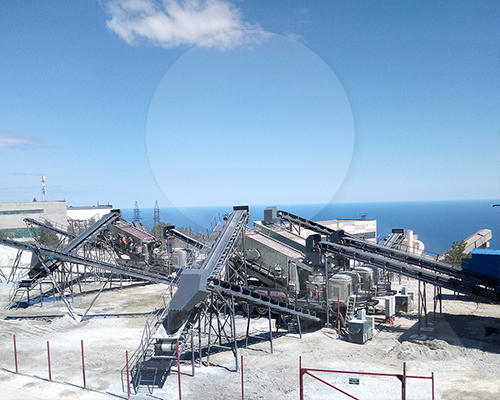
- Adaptability: Hydraulic toggle enabled rapid CSS adjustment from 150mm to 90mm in under 10 minutes, accommodating daily feed changes.
- Reliability: Elimination of choking events increased crusher utilization from 75% to 92%.
- Operational Cost: Reduced energy consumption by 18% per tonne versus the older, fixed-speed unit.
Technical Performance Benchmark: Refurbished vs. "As-Is" Crushers
The following data, aggregated from client reports, illustrates the performance delta between properly engineered refurbishments and unverified "as-is" purchases for units processing gold ore with an average Abrasion Index (Ai) of 0.25-0.35.
| Parameter | Professionally Refurbished Unit (Avg.) | "As-Is" / Unverified Unit (Avg.) | Key Refurbishment Factor |
|---|---|---|---|
| Mean Time Between Failures (MTBF) | 1,200 - 1,800 hours | 400 - 700 hours | Comprehensive bearing & drive alignment to ISO 10816-3 standards. |
| Liner Wear Rate (g/tonne) | 18 - 25 | 40 - 60+ | Application-specific alloy selection (e.g., T500/550 Martensitic steel for high impact). |
| Throughput Consistency (% of rated TPH) | 92% - 97% | 70% - 85% | Restoration of original chamber geometry and crushing kinematics. |
| Energy Efficiency (kWh/tonne) | 0.8 - 1.2 | 1.4 - 2.0 | Optimization of flywheel mass, drive belts, and bearing pre-load. |
Success Pattern Analysis:
Successful deployments consistently treat the used crusher as a core component platform. The value is not in the used frame itself, but in the engineered restoration of its functional tolerances, material integrity, and power transmission efficiency. The highest ROI cases involve:
- Metallurgical Verification: Spectrographic analysis of critical wear parts to confirm alloy grade before purchase.
- Systems Integration: Upgrading lubrication and hydraulic units to modern, serviceable standards with CE-marked components.
- Documented History: Prioritizing units with verifiable service logs and OEM build sheets, enabling predictive life-cycle modeling for major components.
Frequently Asked Questions
How often should wear parts be replaced in used gold crushers?
Replace jaw plates and cone liners every 500-1,500 MT based on ore abrasiveness (Mohs 5-7). Use genuine high-manganese steel (e.g., ASTM A128 Grade B3/B4) parts. Monitor wear patterns weekly; premature failure often indicates incorrect CSS or feed size. Always replace mantle and concave as a matched set.
Can a used crusher handle variations in ore hardness?
Yes, if properly configured. For hard ore (Mohs >6), ensure the crusher has a robust main frame and high-tensile bolts. Adjust hydraulic pressure for clamping force and CSS. For transitional ore, a hybrid liner profile (coarse/fine crushing chambers) is optimal. Verify the main shaft can handle the increased torque.
What are critical vibration checks for a used gold crusher?
Check for imbalance in the rotor or eccentric assembly. Use vibration analysis; levels should be below 7.1 mm/s RMS. Inspect foundation bolts and main frame for cracks. Excessive vibration often indicates worn spherical bearings or misaligned drive belts. Ensure counterweights are correctly installed.
What lubrication is required for a used cone crusher?
Use ISO VG 320 extreme-pressure gear oil. Maintain oil temperature below 60°C. Regularly check for metal particles in filters. Ensure the lube system has adequate flow (typically 40-60 L/min) and pressure (1.5-2 bar). Skimping on oil quality accelerates wear on bronze bushings and thrust bearings.
How do I verify the remaining life of major components?
Conduct ultrasonic thickness testing on the main frame and head. Inspect the main shaft for microfractures via MPI. Check eccentric bushing wear limits (typically max 4mm). Review maintenance logs for bearing (e.g., SKF, Timken) replacement history. A borescope inspection of internal threads is also recommended.
What is the most overlooked maintenance item on used jaw crushers?
Tightening the tension rod and spring assembly. Incorrect tension leads to toggle plate fracture and uneven jaw wear. Use a torque wrench per OEM specs (often 450-500 Nm). Also, lubricate the toggle area with moly-based grease weekly. Neglect here causes catastrophic failure of the pitman bearing.