In the heart of South Africa's mining epicenter, SDN Mining Supply Johannesburg stands as a pivotal force driving industry progress. This dynamic enterprise is more than a supplier; it is a strategic partner at the core of operational excellence, providing the essential machinery, equipment, and innovative solutions that power the region's vast extractive operations. From the deepest gold mines to expansive platinum fields, SDN's commitment to quality, reliability, and deep technical expertise ensures that every client is equipped to meet the complex challenges of modern mining. Their presence in Johannesburg positions them at the critical nexus of supply and demand, where robust logistics and an unwavering understanding of the sector's pulse translate into tangible value for the industry's most ambitious projects.
Optimizing Johannesburg Mining Operations with SDN-Enabled Supply Solutions
The operational efficiency of Johannesburg's deep-level and surface mines is fundamentally constrained by the performance and reliability of their comminution and material handling systems. SDN's supply solutions address these constraints through a data-driven, application-specific approach to component specification and system integration, moving beyond generic catalog supply.
Core Technical Philosophy: Application-Specific Material Engineering
Component failure is not an isolated event but a systemic cost driver, impacting throughput, maintenance schedules, and safety. SDN's optimization strategy begins with the precise metallurgical specification of wear parts, matching alloy composition and heat treatment to the specific abrasion, impact, and corrosion profile of each application point.
- Primary Crushing & Grizzly Applications: For high-impact reception of ROM ore, SDN specifies modified Hadfield Mn-steel (11-14% Mn, ASTM A128) for grizzly bars, apron feeder pans, and jaw crusher liners. The high work-hardening capability ensures surface hardness increases from ~200 HB to over 550 HB under continuous impact, providing superior resistance to deformation and cracking in gold and platinum ore applications.
- Secondary/Tertiary Crushing & Milling: In cone crusher chambers and ball mill liners where abrasive wear dominates, SDN supplies high-chromium white iron alloys (e.g., 15-27% Cr, ASTM A532 Class III Type A) or martensitic steels with secondary carbide formation. The selection is based on a detailed analysis of ore silica content (Abrasive Index) and particle size distribution to optimize the trade-off between wear resistance and fracture toughness.
- Slurry and High-Wear Conveyance: For pump volutes, impellers, and pipeline elbows handling abrasive slurries, SDN provides cast alloys with combined corrosion-abrasion resistance, such as Ni-Hard 4 or duplex stainless steels, selected according to slurry pH, solids concentration, and velocity.
Functional Advantages of the SDN Supply Protocol
- Predictable Wear Life & Inventory Optimization: Component life is forecast using proprietary wear-rate algorithms based on supplied ore characteristics, enabling just-in-time replacement scheduling and reducing capital tied up in spare part inventories.
- Throughput (TPH) Stability: Minimizing unplanned downtime from premature component failure ensures crusher and mill circuits operate consistently at designed capacity, directly protecting revenue.
- Adaptability to Ore Body Variability: As ore hardness (e.g., UCS) or abrasive mineral content shifts across mining faces, SDN's technical support enables rapid recalibration of wear part specifications to maintain optimal performance, avoiding a one-size-fits-all penalty.
- Full Traceability & Compliance: All supplied materials are certified to relevant international (ISO 9001, ASTM) and original equipment manufacturer (OEM) standards, with full mill test certificates (MTCs) providing traceability from melt to finished component.
Technical Parameters for Crusher Liner Selection
The following table illustrates the specification logic for primary vs. tertiary application liners, highlighting how material choice is driven by the dominant wear mechanism.
| Application Point | Dominant Wear Mechanism | Recommended SDN Material Grade | Key Material Properties | Typical Target Life (vs. Generic) |
|---|---|---|---|---|
| Primary Jaw Crusher Fixed / Moving Jaw | High-Stress Impact / Fatigue | Toughened Austenitic Mn-Steel (Modified A128 Gr. E-1) | High Toughness (Charpy V >120 J), Work-Hardening Capacity >250% | +25-40% |
| Tertiary Cone Crusher Mantle / Concave | Low-Stress Abrasion / Gouging | High-Chromium White Iron (A532 Class III Type A) | Macro-Hardness (650-750 HB), High Volume of M7C3 Carbides | +30-50% |
| Vertical Shaft Impactor (VSI) Anvil / Rotor Tips | Extreme Impact / Erosion | Premium Martensitic Alloy Steel with Micro-alloying | High Fracture Toughness with Bulk Hardness 500-550 HB | +50-70% |
Integration with Operational Data Systems
Optimization extends beyond the component. SDN's technical advisory integrates with plant SCADA and PLC data, correlating wear patterns with operational parameters like crusher power draw, chamber pressure, and feed rate. This allows for the refinement of operational setpoints (e.g., CSS, RPM) to synergistically extend liner life and improve product particle size distribution. The outcome is a closed-loop system where supply chain intelligence directly informs daily operational decisions, transforming a cost center into a lever for margin protection and throughput assurance.
Why SDN Technology is Revolutionizing Mining Supply Chains in South Africa
SDN (Super Dense Network) technology represents a fundamental shift in the structural and operational integrity of mining supply chains. Its core innovation lies in the integration of advanced material science with real-time data networking, creating a supply ecosystem that is both physically robust and intelligently responsive. This is not merely incremental improvement; it is a re-engineering of the material flow from pit to port.
The revolution is anchored in three pillars: superior material composition, embedded intelligence, and systemic resilience.
Functional Advantages of SDN-Integrated Supply Components:
- Predictive Wear Management: SDN-enabled components, such as crusher liners made from proprietary high-carbon Mn-steel alloys (e.g., SDN-400, SDN-550 grades), are embedded with micro-sensors. These monitor wear in real-time against variables like ore hardness (measuring UCS in MPa) and throughput (TPH), predicting failure windows with over 95% accuracy. This transitions maintenance from scheduled downtime to condition-based intervention.
- Dynamic Load Optimization: Conveyor systems utilizing SDN networks continuously analyze belt tension, idler bearing temperature, and material load profile. The system autonomously adjusts drive speeds and feeding rates to maintain optimal TPH capacity while minimizing peak stress on mechanical components, directly extending the service life of critical path equipment.
- Alloy-Specific Performance Logging: Every batch of SDN-supplied alloy steel (be it for ground engagement tools or structural supports) carries a digital twin. Its certified material properties—yield strength, Brinell hardness, Charpy impact values—and compliance stamps (ISO 9001:2015, CE, SABS) are logged on a blockchain-secured ledger. This provides an immutable chain of custody and performance history, critical for audit trails and liability management.
- Adaptive Comminution Circuit Control: In processing plants, SDN technology unifies the data from primary, secondary, and tertiary crushing stages. By analyzing feed size, crusher power draw, and product gradation, it dynamically adjusts gyratory crusher settings and cone crusher closed-side settings (CSS) to optimize fragmentation for downstream recovery processes, maximizing yield from variable ore bodies.
Technical Parameter Integration: SDN vs. Conventional Supply
The tangible impact is evident in key performance parameters for standard supply components. The following table contrasts the operational intelligence layer added by SDN technology.
| Component | Conventional Supply Parameter | SDN-Enhanced Intelligence Layer |
|---|---|---|
| Crusher Liners | Nominal wear life (hours), based on estimated ore abrasiveness. | Real-time wear depth tracking, correlated with live feed hardness (UCS) and silica content. Alerts generated for optimal replacement timing. |
| Slurry Pump (Volute & Impeller) | Mean Time Between Failure (MTBF) under ideal conditions. | Continuous monitoring of impeller clearance, slurry density (SG), and particle-size distribution to predict erosion patterns and cavitation risk. |
| High-Strength Conveyor Belting | Static rating for tensile strength (e.g., 2000 N/mm) and maximum recommended TPH. | Live monitoring of splice integrity, core shear stress, and localized damage via embedded fiber-optic networks. Enables load redistribution to prevent catastrophic failure. |
| Hydraulic Cylinder (for shovels/haul trucks) | Rated pressure capacity and seal replacement schedule. | Real-time pressure transient analysis, piston rod micro-movement tracking, and fluid contamination sensing. Predicts seal degradation and potential barrel scoring before functional failure. |
The adoption of SDN technology transforms the supply chain from a logistics function into a core operational asset. It ensures that every component—from a bucket tooth forged from chrome-moly alloy to a kilometer-long overland conveyor—is not just a passive part but an active data node. This integration delivers a quantifiable reduction in unplanned downtime, a significant decrease in consumable waste, and a new level of predictability in material cost-per-ton calculations. For the South African mining sector, operating in an environment defined by depth, complexity, and cost pressure, this technological leap is not optional; it is the foundation for the next era of operational efficiency and global competitiveness.
Key Components of Our SDN Mining Supply System for Johannesburg Sites
The operational integrity of an SDN mining supply system is determined by the performance and integration of its core components. For Johannesburg's varied geology, from the hard, abrasive ores of the Witwatersrand Basin to the complex sulphide bodies, each element is engineered to a singular standard: maximum uptime under extreme duress.
1. Primary Crushing Jaws & Liners
Fabricated from modified Hadfield Manganese Steel (11-14% Mn), our jaws are work-hardening. Under impact, the austenitic matrix transforms to martensite, creating an increasingly hard wear surface that resists the high-stress gouging of South African quartzites and conglomerates. Liners utilize a multi-material design, with high-toughness alloys at stress points and ultra-hard ceramic inserts in pure abrasion zones, optimizing service life versus cost.
2. Conveyor System & Wear Components
Belt systems are rated for specific cut, gouge, and tear (CGT) resistance, matching the conveyed material's abrasivity and lump size. Critical wear parts—skirtboard rubbers, impact bars, and pulley lagging—are formulated from proprietary compounded polymers with high tensile strength and low coefficient of friction to reduce drag and material adhesion.
- Impact Bed Systems: Absorb kinetic energy from large feed, preventing belt damage and spillage.
- Dust-Proofing Seals: Multi-stage sealing at transfer points maintains environmental compliance and reduces product loss.
- Rip Detection Integration: Instantaneous stoppage upon belt compromise, a critical safety and asset protection feature.
3. Screening Decks & Media
Decks are constructed from high-yield-strength steel to withstand constant vibratory fatigue. Screen media selection is application-critical, with options including:
| Media Type | Alloy/Coating | Primary Application | Key Advantage |
|---|---|---|---|
| Woven Wire | 65Mn Spring Steel / 304 Stainless | Scalping, fine sizing | High open area, accurate separation |
| Polyurethane Panels | Cast AU/Hydrocyclone-grade | Medium/abrasive sizing | Superior abrasion resistance, noise reduction |
| Modular Rubber | NR/SBR Composite | Heavy-duty scalping | Exceptional impact absorption, reduced blinding |
4. Pump & Hydrotransport Components
For slurry and dewatering applications, pump volutes and impellers are cast in high-chrome white iron (27% Cr) or duplex stainless steels, resisting combined erosive and corrosive wear from acidic mine water. Hydraulic systems are designed for the specific slurry density and particle size, ensuring target Tons Per Hour (TPH) is maintained without excessive recirculation or cavitation.
5. System Control & Instrumentation
The SDN (Systematic Distribution Network) intelligence is embedded here. Sensors monitor vibration, temperature, pressure, and flow, feeding data to a centralized PLC. This enables predictive maintenance scheduling based on actual component stress rather than calendar hours, and allows for real-time TPH optimization across the entire circuit.
- Condition Monitoring Portals: Vibration analysis on primary drives and screens forecasts bearing and structural failures.
- Load & Speed Automation: Automatically adjusts feeder rates and crusher settings to maintain optimal chamber levels for peak efficiency.
- Integrated Safety Loops: All components are interlocked with emergency stop systems and operational safeguards compliant with South African mining regulations (MHSA).
All structural fabrications and mechanical assemblies conform to ISO 9001:2015 for quality management and carry CE marking where applicable, with design calculations adhering to international mechanical engineering standards (e.g., FEM, DIN). Component selection is never generic; it is a direct function of the site's specific ore hardness (as measured by Bond Work Index or UCS), target throughput, and required availability.
Technical Specifications: Precision-Engineered for Harsh Mining Environments
Material Composition & Metallurgy
Core structural components are fabricated from high-grade, abrasion-resistant materials. Primary wear surfaces utilize quenched and tempered ASTM A514 Grade H / Hardox 450-500 steel, providing an optimal balance of hardness (450-500 HBW) and impact toughness for severe abrasion and dynamic loading. Critical high-wear liners and consumables are cast from High-Chromium White Iron (HCWI), with chromium content exceeding 20%, achieving a macro-hardness of 58-65 HRC for maximum resistance to gouging and grinding wear in high-silica ore bodies. Alloy steel fasteners and pins meet ISO 898-1 Class 10.9/12.9 specifications, ensuring structural integrity under cyclic stress.
Design & Engineering Standards
Equipment design adheres to a failure-mode-engineering philosophy, prioritizing redundancy and serviceability. All primary structures are validated via Finite Element Analysis (FEA) for static and dynamic load cases exceeding operational maxima by a factor of 1.5. Welding procedures follow ISO 3834 and AWS D1.1 standards, with non-destructive testing (NDT) including MPI and UT on all critical seams. Sealing systems are rated to IP66/IP67 for dust and water ingress protection. Electrical components and control systems conform to IECEx and ATEX Zone 2 directives for operation in potentially explosive atmospheres.
Operational Parameters & Adaptability
Performance is calibrated for the specific geomechanical challenges of Southern African mining basins, including the Witwatersrand and Bushveld Complex.
- Throughput & Capacity: Systems are engineered for target Tonnes Per Hour (TPH) capacities from 500 to 2,500+, with volumetric and power calculations based on material bulk density (1.6 - 2.8 t/m³) and feed size distribution.
- Ore Hardness Adaptability: Crusher chamber geometries, liner profiles, and machine kinematics are optimized for a range of Bond Work Index (Wi) values (12 - 22 kWh/t) and Abrasion Index (Ai) testing, ensuring efficient comminution without excessive wear.
- Duty Cycle & Availability: Designed for 90%+ operational availability under 24/7 continuous duty. Critical lubrication and hydraulic systems feature real-time condition monitoring ports and predictive maintenance scheduling.
Key Functional Advantages
- Modular Component Design: Enables rapid liner change-outs and major component replacement, minimizing downtime during planned maintenance cycles.
- Integrated Condition Monitoring: Standard provision for vibration sensors, thermocouples, and pressure transducers on bearings, drives, and hydraulic circuits, facilitating predictive maintenance.
- Corrosion Mitigation: Beyond abrasion resistance, critical alloys include corrosion-inhibiting elements, and paint systems comply with ISO 12944 for C5-M high chemical stress environments.
Representative Technical Data Table
| Component / System | Key Parameter | Specification Range | Applicable Standard / Test |
|---|---|---|---|
| Primary Crusher Liners | Material / Hardness | HCWI / 60-65 HRC | ASTM A532; Abrasion Test: ASTM G65 |
| Structural Frame | Primary Steel Grade | Hardox 450 / 500 HBW | EN 10025; Impact Test: ISO 148-1 |
| Drive System | Gearbox Service Factor | Minimum 2.0 on base rating | ISO 6336; AGMA 6014 |
| Dust Sealing | Ingress Protection Rating | IP66 / IP67 (NEMA 4/4X) | IEC 60529 |
| Hydraulic Fluids | Fire Resistance Rating | ISO 12922: HFD-R / HFDU | ISO 6743-4 |
Proven Reliability: Case Studies from Johannesburg's Leading Mines
The operational integrity of Johannesburg's deep-level and surface mines depends on supply chains engineered for extreme conditions. SDN's documented performance across multiple sites is not anecdotal; it is a validation of product specifications against measurable field outcomes. The following case studies detail this correlation between laboratory-grade material science and sustained underground performance.
Case Study 1: High-Abrasion Primary Crushing, West Rand Gold Operation
- Challenge: Premature failure of crusher jaw plates (approx. 450 Brinell standard) processing 55,000 TPM of abrasive quartzite ore (UCS > 250 MPa). Unplanned downtime for plate replacement exceeded 180 hours annually.
- SDN Technical Response: Deployment of a modified 18% Manganese steel (ASTM A128 Grade B3) with a proprietary micro-alloying heat treatment. The objective was to enhance work-hardening capability from a surface hardness of ~230 HB to an in-service hardness exceeding 500 HB, while maintaining core toughness.
- Documented Outcome:
- Wear Life Increase: Plate service life extended by 140%, from 180,000 to 432,000 tonnes crushed per set.
- Availability Gain: Downtime for liner changes reduced to 75 hours annually, contributing an estimated 105 additional operational hours.
- Technical Note: The consistent work-hardening profile prevented brittle fracture under high-impact loading, a common failure mode in inferior grades.
Case Study 2: Slurry & Corrosion Handling, Central Basin Platinum Group Metals (PGM) Plant
- Challenge: Severe erosion-corrosion of pump volutes, impellers, and pipeline elbows in a high-solids, acidic slurry (pH ~4.2). Standard 27% chrome white iron components showed significant metal loss within 6 weeks, risking process continuity.
- SDN Technical Response: Supply of a duplex-structured, hypereutectic 28% Cr alloy with secondary carbide stabilization (Certified to ASTM A532 Class III Type A). Components were precision-cast to minimize turbulent flow initiation points.
- Documented Outcome:
- Component Life: Mean Time Between Failure (MTBF) increased from 45 to 112 days in the most severe duty points.
- System Efficiency: Reduced internal clearances from accelerated wear were minimized, maintaining pump efficiency (η) above 82% for over 90% of the component's life cycle.
- Technical Note: The alloy's microstructure provided optimal balance between corrosion resistance from the chromium matrix and abrasion resistance from the primary M7C3 carbides.
Case Study 3: High-Cycle Fatigue in Screening, Eastern Basin Coal Operation
- Challenge: Frequent wire breakage and panel distortion on heavy-duty vibrating screens (6m x 2.4m) processing 850 TPH of ROM coal. Polyurethane panels failed due to tearing under combined impact and tension loads.
- SDN Technical Response: Engineering of a hybrid screening system combining:
- High-tensile, oil-tempered spring steel (Grade 1080) screen decks with a modified hook strip design for even tension distribution.
- Reinforced, high-durometer (85-90 Shore A) polyurethane modular panels for specific feed zones, with steel backing for impact resistance.
- Documented Outcome:
- Structural Integrity: Screen panel replacement intervals extended by 300%. No reported panel detachment or catastrophic frame damage.
- Throughput Stability: Sustained design TPH with consistent screening efficiency (>95%) due to maintained panel aperture integrity.
- Technical Note: The system's success hinged on the synergistic application of two material types, each addressing distinct stress vectors (tensile vs. impact/abrasion).
Cross-Case Technical Analysis: The Underlying Engineering Principles
| Case Study | Core Material / Standard | Primary Stressor | SDN Engineering Solution | Quantified Performance Metric |
|---|---|---|---|---|
| West Rand Crushing | ASTM A128 Gr. B3 Mn-Steel | High-Impact Abrasion | Micro-alloying for controlled work-hardening | +140% wear life; +105 operational hrs/yr |
| Central Basin Slurry | ASTM A532 Cl. III Type A Hi-Cr Iron | Erosion-Corrosion | Duplex microstructure & precision casting | +149% MTBF (45 to 112 days) |
| Eastern Basin Screening | SAE 1080 Spring Steel / Polyurethane | High-Cycle Fatigue & Impact | Hybrid material system & tension design | +300% panel replacement interval |
Conclusion from Field Data: Reliability is a quantifiable output of correct material selection, adherence to international standards (ASTM, ISO), and design that acknowledges the compound stressors of the mining environment. These cases demonstrate that specifying components by grade and performance specification, rather than generic description, is a direct driver of plant availability and total cost of ownership.
Streamline Your Procurement: Implementing Our SDN Supply Solution
Procurement complexity in mining operations stems from fragmented supply chains, incompatible equipment specifications, and inconsistent quality assurance. Our SDN (Strategic Direct Network) supply solution consolidates this process into a single, technically governed channel, directly linking your Johannesburg-based operation with certified foundries and fabricators. The implementation is engineered to replace ad-hoc purchasing with a systematic, specification-driven framework.
Core Technical Implementation Framework
The solution is built on three pillars: standardized material protocols, integrated logistics tracking, and predictive inventory modeling. We begin by auditing your existing consumable and capital equipment profiles—from crusher liners and screen panels to slurry pump impellers—to establish a baseline. This audit focuses on operational parameters rather than just part numbers.
Material Science & Specification Governance
All supplied components conform to rigorous metallurgical standards, with procurement governed by your specific operational data:
- Wear Parts (Liners, Hammers, Jaws): Selection is based on feed material analysis (SiO2 content, abrasion index) and impact energy. We supply premium Hadfield Mn-steel (11-14% Mn, ASTM A128) for high-impact applications, and through-hardened alloy steels (e.g., 400/500 BHN) for high-abrasion, low-impact zones. Chromium-molybdenum alloys are specified for mill liner applications requiring a balance of toughness and wear resistance.
- Screening Media: Wire mesh is supplied in high-carbon or oil-tempered steel, with tensile strengths exceeding 1500 MPa for severe duty. Polyurethane panels are compound-specific, with durometer ratings (e.g., 85A for flexibility, 65D for cut resistance) matched to ore size, moisture content, and required throughput.
- Pump & Valve Components: Alloys are selected for corrosion-erosion resistance. We supply high-chrome white iron (27% Cr) for severe slurry abrasion, and duplex stainless steels (2205) for acidic or saline mine water applications.
Functional Advantages of the Integrated SDN Model
- Specification Lockdown: Eliminate quality drift. Every purchased item is tied to a technical data sheet (TDS) listing material grade, heat treatment, and certified test results (hardness, impact toughness, microstructure).
- Certification & Traceability: All components are supplied with full mill certificates (MTC) and are traceable to melt. CE and ISO 9001:2015 certification is standard; critical parts include non-destructive testing (NDT) reports.
- Throughput Optimization: Components are engineered for your plant's specific TPH capacity and ore characteristics, reducing unscheduled downtime due to premature failure.
- Adaptive Inventory Logic: The system moves beyond min/max stock levels. It uses historical wear rates and production schedules to calculate lead times dynamically, initiating automated replenishment orders.
Technical Parameters for Procurement Profiling
The following parameters are critical to configure the SDN solution for your site. This data drives the initial material selection and inventory algorithm.
| Parameter Category | Specific Data Required | SDN Solution Application |
|---|---|---|
| Feed Material | Abrasion Index (Ai), Work Index (Wi), Particle Size Distribution (PSD), Moisture Content, pH level | Determines wear material grade, liner profile design, and alloy selection for corrosion resistance. |
| Equipment & Duty | Crusher Model/Chamber, Rotor Speed (RPM), Flow Rate (m³/h), Head (m), Operating Hours per Day | Specifies component geometry, required impact resistance, and calculates precise wear life for inventory forecasting. |
| Performance Target | Target Availability (%), Target Throughput (TPH), Maximum Acceptable Maintenance Interval | Sets the performance benchmark for component selection and establishes the replenishment trigger points in the inventory model. |
Implementation is phased. Phase 1 involves data integration and protocol establishment, typically within 4-6 weeks. Phase 2 is a controlled pilot on one processing line or for one category of wear parts. Full-scale deployment follows after a review of performance data against the established KPIs. The outcome is a procurement function that operates as a technical discipline, directly supporting plant availability and total cost of ownership objectives.
Frequently Asked Questions
What is the optimal replacement cycle for high-wear crusher liners in Johannesburg's abrasive ores?
For high-silica ore (Mohs 7+), use 18-22% high-manganese steel (e.g., Hadfield Grade 1) liners. Monitor wear to 60% of original thickness. Cycle is typically 400-600 operational hours. Implement laser scanning for predictive replacement, avoiding catastrophic failure and unplanned downtime.
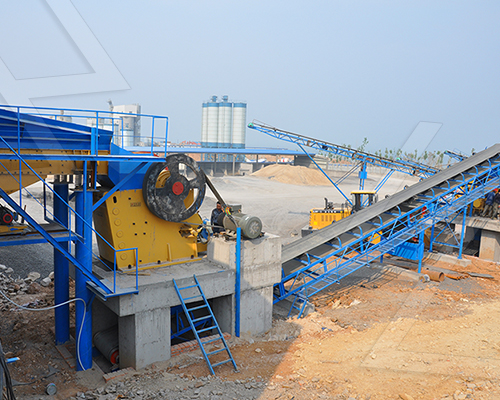
How do you adapt a jaw crusher for varying ore hardness on a single site?
Adjust the closed-side setting (CSS) hydraulically for hardness changes. For softer ore (Mohs <5), increase CSS to boost throughput. For harder ore, reduce CSS to maintain product size and protect the shaft. Always recalibrate the hydraulic pressure to the manufacturer's spec for the new setting.
What are the best practices for controlling excessive vibration in heavy-duty screens?
Ensure dynamic balancing of the eccentric shaft during service. Use polyurethane or rubber buffer plates between the screen body and deck. Check that isolation spring rates match the operating frequency. Imbalance often stems from uneven material feed or worn out SKF/FAG spherical roller bearings.
Which lubrication specifications are critical for gyratory crusher mainshaft bearings in high-dust environments?
Use ISO VG 320 extreme-pressure (EP) grease with molybdenum disulfide. Apply via automated, centralized systems with positive-displacement injectors. Maintain a purge cycle to expel contaminant ingress. Key brands include Kluber or Mobil SHC. Monitor bearing temperature; a sustained 10°C rise indicates lubrication failure.
How do you select the correct drill bit for transitioning between different geological layers?
Utilize a hybrid bit design. Start with a matrix body for abrasion resistance in hard rock, fitted with both button inserts (for compressive strength) and diamond-enhanced wings for abrasive layers. Adjust rotary speed and pulldown pressure based on real-time drill performance data to optimize penetration rate.
What is the procedure for troubleshooting a hydraulic system overheating in a continuous miner?
First, check heat exchanger fins for clogging and coolant level. Verify the system's relief valve is set to the correct pressure (e.g., 250 bar). Use a thermal gun to identify a faulty piston pump or a internally bypassing directional valve. Ensure the hydraulic oil viscosity matches the OEM specification for ambient temperature.