Within the intricate world of mineral processing, the chromite beneficiation plant stands as a critical nexus where raw ore is transformed into a valuable industrial commodity. The efficiency and success of this complex operation hinge entirely on the sophisticated machinery and equipment deployed at each stage. From primary crushing units that reduce rugged ore to manageable fragments, to gravity separators that exploit density differences, and magnetic circuits that isolate chromite from gangue, each piece of technology plays a pivotal role. This orchestration of specialized equipment—including spirals, jigs, and advanced shaking tables—is engineered to maximize recovery rates and concentrate grade. Understanding this machinery is fundamental to optimizing plant performance, ensuring economic viability, and meeting the stringent demands of global markets for high-quality chromite concentrate.
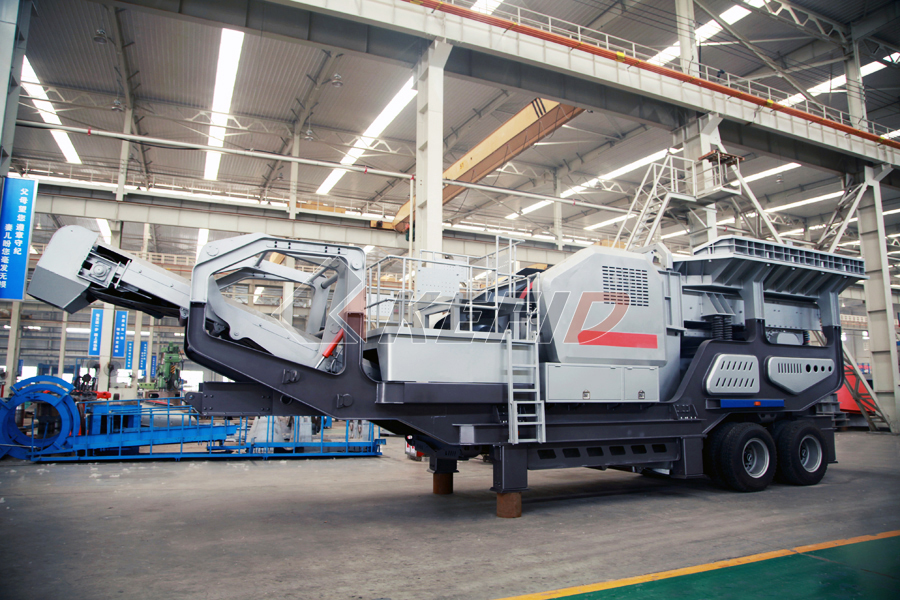
Maximizing Chromite Recovery: Advanced Separation Technologies for Higher Purity Output
Chromite recovery and concentrate purity are fundamentally governed by the efficiency of separation technologies. Modern plants leverage a multi-stage, gravity-magnetic-flotation circuit, engineered to handle variable ore hardness (Mohs 5.5-6) and liberate finely disseminated chromite. The core objective is to maximize Cr₂O₃ grade while minimizing silica, iron, and alumina content in the final product.
Gravity Concentration: The Primary Workhorse
High-capacity spirals and centrifugal concentrators (e.g., enhanced gravity separators) perform the initial bulk separation. Their effectiveness relies on precise control of specific gravity differentials.
- High-Wear Resilience: Concentrator cones and launders are lined with high-chrome white iron or specialized Ni-hard alloys to withstand continuous abrasive wear from coarse feed, significantly reducing maintenance downtime.
- Adaptive Control: Modern units feature adjustable wash water and splitter mechanisms, allowing real-time optimization for fluctuating feed densities and particle size distributions, directly impacting mass yield.
Magnetic Separation: Critical for Grade Enhancement
Both low-intensity (LIMS) and high-intensity (HIMS) magnetic separators are employed to remove ferromagnetic and paramagnetic gangue minerals, respectively.
- Precision Engineering: High-gradient magnetic separators (HGMS) utilize matrices of corrosion-resistant stainless steel wool or expanded metal to generate ultra-high field gradients, essential for capturing fine, weakly magnetic impurities.
- Process Stability: Electromagnetic coils with ISO 9001-compliant insulation systems ensure consistent magnetic field strength, a non-negotiable parameter for achieving stable silica (SiO₂) and iron oxide (FeO) specifications in the concentrate.
Froth Flotation: For Ultrafine and Complex Ores
Applied to gravity tailings or specific ore types, reverse flotation of silicates is key to achieving premium-grade (>48% Cr₂O₃) concentrates.
- Specialized Reagent Regimes: Tailored collectors and modifiers, developed for specific ore mineralogy, selectively depress chromite while floating gangue.
- Robust Cell Design: Agitators and impellers are cast from abrasion-resistant alloys, while tank linings utilize polymer composites to endure corrosive chemical environments and ensure long-term operational integrity.
Integrated Circuit Design & Control
Maximum recovery is not achieved by individual units but through their synergistic integration and automated control.
- Sensor-Based Sorting: Pre-concentration via X-ray transmission (XRT) or laser sensors at the coarse feed stage can reject barren waste rock, increasing effective plant capacity (TPH to the mill) and reducing energy consumption per ton of concentrate.
- Process Analytics: Online X-ray fluorescence (XRF) analyzers at key nodes provide real-time elemental assay data (Cr, Fe, Si, Al), enabling closed-loop control of separator parameters for consistent output quality against ISO 6124 or customer-specific standards.
| Technology | Primary Function | Key Material/Design USP | Typical Impact on Output |
|---|---|---|---|
| Enhanced Gravity Separators | Bulk density separation | Ni-hard alloy/ceramic linings for 10,000+ hour wear life in >100 TPH units. | High mass recovery; produces medium-grade concentrate. |
| High-Gradient Magnetic Separators (HGMS) | Removal of paramagnetic silicates | Corrosion-resistant 316L stainless steel matrix; PLC-controlled flushing cycles. | Reduces SiO₂ by 3-8%, critical for metallurgical-grade concentrate. |
| Column Flotation Cells | Reverse silicate flotation | Static, column-type design with ceramic spargers for fine bubble generation. | Achieves final upgrade, producing +48% Cr₂O₃ concentrate from cleaner feed. |
| Online Process Analyzer | Real-time composition control | Industrial-grade XRF with sample conditioning system for slurry analysis. | Enables ±0.5% Cr₂O₃ grade stability, ensuring batch-to-batch consistency. |
The selection of equipment must be based on a comprehensive mineralogical study and locked-cycle testing. The ultimate goal is a flowsheet where each stage is precisely calibrated to the liberation characteristics of the ore, ensuring that capital investment translates directly into superior recovery metrics and product purity.
Engineered for Efficiency: How Our Plant Design Reduces Operational Costs and Downtime
Our plant design philosophy is rooted in operational efficiency, achieved through material integrity, process optimization, and robust engineering. This directly translates to lower cost per ton and maximized uptime.
Material Integrity & Wear Resistance
Critical wear components are not standard off-the-shelf parts. They are engineered for chromite's specific abrasiveness.
- Primary Crushing & Heavy-Duty Scrubbing: Jaws, mantles, and scrubber liners utilize high-grade manganese steel (Hadfield steel, 11-14% Mn) for optimal work-hardening under impact, extending service life in primary reduction.
- Classification & Beneficiation Circuits: Spiral concentrator troughs, hydrocyclone liners, and launder systems are fabricated from specialized polyurethanes or ceramic-alumina composites. These materials offer superior abrasion resistance compared to standard rubber or steel, maintaining precise separation profiles and reducing replacement frequency.
- Pump & Pipeline Systems: Slurry pumps are lined with high-chrome white iron (27% Cr) or elastomers specifically formulated for high-solids, abrasive slurries. Pipeline bends feature removable, reinforced ceramic liners at wear points.
Process Design for Minimal Downtime
Layout and system design prioritize maintenance access and process stability.
- Modular, Accessible Layout: Major equipment like crushers, screens, and pump sumps are positioned with clear overhead crane access and service decks. This allows for planned component replacement in hours, not days.
- Redundancy in Critical Paths: Key material handling conveyors and slurry pump systems are designed with built-in redundancy or bypass options, allowing maintenance without a full plant shutdown.
- Intelligent Control & Instrumentation: PLC/SCADA systems with integrated condition monitoring (vibration, temperature sensors on crusher bearings, pump shafts) enable predictive maintenance, preventing catastrophic failures.
Technical Specifications & Standards
All equipment is designed and manufactured to international mechanical and safety standards, ensuring reliability and interoperability.
| System Component | Key Design Parameter | Operational Impact |
|---|---|---|
| Primary Jaw Crusher | Feed opening & CSS tailored for ROM ore lump size; TPH capacity rated for 110% of design feed. | Prevents bridging, handles peak feed rates without bottlenecking downstream processes. |
| Vibrating Screens | Screen deck tensioning system & wire mesh grade (ISO 9044). | Maintains consistent aperture size for accurate sizing, reducing recirculating load. |
| Spiral Concentrators | Trough profile precision & wash water manifold design. | Ensures stable grade-recovery performance despite feed grade fluctuations. |
| Dewatering Screens & Thickeners | Polyurethane panel aperture tolerance & rake mechanism torque. | Produces a drier product (lower moisture content) and consistent underflow density, reducing transport costs and reagent consumption. |
Capacity & Adaptability
Plants are engineered for specific ore body characteristics, not just generic throughput.
- TPH Capacity: Designs are based on a detailed analysis of ore hardness (Bond Work Index), bulk density, and clay content, ensuring equipment is not under or over-sized for the duty.
- Ore Variability Management: Adjustable parameters like crusher gap, screen inclination, spiral splitter positions, and DMS medium density allow the plant to adapt to changes in feed grade and mineralogy, protecting recovery rates.
Tailored Solutions: Customizable Configurations to Match Your Ore Grade and Production Goals
Chromite beneficiation is not a one-size-fits-all process. Plant configuration is dictated by the specific mineralogy of your deposit, target production volume, and final product specifications. Our engineering approach begins with a comprehensive analysis of your run-of-mine ore, focusing on critical parameters that dictate machinery selection and flow sheet design.
Core Customization Parameters:
- Feed Ore Grade (Cr₂O₃ %): Determines the required liberation size and the intensity of the concentration stages. Low-grade ores necessitate more aggressive pre-concentration and higher-capacity scavenging circuits.
- Gangue Mineralogy (Serpentine, Olivine, Talc): Directly influences the selection of separation technology. Magnetic susceptibility and specific gravity of gangue minerals dictate whether a combination of gravity separation (spirals, shaking tables) and high-intensity magnetic separation (HIMS) is optimal.
- Ore Hardness & Abrasiveness (Bond Work Index): Governs the selection of comminution equipment. For highly abrasive chromite, primary and secondary crushing circuits utilize Mn-steel (11-14% Manganese) liners and jaws. Ball mill specifications, including shell thickness and liner profile (wave, step), are selected based on grindability.
- Target Production Capacity (TPH): Scales the entire plant, from feed hopper dimensions and conveyor belt widths to the number of parallel processing modules. Designs are engineered for specific throughputs, from pilot-scale (5-10 TPH) to large-scale operations (100+ TPH).
- Final Product Specification: Whether producing metallurgical-grade lumpy ore, chemical-grade concentrates, or refractory-grade sands, the final cleaning, sizing, and drying stages are precisely configured to meet chemical (Cr:Fe ratio, SiO₂ content) and physical (sizing, moisture) specifications.
Technical Implementation & Material Specifications:
Equipment is not merely selected from a catalog; it is specified and, where necessary, custom-manufactured to match process demands. Critical wear components in high-abrasion zones are fabricated from certified alloy steels.
| Process Stage | Customization Focus | Typical Material/Standard Specification |
|---|---|---|
| Communition | Crusher cavity design, mill liner geometry & material, drive motor sizing. | Jaw Plates: ASTM A128 Mn-Steel (Grade B3, ~12% Mn). Ball Mill Liners: High-Cr White Iron (ASTM A532, Class III Type A) or Ni-Hard. |
| Gravity Separation | Spiral trough profile (pitch, curvature), number of turns. Shaking table deck riffle design and wash water system. | Spirals: Cast polyurethane with ceramic wear inserts. Structural Frames: ISO 8528 welded steel, hot-dip galvanized. |
| Magnetic Separation | Magnetic field intensity (Gauss), matrix design for HIMS rolls, feed rate control. | Drum Shells: 304/316 Stainless Steel. Coils: Class H insulated, IP66 protection. CE marked electrical assemblies. |
| Material Handling | Chute lining angles & material, conveyor idler spacing, dust suppression points. | Chute Liners: Abrasion-resistant steel plate (AR400/500) or ceramic tiles. |
Functional Advantages of a Tailored Configuration:
- Optimized Metallurgical Recovery: A process circuit designed for your specific liberation size and gangue composition maximizes Cr₂O₃ recovery to the concentrate stream, directly impacting project economics.
- Reduced Operational Cost: Correctly sized equipment and wear-matched materials minimize specific energy consumption (kWh/ton) and lower the cost-per-ton for replacement parts and liner maintenance.
- Operational Stability: Systems engineered for your ore's characteristics, including clay content and moisture, reduce the risk of plugging, surging, or unexpected downtime, ensuring consistent throughput.
- Future-Proof Scalability: Modular design philosophy allows for the later integration of additional parallel lines or tailings retreatment circuits as resource understanding or production goals evolve.
The definitive flow sheet—whether a simple crush-screen-wash circuit for high-grade lumpy ore or a complex multi-stage grinding, gravity, and magnetic separation plant for friable, disseminated deposits—is a function of rigorous test work and precise engineering. Our deliverables include detailed mass balance calculations, plant layout drawings (GA), and equipment data sheets specifying all critical performance and material parameters.
Robust Construction: Durable Materials and Design for Harsh Mining Environments
The operational integrity of a chromite beneficiation plant is fundamentally dependent on the physical endurance of its machinery. Equipment must withstand continuous abrasion from hard, dense chromite ore, corrosive slurry media, and high-impact loading. This demands a deliberate engineering philosophy that prioritizes material selection and structural design over initial cost, ensuring longevity and minimizing total cost of ownership.
Core Material Specifications for Critical Wear Components
- Primary Crushing & Heavy-Duty Screening: Jaws, mantles, concaves, and screen decks are fabricated from modified high-strength manganese steel (e.g., ASTM A128 Grade B3/B4). This austenitic steel work-hardens under impact, developing a hardened surface layer while retaining a tough, shock-absorbing core, ideal for feed sizes up to and exceeding 1,000mm.
- Slurry Handling & Classification: Pump casings, impellers, valve trim, and hydrocyclone liners utilize ASTM A532 Class III Type Ni-Hard 4 (nickel-chromium white iron) or high-chrome cast iron (27-30% Cr). These materials provide exceptional resistance to low-stress, high-velocity abrasive wear in slurry densities ranging from 25% to 65% solids by weight.
- Gravity Concentration Units (Spirals, Reichert Cones): Troughs and splitters are constructed from specialized polyurethanes with a minimum hardness of 85 Shore A, formulated for cut resistance and dimensional stability. Wear surfaces on dense media separators are lined with ceramic alumina tiles (90-95% Al₂O₃) bonded to a steel substrate, offering superior lifespan in high-density medium circuits.
- Structural Fabrications: Plant chassis, feed hoppers, and walkway supports are built from heavy-duty, normalized steel plate (minimum yield strength 355 MPa) with continuous welds. Critical stress points are reinforced with gussets and ribbed sections to dampen vibrational loads from crushers and screens.
Design Principles for Harsh Environments
- Sealed & Protected Drives: Electric motors and gear reducers are rated to IP65/66 standards, featuring labyrinth seals and pressurized housings to exclude dust and moisture. Critical bearings are oversized, with automated, centralized grease lubrication systems to ensure consistent protection against particulate ingress.
- Corrosion Mitigation: All structural steel undergoes abrasive blast cleaning to SA 2.5 standard prior to application of a multi-coat epoxy-polyurethane paint system, with a minimum dry film thickness of 250 microns. In highly corrosive splash zones, stainless steel (316L) or fiber-reinforced polymer (FRP) cladding is specified.
- Maintenance-Centric Architecture: Equipment layouts incorporate clear service aisles. Crushers feature hydraulic adjustment and clearing systems. Screen decks and cyclone clusters are configured for rapid, single-person change-out via bolted or modular clamp systems, drastically reducing downtime for wear part replacement.
Technical Parameters for Primary Wear Components
| Component | Typical Material Specification | Key Property | Expected Service Life (MTBF*) in Chromite Ore |
|---|---|---|---|
| Jaw Crusher Fixed Jaw | Mn-Steel, 16-18% Mn, 1.8-2.0% Cr | Work-Hardening to 550+ BHN | 4,500 - 6,000 operating hours |
| Slurry Pump Wet End | High-Chrome Cast Iron, 27% Cr, 2.5% C | Abrasion Resistance, 650-750 HV | 1,800 - 2,500 hours (subject to silica content) |
| Hydrocyclone Liner | Ceramic Alumina, 92% Al₂O₃ | Wear Rate <0.5mm per 1,000 hrs | 8,000+ operating hours |
| Vibrating Screen Deck Panel | Rubber/Polyurethane, 60-65 Shore A | Impact & Abrasion Resistance | 3,000 - 4,000 operating hours |
*MTBF: Mean Time Between Failures (for the wear part). Life is contingent on feed characteristics (e.g., Hardness, Abrasion Index) and operational TPH.
This engineered robustness directly translates to plant performance. It ensures sustained throughput at design TPH capacity, maintains metallurgical efficiency by preserving critical equipment tolerances, and provides predictable maintenance scheduling, forming the foundation for a reliable and profitable operation.
Comprehensive Technical Specifications: Detailed Breakdown of Equipment and Performance Metrics
Crushing & Screening Circuit
Primary Jaw Crusher
- Model & Type: Heavy-duty, single-toggle design with deep crushing chamber.
- Frame & Jaw Plates: Fabricated from high-tensile steel plate. Fixed and movable jaw plates are cast from ASTM A128 Grade B-3 (12-14% Manganese Steel) for exceptional work-hardening resistance against chromite's abrasive nature.
- Drive & Adjustment: Robust eccentric shaft on anti-friction bearings. Hydraulic toggle adjustment system for quick CSS (Closed Side Setting) changes and overload protection via automatic release and reset.
- Key Performance Metric: Capable of accepting ROM (Run-of-Mine) feed sizes up to 1200mm, reducing to -250mm at a capacity of 450-600 TPH, dependent on ore hardness (6-7 Mohs).
Secondary Cone Crusher
- Model & Type: Hydraulic adjustment and clamping, with automatic overload protection and cavity clearing.
- Liners: Mantle and concave are manufactured from high-grade austenitic manganese steel (ASTM A128 Gr E-1, 18% Mn) or proprietary martensitic iron alloys for extended wear life in tertiary applications.
- Control System: ASRi (Automatic Setting Regulation) intelligence for real-time CSS optimization and power management, ensuring consistent product size.
- Key Performance Metric: Accepts -250mm feed, producing a nominal -50mm product at 250-350 TPH. Liner life expectancy is 800-1200 operating hours, contingent on silica content.
Vibrating Screens (Scalping & Sizing)
- Type: Heavy-duty, multi-slope, linear motion screens.
- Deck & Media: Robust side-plated construction with high-strength coil spring mounts. Screen decks feature modular, interchangeable polyurethane or rubber panels (65-70 Shore A) for high abrasion resistance and reduced blinding. Alternative: Harp screens with tensioned Mn-steel wires for sticky ores.
- Drive: Dual, out-of-balance exciters with labyrinth seals and SKF/Caterpillar class bearings.
- Key Performance Metric: Screening efficiency >92% at designated cut points (e.g., 50mm, 10mm). Drive bearing L10 life exceeds 60,000 hours.
| Screening Stage | Deck Configuration | Aperture Size | Motor Power (kW) | G-Force |
|---|---|---|---|---|
| Scalping | Single Deck | 50 - 75 mm | 15 - 22 | 4.5 - 5.0 g |
| Sizing | Double Deck | Top: 25mm, Bottom: 6-10mm | 18.5 - 30 | 4.0 - 4.5 g |
Gravity Concentration Section
Spiral Concentrators
- Model & Type: 5-turn, modified sluice profile, cast polyurethane construction (ASTM D2000 M4BG 625 A14 B14 E014 F17).
- Wear Resistance: Polyurethane formulation provides superior abrasion resistance (Taber Abrasion Index <50mg loss) versus traditional fiberglass, ensuring consistent concentrate grade over a 5+ year lifespan.
- Distribution & Launder System: CNC-machined, corrosion-resistant aluminum feed distributors ensure even pulp split. Launders are fabricated from 6mm AR400 abrasion-resistant steel plate.
- Key Performance Metric: Effective separation density range of 2.8 - 4.2 SG. Feed pulp density maintained at 25-35% solids by weight. Single spiral capacity: 1.5 - 3.0 TPH, depending on feed grade and liberation size.
Shaking Tables
- Model & Type: Reciprocating mechanical drive, deck surface 4.5m x 1.8m.
- Deck Surface: Laminated with CNC-cut, wear-resistant Raptor rubber (60-65 Shore D) in a patented riffle pattern optimized for chromite's specific gravity.
- Drive Mechanism: Eccentric head-motion with easily adjustable stroke length (10-25mm) and frequency (250-300 rpm) via interchangeable V-belts and sheaves.
- Key Performance Metric: Produces high-grade concentrate (>45% Cr₂O₃), middlings, and tailings from -1mm +100µm feed. Typical feed rate: 0.8 - 1.2 TPH per table.
Beneficiation & Milling Circuit
Ball Mill (for liberated silica grinding)
- Type: Overflow discharge, grate discharge, or combination per process requirements.
- Shell & Liners: Shell fabricated from rolled and welded Boiler Quality (IS 2062 E250/EN 10025 S355JR) steel. Liners: High-chrome cast iron (16-20% Cr, HRC 58-62) or Ni-hard type for maximum service life.
- Drive System: Dual pinion drive with synchronous motor, air clutch, and helical gearing. Includes auxiliary drive for inching and positioning.
- Key Performance Metric: Grinds -6mm feed to a P80 of 75-150µm. Specific power consumption: 12-18 kWh/T. Mill shell vibration monitored continuously, with limits not exceeding 2.5 mm/s RMS.
Magnetic Separators
- Type (WHIMS): Wet High-Intensity Magnetic Separator, carousel type with 1200mm diameter rotor.
- Matrix: Canister-style, filled with expanded metal or steel wool matrix of 430-grade ferritic stainless steel for corrosion resistance.
- Magnetic Field: Electromagnetic coils generate a peak field intensity of 1.0 - 1.4 Tesla (10,000 - 14,000 Gauss), water-cooled for thermal stability.
- Key Performance Metric: Effective for recovering para-magnetic chromite from non-magnetic gangue (e.g., silica) in -1mm fractions. Mass pull to magnetics is controlled between 15-30%.
Materials Handling & Ancillary Equipment
Slurry Pumps (Centrifugal)
- Type & Standard: Heavy-duty, rubber-lined, horizontal centrifugal pumps to ISO 2858 / ANSI B73.1.
- Wet End: Casings and impellers lined with natural rubber (NR) or premium wear-resistant elastomer (e.g., Linatex®). For coarse tailings, hard metal (ASTM A532 Class III Type A, high-chrome iron) impellers are specified.
- Sealing: Expeller-type dynamic seal or gland packing with pressurized water flush, eliminating need for external water supply.
- Key Performance Metric: Designed for 20,000 hours MTBF (Mean Time Between Failures) on abrasive chromite slurry duties (d50 up to 500µm). Efficiency >75% at Best Efficiency Point (BEP).
Thickeners / Clarifiers
- Type: Center column supported, rake arm type with hydraulic drive lift.
- Tank & Mechanism: Tank floor: 6-8% slope, lined with HDPE or high-density acid-resistant bricks. Rake arms: fabricated from hollow section steel, fitted with replaceable polyethylene or AR400 steel scraper blades.
- Drive Head: Worm gear reduction unit with integrated hydraulic motor and overload sensor (torque arm type). Automatic lifting mechanism prevents rake damage during underflow blockage.
- Key Performance Metric: Achieves underflow densities of 55-65% solids by weight for tailings and 45-50% for concentrate. Overflow water clarity: <250 ppm suspended solids.
General Construction & Compliance
- All major equipment structural steel is Grade S355JR/S355J2 per EN 10025.
- Critical rotating components (shafts, pinions) are manufactured from forged alloy steel (AISI 4140/EN19), heat-treated and precision machined.
- All electrical motors and control gear conform to IEC 60034 & IEC 61439 standards, with minimum IP55/IP65 protection for outdoor installation.
- Equipment design and fabrication comply with relevant CE marking directives (Machinery Directive 2006/42/EC, PED 2014/68/EU where applicable) and are certified to ISO 9001:2015 quality management standards.
Proven Reliability: Case Studies and Certifications Demonstrating Industry Trust
Our equipment's operational integrity is validated by long-term deployments in major chromite basins, from the Bushveld Complex to the Great Dyke. This reliability stems from a foundation of certified engineering and material selection, proven under continuous, abrasive service.
Certified Engineering and Material Specifications
All core comminution and classification machinery is designed and manufactured to international standards, with full traceability.
- Structural & Wear Component Certification: Primary crusher frames and heavy-media cyclone modules carry CE marking and ISO 3834-2 certification for welding integrity. Critical wear components in slurry handling circuits are cast from proprietary high-chrome white iron (27-30% Cr) or AR400/500 abrasion-resistant steel plate, with mill certificates verifying hardness (550-700 BHN) and microstructure.
- Quality Management Systems: Fabrication adheres to ISO 9001:2015 protocols, ensuring consistency from raw material procurement to final assembly. Non-destructive testing (NDT) via ultrasonic and dye-penetrant methods is standard on all pressure-bearing and high-stress welds.
Documented Performance in Varied Ore Bodies
Case studies highlight adaptability to specific ore characteristics, such as hardness (Mohs 5.5-7.5), clay content, and Cr₂O₃ grade variability.
| Project Location | Key Equipment | Ore Profile | Demonstrated Metric | Outcome |
|---|---|---|---|---|
| South Africa | Double-Roll Crushers, HMS Drums | Hard, lumpy chromite (UG2 reef) | Sustained throughput of 180 TPH at a feed size of -350mm. | Achieved consistent liberation with <8% fines generation, optimizing downstream recovery. |
| Turkey | Spiral Concentrators, De-watering Screens | Friable, clay-rich ore | 95% availability over 24-month period. | Modular design allowed for rapid on-site adjustment of spiral pitch and wash-water pressure to handle feed variability. |
| Kazakhstan | Ball Mills, Hydrocyclone Clusters | Fine-grained, disseminated ore | Grind consistency to 85% passing 75µm for liberation. | Liner design in Mn-steel (11-14% Mn) provided 30% longer service life versus standard carbon steel in high-impact grinding zones. |
Functional Advantages Validated in Operation
- Reduced Total Cost of Ownership: Documented liner life exceeding 4,000 hours in rod mills processing abrasive chromite, reducing downtime and consumable costs.
- Process Stability: Feed-forward control systems on dense media circuits maintain separation density within ±0.1 g/cm³, directly correlating to consistent concentrate grade.
- Adaptability: Modular plant designs have been successfully reconfigured on-site to accommodate a shift from high-grade lump ore to low-grade fine ore beneficiation without major foundation work.
Frequently Asked Questions
How often should wear parts in chromite jigs be replaced?
Replace manganese steel jigs and sieve plates every 1,800-2,200 hours for abrasive ores. Use water-jet hardened, high-chrome cast iron (e.g., Cr27) for feed launders to extend life. Monitor thickness loss; schedule replacement at 30% wear to prevent catastrophic failure and maintain consistent concentrate grade.
What equipment settings are critical for hard chromite ore (Mohs 5.5-6)?
For hard ore, increase spiral classifier rake speed and adjust hydrocyclone feed pressure to 55-65 psi. Use jaw crushers with a tighter CSS and cone crushers in closed circuit. Ensure all liners are ZGMn13-4 steel, heat-treated for optimal work-hardening against high abrasion.
How is vibration managed in large ball mills for chromite grinding?
Isolate mills on reinforced concrete foundations with neoprene pads. Dynamically balance the trunnion and shell during installation. Use laser alignment for pinion and girth gear, maintaining backlash within 0.25mm. Install real-time vibration sensors (SKF or equivalent) on bearing housings with automatic shutdown triggers.
What are the lubrication specifications for heavy-duty slurry pumps?
Use extreme pressure (EP) lithium complex grease (NLGI 2) for bearings, re-lubricating every 400 hours. For gearboxes, ISO VG 320 synthetic oil with anti-wear additives is mandatory. Strictly adhere to temperature limits (≤80°C) and conduct weekly oil analysis to monitor for water ingress and particulate contamination.
How do you adjust a shaking table for fine chromite recovery?
Optimize for fine (-100 mesh) material by reducing deck slope to 1-2°, increasing wash water flow to 12-15 GPM, and using a faster, shorter stroke (10-12mm, 300 RPM). Ensure deck surface is perfectly level and use a uniform feed density of 25-30% solids for optimal separation efficiency.
What maintenance prevents downtime in high-pressure grinding rolls (HPGR)?
Perform daily checks on hydraulic accumulator pressure (must be ±5% of operating pressure). Rotate and flip wear tires before reaching minimum thickness. Use laser cladding on studs for rebuilds. Calibrate the gap control system weekly and use only OEM-recommended hydraulic fluid (e.g., Shell Tellus S4 VX 46).