When specifying materials for road bases, parking lots, or foundational layers, engineers and contractors rely on a critical metric: the California Bearing Ratio (CBR). This value quantifies a material's strength and load-bearing capacity under controlled conditions. For the widely used aggregate known as crusher run—a blend of coarse and fine stone particles—understanding its CBR is paramount for ensuring structural integrity and longevity in construction projects. The CBR value of crusher run is not a fixed number; it is influenced by factors such as parent rock type, gradation, and compaction effort. This article delves into the significance of this key engineering property, exploring typical CBR ranges, testing methodologies, and how optimal values translate into stable, durable, and cost-effective sub-base performance.
Understanding CBR Value: The Key to Durable and Stable Sub-Base Construction
The California Bearing Ratio (CBR) is the definitive empirical test to quantify the mechanical strength of a sub-base material like crusher run. It expresses the material's resistance to penetration under controlled conditions as a percentage of the resistance offered by a standard crushed stone. For engineered sub-base construction, a high and consistent CBR value is non-negotiable; it directly correlates to load-bearing capacity, shear strength, and long-term stability, preventing rutting, differential settlement, and premature pavement failure.
For crusher run, achieving a superior CBR is a function of optimized gradation, particle interlock, and the inherent properties of the source aggregate. This is where industrial-grade crushing technology becomes critical. Standard crusher run may suffice for light-duty applications, but for heavy-haul roads, port laydown areas, or mining infrastructure, the specification must be tied to the production process.
Key Functional Advantages of High-CBR Crusher Run:
- Superior Load Distribution: A high CBR value (>80%) ensures stresses from super-imposed loads are effectively dissipated through the sub-base layer, protecting the weaker subgrade.
- Enhanced Shear Resistance: Optimal gradation with a high percentage of fractured faces creates a dense, interlocking matrix that resists lateral movement under traffic loads.
- Reduced Permanent Deformation: The mechanical stability minimizes plastic deformation over time, leading to lower maintenance costs and extended service life for the overlying pavement or surface.
- Improved Drainage Characteristics: While providing cohesion, a well-graded crusher run with controlled fines content allows for adequate permeability, preventing water entrapment and subsequent weakening.
The production of crusher run capable of consistently meeting high CBR specifications (often exceeding 100% for premium applications) depends on crusher technology and metallurgy. Jaw and cone crushers fitted with manganese steel (Mn-steel) wear parts are standard, but the alloy grade and design are paramount.
- Metallurgy: Premium ASTM A128 Grade B-High Mn-Steel liners offer exceptional work-hardening properties. Upon impact, the surface hardness increases significantly, providing superior abrasion resistance against hard, abrasive ores (e.g., taconite, granite). This maintains the crusher's closed-side setting (CSS) for longer, ensuring consistent output gradation—the primary factor influencing CBR.
- Crusher Configuration: Modern cone crushers with advanced crushing chambers and high eccentric throw are engineered to produce a higher percentage of cubical, fractured particles. This particle shape is critical for achieving the interlock necessary for high shear strength and CBR.
- Capacity & Control: Industrial crushers with high throughput (TPH) capacities must maintain particle size distribution (PSD) under variable feed conditions. Automated control systems that monitor and adjust the CSS in real-time are essential for CBR consistency, especially when processing ore of variable hardness (e.g., from 200 to 400 MPa compressive strength).
From a specification standpoint, CBR is governed by standards such as ASTM D1883 or AASHTO T193. Compliance with ISO 9001 for quality management systems ensures traceability and consistency in production. For crusher run, the PSD envelope is the controlling factor, typically specified within bands like the following, which is engineered for optimal density and CBR:
| Sieve Size (mm) | Percentage Passing (Typical Range for High-CBR Spec) |
|---|---|
| 37.5 | 100 |
| 19.0 | 85 - 100 |
| 9.5 | 60 - 80 |
| 4.75 | 40 - 60 |
| 2.36 | 30 - 50 |
| 0.425 | 15 - 30 |
| 0.075 | 5 - 12 |
The critical takeaway is that the "cbr value of crusher run" is not a fixed number but a performance characteristic dictated by geological source and precision crushing. Specifying a CBR minimum without defining the production controls and aggregate properties is insufficient for critical infrastructure. The industrial advantage lies in coupling material science with crushing technology to deliver a granular sub-base that performs as a unified, stable platform.
Why Our Crusher Run Delivers Superior Load-Bearing Performance for Your Projects
The superior California Bearing Ratio (CBR) of our crusher run is not a coincidence; it is engineered through precise control of material science, particle distribution, and production methodology. High CBR values directly correlate to exceptional load-bearing capacity, reduced pavement thickness requirements, and long-term structural integrity for sub-base and base course applications.
Core Engineering Principles:
- Optimal Gradation Control: Our production process strictly adheres to a modified Fuller curve, ensuring a continuous and interlocking particle size distribution. This minimizes voids and creates a dense, mechanically stable matrix that effectively distributes vertical loads laterally.
- High-Particle Fracture Strength: The aggregate is sourced from high-grade, dense-gabbro or granite deposits with typical unconfined compressive strength (UCS) exceeding 150 MPa. Each particle possesses inherent strength to resist crushing under load, preventing premature degradation and CBR loss.
- Angular Particle Morphology: Our primary and secondary crushing stages utilize high-chrome blow bars and Mn-steel concaves in cone crushers, configured for maximum inter-particle locking. This produces highly angular, cubical fragments—not rounded gravel—which significantly enhances shear strength and resistance to lateral displacement.
Technical Specifications & Production Superiority:
| Parameter | Our Specification | Industry Typical | Performance Impact |
|---|---|---|---|
| CBR Value (Soaked, 95% Mod. Proctor) | ≥ 100% | 80 - 100% | Exceeds requirements for heavily trafficked pavements and industrial yards. |
| Fines Content (Passing #200) | 5 - 9% | 8 - 12% | Optimal plasticity index control; sufficient fines for cohesion without compromising drainage or leading to frost susceptibility. |
| Los Angeles Abrasion Loss (LAA) | < 25% | < 35% | Superior resistance to mechanical wear under dynamic loading, ensuring long-term CBR retention. |
| Primary Crushing Capacity | 450 - 600 TPH | 200 - 350 TPH | High-volume consistency, ensuring uniform gradation across large projects from a single, controlled source. |
Functional Advantages for Project Integrity:
- Adaptability to Ore Hardness: Our tertiary crushing circuit is engineered with variable-speed drives and pressure-regulated chambers, allowing real-time adjustment to feed material hardness (from 200 to 400 Brinell). This ensures consistent product gradation and particle strength regardless of geological variance within the quarry.
- Certified Quality Assurance: Full traceability from bench to stockpile. Production is governed by an ISO 9001-certified Quality Management System, with batch testing against ASTM D1883 (CBR), ASTM D6928 (gradation), and EN 13285 for European projects.
- Reduced Total Project Cost: A higher, guaranteed CBR allows for optimized pavement design—often reducing required sub-base thickness by 15-25% while maintaining or improving design life, leading to significant savings on imported fill and haulage.
Technical Specifications: Precision-Graded Aggregates for Consistent CBR Ratings
Particle Size Distribution (PSD) & Gradation Control
The foundational parameter for predictable CBR performance is a tightly controlled particle size distribution. Precision grading ensures optimal particle interlock and density. Our crushing circuits, utilizing multi-stage screening and closed-loop feedback systems, produce crusher run that consistently adheres to target gradation bands, such as ASTM D2940 or local DOT specifications (e.g., 25mm to dust). The critical ratio of coarse aggregate to fines (passing the No. 200 sieve) is maintained within a ±3% tolerance to ensure consistent compaction and shear strength.
- Functional Advantage: Eliminates weak spots and differential settlement by providing a homogeneous matrix for compaction.
- Functional Advantage: Enables precise proctor and CBR correlation during laboratory mix design, translating directly to field performance.
Crushing Technology & Material Integrity
Consistent CBR ratings are a direct function of aggregate shape, texture, and fracture strength. Our primary crushing stages employ Mn-Steel (11-14% Manganese) jaw and cone crushers, chosen for their work-hardening properties and durability against abrasive feed. For highly siliceous or exceptionally hard ore (e.g., granite, trap rock with UCS > 150 MPa), we deploy premium alloy steel (T-400 series) wear parts in secondary/tertiary cones to maintain closed-side settings (CSS) and prevent gradation drift over the production run.
- Functional Advantage: Produces cubical, fractured particles that enhance mechanical interlock and stability over rounded, smooth aggregates.
- Functional Advantage: Maximizes crusher uptime and consistent output gradation, critical for large-scale projects with uniform specification requirements.
Production Standards & Quality Assurance
Our production is governed by a certified Quality Management System aligned with ISO 9001:2015. Every production lot is traceable from quarry face to stockpile. In-line particle size analyzers (e.g., laser diffraction) provide real-time PSD data, allowing for immediate adjustment. Routine CBR testing (ASTM D1883) is performed on compacted samples from daily production to validate performance against project specifications.
| Parameter | Specification Range | Control Method | Relevant Standard |
|---|---|---|---|
| Max. Particle Size | 25mm (1") / 37.5mm (1.5") | Deck Screens, CSS Adjustment | ASTM D2940 / AASHTO M283 |
| Fines Content (Passing #200) | 5 - 10% (by weight) | Wet Washing, Air Classification | ASTM C117 / ASTM D1140 |
| Plasticity Index (PI) of Fines | < 6 (Non-Plastic) | Atterberg Limits Testing | ASTM D4318 |
| Abrasion Loss (Los Angeles) | < 40% | LA Abrasion Testing | ASTM C131 / C535 |
| Production Consistency (PSD) | ±3% from target gradation | Statistical Process Control (SPC) | ISO 9001:2015 |
Operational Specifications & Mining USP
Our plants are engineered for high-volume, consistent output without quality degradation. Key operational specifications include:
- Throughput Capacity: Plants are configured for 500 - 1200 TPH (Tons Per Hour), ensuring a continuous supply for major earthworks and pavement projects.
- Ore Hardness Adaptability: Circuit design allows for rapid re-configuration between sedimentary (limestone, dolomite) and igneous (granite, basalt) feed materials, maintaining CBR-critical gradation and particle shape.
- Moisture Control: Integrated stockpile covering and automated misting systems maintain optimal moisture content (typically near OMC) for direct placement and compaction, preventing dry, unbound fines that compromise CBR.
- Dust Suppression: High-pressure, atomized spray systems at transfer points ensure environmental compliance and preserve the integrity of the fines fraction, which is essential for binding the matrix.
Applications and Benefits: From Roadways to Foundations with Proven Reliability
Crusher run, a graded blend of coarse aggregate and fines, derives its fundamental engineering value from its optimized California Bearing Ratio (CBR). This mechanically-stabilized matrix provides a balance of shear strength, derived from stone-on-stone contact of the coarse fraction, and cohesion, imparted by the well-graded fines that fill voids and inhibit particle migration. Its CBR value—typically ranging from 80 to 100+ for well-compacted, high-quality material—is not a mere number but a direct predictor of performance in load-bearing applications. This performance is contingent on the parent rock's mineralogy and the crusher's capability to produce the ideal gradation.
Core Applications: Engineered for Structural Roles
- Road Base and Sub-base Construction: The primary application where CBR is critical. Crusher run acts as a stress-distribution layer, preventing subgrade failure. Its high CBR provides a stable platform for asphalt or concrete paving, directly reducing required surface thicknesses and mitigating reflective cracking.
- Heavy-Duty Pavements: For ports, logging yards, and industrial facilities, crusher run's stability under repeated high-magnitude loads (e.g., from container straddle carriers or haul trucks) is paramount. The material's resistance to deformation under dynamic loading is a function of its interlocking aggregate structure and high CBR.
- Foundation Sub-grade Improvement: On sites with weak, compressible soils, a crusher run layer is used as a capping medium to bridge soft spots and uniformly transfer structural loads to the subsoil, effectively raising the in-situ CBR of the foundation zone.
- Trench Backfill and Utility Bedding: Provides stable, non-settling support for pipelines and conduits. Its drainage characteristics (when properly graded) and high angularity prevent washouts and protect against point-load damage on utility lines.
- Erosion Control and Slope Stabilization: The locked-in-place nature of a well-compacted crusher run layer makes it highly resistant to hydraulic erosion from stormwater, serving as a durable lining for drainage channels and embankments.
Functional Advantages & Material Science Considerations
The benefits of crusher run stem from its inherent properties and the precision of its manufacture:
- Proven Load-Bearing Capacity: The direct correlation between CBR and modulus of subgrade reaction (k-value) makes it a predictable, calculable material for engineering design, reducing project risk.
- Superior Interlock and Stability: The fractured faces of the crushed aggregate, as opposed to rounded gravel, create a mechanical interlock that resists shear displacement under traffic loads.
- Optimal Gradation Control: High-performance crushers, often utilizing manganese steel (Mn-steel) or advanced alloy wear parts, are essential. They consistently produce the specified particle size distribution (PSD), ensuring the right balance of permeability and density. A poorly graded material will have a lower CBR.
- Adaptability to Feedstock: Modern cone and impact crushers, with hydraulic adjustment and automated control systems, can be tuned to process a variety of ore types—from hard, abrasive granite (Mohs 6-7) to softer limestone—while maintaining consistent output gradation critical for CBR.
- Durability and Long-Term Performance: The use of high-grade, abrasion-resistant alloys in crusher liners (e.g., ASTM A128 Mn-steel) ensures the aggregate retains its angularity and fractured faces, which are crucial for long-term stability, rather than becoming polished and rounded over time.
- Construction Efficiency: It is a spread-and-compact material. When placed at optimal moisture content and compacted to proctor density, it achieves design strength rapidly, accelerating construction schedules.
Technical Parameters for Specification
Key to specifying crusher run for an application is defining the parameters that guarantee the required CBR. This goes beyond simple size designation.
| Parameter | Specification Focus | Impact on CBR & Performance |
|---|---|---|
| Gradation (PSD) | Compliance with ASTM D2940/D2940M or local DOT standards (e.g., 25mm down to dust). The percentage of fines (-75µm) is critical. | Optimal gradation maximizes density and interlock. Insufficient fines reduce cohesion; excess fines can lead to saturation and weakness. |
| CBR Value | Minimum soaked CBR (typically at 95% Mod. Proctor density). Often specified as >80, >100, etc., per project geotechnical report. | Direct input for pavement design thickness using AASHTO or other empirical methods. Higher CBR allows for thinner structural sections. |
| Los Angeles Abrasion Loss | Max % loss (e.g., <40% per ASTM C131/C535). | Indicates aggregate toughness and long-term resistance to degradation under traffic, preserving the layer's integrity and CBR. |
| Flakiness Index | Max % (e.g., <35%). | Excessive elongated or flat particles can break under compaction and load, leading to re-orientation and settlement. |
| Parent Rock Type | Petrographic description; unconfined compressive strength (UCS). | Determines basic hardness, chemical stability (e.g., resistance to sulfates), and fracture pattern. High-UCS rock yields higher-quality aggregate. |
Mining & Production USP: Consistency at Scale
The reliability of crusher run is ultimately determined at the plant. Key industrial differentiators include:
- High TPH (Tons Per Hour) Capacity with Consistency: Modern plants, designed with multiple crushing stages (primary, secondary, tertiary) and high-capacity screens, can deliver large volumes while holding tight tolerances on top size and fines content—the variables that directly control CBR.
- Automated Process Control: Systems that monitor crusher load, chamber pressure, and product PSD in real-time allow for immediate adjustment, ensuring every truckload meets the engineered specification.
- Wear Part Metallurgy: The use of ISO/CE-certified crusher liners made from proprietary alloys ensures consistent product shape and gradation over extended campaigns, maintaining product quality from the first to the last ton of the production run.
Quality Assurance and Testing: Ensuring Compliance with Industry Standards
Quality assurance for crusher run begins at the geological and material selection stage. The parent rock's mineralogy—whether basalt, granite, or limestone—directly dictates the ultimate CBR (California Bearing Ratio) value and durability. We specify source materials with high intrinsic hardness and fracture toughness, typically prioritizing igneous and metamorphic aggregates for high-stress applications. The crushing equipment itself is a critical quality variable. Liners and mantles fabricated from premium Austenitic Manganese Steel (Mn14, Mn18, Mn22) or advanced chromium white iron alloys ensure consistent particle size distribution (PSD) by resisting wear, which prevents the production of excessive fines that can degrade CBR under saturation.
The production process is governed by a regime of in-process testing aligned with international standards (e.g., ASTM D1883, AASHTO T193, BS 1377-4) to certify every batch. Key parameters monitored include:
- Particle Size Distribution (Gradation): Continuously verified against specification envelopes (e.g., ASTM D448, DOT specifications). Optimal interlock and density, critical for high CBR, are achieved through a well-graded curve.
- Modified Proctor Density (ASTM D1557): Establishes the target compaction density for subsequent CBR testing, ensuring results reflect field-performance conditions.
- Los Angeles Abrasion Loss (ASTM C131/C535): Quantifies aggregate toughness and resistance to degradation under traffic loading, a direct indicator of long-term structural integrity.
- Flakiness & Elongation Indices (BS EN 933-3): Controlled to ensure a cubical particle shape, enhancing mechanical interlock and shear strength over platy or elongated particles.
For CBR determination, samples are prepared at optimum moisture content and compacted to specified energy levels before being subjected to penetration testing in a soaked condition (typically 96-hour soak), simulating worst-case subgrade scenarios.
| Test Parameter | Standard Method | Quality Benchmark & Impact on CBR |
|---|---|---|
| CBR (Soaked) | ASTM D1883 / AASHTO T193 | Primary Spec. Target values (e.g., 80%, 100%, 120+) are contractually mandated. Directly measures shear strength for sub-base/base. |
| Particle Size Distribution | ASTM D6913 / D2487 | Must conform to specified gradation band (e.g., 37.5mm to dust). Defines packing density and drainage. |
| Modified Proctor Density | ASTM D1557 | Establishes the 100% compaction reference. CBR is measured at this density. |
| Los Angeles Abrasion Loss | ASTM C535 | Max loss typically <35-40%. Lower loss indicates higher aggregate hardness, ensuring CBR is maintained over time. |
| Plasticity Index (PI) of Fines | ASTM D4318 | PI < 6 (Non-plastic). Low plasticity ensures minimal swelling and strength loss when saturated. |
Beyond standardized lab tests, operational quality is ensured through engineering controls at the production site. Crusher settings (CSS - Closed Side Setting) are laser-monitored to maintain PSD. Plant USPs that underpin consistent quality include:
- Adaptive Crushing Chambers: Real-time adjustment of crusher geometry to accommodate variations in feed ore hardness (e.g., from 200 to 350 Brinell), maintaining a stable output gradation.
- High-Capacity Screening: Multi-deck vibrating screens with high TPH (Tons Per Hour) capacity ensure precise scalpings and removal of oversize material, preventing segregation in stockpiles.
- Automated Sampling Systems: Cross-belt samplers provide statistically representative samples for continuous lab analysis, enabling process control feedback loops.
Final certification involves a Lot Release Document package, which includes full test data traceable to a specific production date, shift, and source quarry. This chain of custody, often supported by ISO 9001 quality management systems, provides the assurance that the supplied crusher run possesses the geotechnical properties—most critically the specified CBR value—required for engineering design compliance.
Expert Support and Sourcing: Your Partner for High-Performance Aggregate Solutions
Partnering with a knowledgeable supplier is critical for securing crusher run that consistently meets the target CBR value required for your sub-base or base course. Beyond basic gradation, the performance and longevity of the aggregate are dictated by the quality of the source rock and the crushing equipment used to produce it.
Technical Sourcing & Material Integrity
We prioritize quarries with competent parent rock, analyzing geological reports for unconfined compressive strength (UCS) and abrasion resistance (e.g., Los Angeles Abrasion Loss). The crusher run is engineered from the outset, not merely screened from waste. Our partner network utilizes primary crushing jaws and secondary cone crushers built with high-grade manganese steel (Mn14, Mn18, Mn22) liners, selected based on the silica content and abrasiveness of the ore.
Engineering & Specification Adherence
Our technical support ensures the supplied material aligns with project specifications and fundamental engineering principles.
- Gradation Control: Precise management of the fines content (material passing the No. 200 sieve) is paramount, as it directly influences compaction and the resultant CBR. We monitor the ratio of crushed faces to ensure proper interlock.
- Production Consistency: Partner plants are selected for their capability to maintain consistent gradation and particle shape at high throughputs (e.g., 200-800 TPH), ensuring uniform CBR performance across large lifts and entire projects.
- Quality Documentation: We provide mill test reports and quarry certifications, with production processes often aligned with ISO 9001 and CE marking frameworks for quality management systems.
Equipment & Operational Intelligence
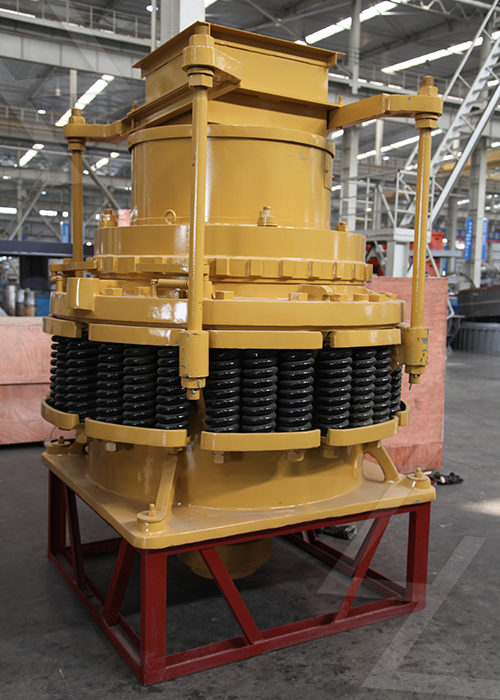
The right crusher configuration is non-negotiable for producing high-performance crusher run. We advise on optimal cavity designs and wear part metallurgy to manage flakiness index and maximize yield of cubical particles.
| Consideration | Technical Parameter | Impact on Crusher Run & CBR |
|---|---|---|
| Crusher Type & Setting | Closed Side Setting (CSS), Stroke, Cavity Profile | Dictates top size, gradation curve, and percentage of fines generated. |
| Liner Metallurgy | Manganese Steel Grade (e.g., Mn18Cr2) | Determines wear life and cost-per-ton in abrasive rock; affects consistency of product shape over time. |
| Feed Material Hardness | Unconfined Compressive Strength (UCS), Abrasion Index | Influences crusher selection (e.g., jaw vs. impactor), power draw, and optimal production rate. |
Strategic Partnership Value
Our role is to bridge the gap between aggregate production and geotechnical engineering. We provide the technical liaison to source material that delivers predictable, high CBR values, reducing compaction effort and mitigating long-term settlement risks in your pavement structures. This partnership ensures your aggregate is not just a commodity, but a engineered component of your project's foundation.
Frequently Asked Questions
How does crusher run CBR vary with different ore hardness on the Mohs scale?
Higher Mohs hardness (e.g., quartzite >7) accelerates wear, reducing CBR consistency. Use high-manganese steel liners (Hadfield Grade A, 11-14% Mn) and adjust CSS for optimal particle interlock. For abrasive ores, implement real-time particle size analysis to maintain CBR >80% through controlled fragmentation.
What is the impact of wear part degradation on crusher run CBR value?
Worn mantles/concaves produce flaky, elongated aggregates, degrading particle packing and CBR. Monitor wear profiles with laser scanning; replace at 60-70% wear depth. Use chrome-molybdenum alloy backing compounds to prevent liner movement and ensure consistent, cubical output for high CBR.
How do vibration anomalies affect the CBR of produced crusher run?
Excessive vibration indicates imbalance or loose components, causing uneven particle distribution and reduced CBR. Install tri-axial accelerometers on the main frame. Balance rotors dynamically and ensure foundation bolt torque meets OEM spec (e.g., 450-500 ft-lbs for major crushers) to stabilize output gradation.
What lubrication protocols are critical for maintaining consistent crusher run quality?
Contaminated or degraded grease in bearings causes overheating and rotor speed fluctuations, altering gradation. Use synthetic extreme-pressure grease (e.g., Mobilith SHC 220) with automatic lubrication systems. Monitor oil particle counts weekly and maintain ISO 4406 cleanliness code ≤18/16/13 for spindle bearings.
How should hydraulic system adjustments be made to optimize crusher run CBR?
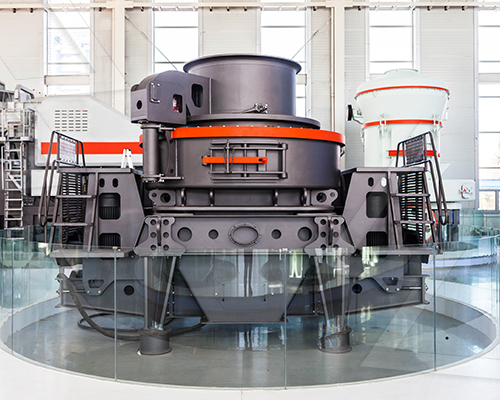
Incorrect hydraulic pressure affects CSS and crushing chamber profile. Set tramp release pressure per material crushability (e.g., 180-220 bar for granite). Utilize PLC-controlled hydraulic ram adjustment for real-time CSS corrections, ensuring a well-graded curve that maximizes CBR through optimal particle interlock.
Can crusher run CBR be maintained during high-throughput operations?
Yes, but requires synchronized feed control and wear compensation. Implement variable frequency drives on feeders to match crusher cavity level. Use ASRi or similar automated systems to adjust CSS based on mainshaft position/power draw, preserving the target gradation and CBR under fluctuating feed rates.