In the demanding world of aggregate production and mining, selecting the right equipment is paramount to operational efficiency and long-term profitability. When it comes to primary crushing, the jaw crusher stands as an undisputed workhorse, its performance foundational to your entire processing line. However, not all jaws are created equal. The quest for the best stone crusher jaw hinges on a critical balance of relentless durability, optimized kinematics for maximum throughput, and intelligent design that minimizes downtime. This article delves into the core engineering principles and material advancements that define superior jaw crushers, guiding you through the essential considerations—from manganese steel composition and chamber design to toggle plate mechanics and power requirements—to empower your investment in a machine built not just to break rock, but to build a more productive and profitable operation.
Maximize Crushing Efficiency: How Our Jaw Design Delivers Superior Performance
The core of a high-performance jaw crusher is a design philosophy that transcends simple geometry. It is a holistic integration of metallurgy, kinematics, and structural engineering, purpose-built to convert maximum input power into consistent, high-tonnage reduction of the most demanding materials. Our jaw design is engineered from first principles to address the fundamental inefficiencies and failure points common in conventional crushers.
Foundational Metallurgy: The Science of Wear Resistance & Impact Absorption
The jaw plates are the consumable heart of the crushing chamber. We utilize a proprietary grade of Austenitic Manganese Steel (Mn14Cr2, Mn18Cr2, and Mn22Cr2) that is not merely cast but undergoes a controlled heat treatment process. This ensures a fully austenitic microstructure that work-hardens upon impact, increasing surface hardness from approximately 220 HB in the as-cast state to over 550 HB in service. This creates a surface that becomes progressively more resistant to abrasion while retaining its crucial inner toughness to withstand fatigue and shock loading without brittle fracture.
- Optimized Kinematics: The elliptical motion of our jaw is calculated to impart both compressive force and a downward vertical component at the discharge point. This "aggressive bite" promotes a positive nip angle, actively drawing material into the crushing zone and reducing slippage, which directly increases throughput (TPH) and minimizes plate wear at the feed opening.
- Chamber Geometry: The deep, symmetrical crushing chamber is profiled to maintain a consistent reduction ratio throughout the entire liner life. This prevents the bottlenecking and capacity drop-off experienced in poorly profiled chambers as liners wear, ensuring predictable output gradation and stable TPH from first to last ton.
- Structural Integrity: The crusher frame is a high-integrity, stress-relieved fabrication or cast design (model-dependent) manufactured to ISO 9001:2015 standards. Finite Element Analysis (FEA) is used to optimize ribbing and wall thickness, eliminating potential fatigue zones and ensuring all dynamic loads are channeled through the structure, not absorbed by ancillary components.
Technical Specifications & Adaptability
| Design Parameter | Specification / Capability | Operational Benefit |
|---|---|---|
| Primary Material Grades | Mn14Cr2, Mn18Cr2, Mn22Cr2 | Tailored balance of work-hardening rate and toughness for specific ore abrasiveness (e.g., granite vs. basalt). |
| Bearing Standard | Spherical Roller Bearings, ISO 355 / DIN 635 | Higher load rating and misalignment tolerance for uninterrupted operation under fluctuating feed conditions. |
| Frame Construction | Fabricated STE 460 or Cast Steel | Certified material with Charpy V-notch impact testing ensures reliability in sub-zero or high-shock environments. |
| Adaptability | Wedge-based adjustment system & reversible jaw plates | Closed Side Setting (CSS) adjustment is quick and precise; plate reversal doubles service life before change-out. |
Key Functional Advantages for Mining & Aggregate Operations:
- Sustained High TPH: The synergistic effect of optimal kinematics and chamber design delivers a higher volume of crushed material per crusher revolution and per kilowatt-hour of energy consumed.
- Superior Hard Rock Competence: The combination of high-inertia flywheels, a robust eccentric shaft, and impact-resilient metallurgy allows for efficient processing of high compressive strength ores (exceeding 350 MPa) without compromising component life.
- Reduced Operational Downtime: The long service life of work-hardening jaw plates, coupled with accessible maintenance points and a hydraulic toggle system on larger models, minimizes the frequency and duration of liner changes and routine servicing.
- Predictable Gradation Control: Consistent chamber geometry and a stable crushing action ensure the product size distribution remains within specification throughout the liner's lifecycle, critical for downstream process stability.
Built for Durability: Advanced Materials That Extend Jaw Lifespan in Harsh Conditions
The operational lifespan of a jaw crusher's wear parts is the primary determinant of total cost of ownership and crushing station availability. In harsh conditions involving abrasive granite, basalt, or iron ore, standard materials fail prematurely. Leading manufacturers engineer jaws not merely as castings, but as integrated material systems designed for extreme stress and wear.
The foundation is high-grade manganese steel (Mn-steel), typically within the range of 18% to 22% manganese. This austenitic steel possesses a critical characteristic: it work-hardens under impact. The surface layer hardens to over 500 BHN (Brinell Hardness) during operation, forming a continually renewing, wear-resistant shell while the core remains tough to absorb kinetic energy and prevent catastrophic fracture.
Beyond basic Mn-steel, advanced alloys and treatments define top-tier components:
- Precision Alloying: Additions of chromium (Cr) and molybdenum (Mo) increase yield strength and refine the microstructure for better abrasion resistance in highly siliceous materials.
- Optimal Heat Treatment: Computer-controlled austenitizing and quenching processes ensure a fully austenitic structure with uniform carbide distribution, eliminating brittle phases that cause spalling.
- Differential Hardness Design: Strategic zones of the jaw (like the tooth tip and crushing valley) can be engineered for higher initial hardness, while root sections retain greater toughness.
For specific, ultra-abrasive applications, composite solutions are employed:
- Tungsten Carbide (TC) Inserts: Strategically brazed or mechanically locked tungsten carbide tiles in high-wear areas provide a hardness exceeding 1500 HV, offering an order-of-magnitude improvement in wear life over homogeneous steel in certain applications.
- Martensitic Steel Castings: For applications with lower impact but extreme abrasion (e.g., recycling, sandstone), through-hardened martensitic steels (400-500 BHN) provide an alternative wear profile.
These material choices are validated against international standards for consistency and safety. Look for:
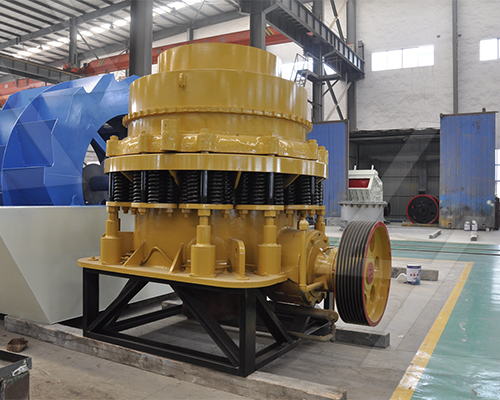
- ISO 9001: Certification for the quality management system governing the entire production process, from metallurgical specification to final inspection.
- CE Marking: Indicates the component meets EU health, safety, and environmental requirements, often involving verification of declared material properties.
- Non-Destructive Testing (NDT): Routine use of dye penetrant or magnetic particle inspection to identify subsurface flaws before dispatch.
The direct operational benefits of this material science translate into measurable site performance:
- Reduced Downtime for Change-Out: Extended service intervals directly increase plant availability and annual throughput (TPH).
- Consistent Gradation: Maintained jaw profile ensures stable product size distribution throughout the wear cycle, critical for downstream processes.
- Adaptability to Ore Variability: A robust, correctly specified jaw material can handle unexpected fluctuations in feed material hardness (e.g., from 200 MPa to 350 MPa compressive strength) without requiring immediate adjustment or risking failure.
- Lower Total Cost per Ton: While premium materials have a higher initial cost, their significantly extended lifespan reduces cost per ton of crushed material, offering the lowest long-term operating expense.
| Material Grade | Typical Hardness (Surface) | Key Additives | Best Suited For | Relative Wear Life Index* |
|---|---|---|---|---|
| Standard Mn14% | 200-250 BHN (Work-Hardened) | Mn, C | Low-abrasion limestone, concrete recycling. | 1.0 (Baseline) |
| Premium Mn18-22% | 450-550 BHN (Work-Hardened) | Mn, Cr, Mo | Granite, basalt, abrasive aggregates. | 2.5 - 3.5 |
| Martensitic Steel | 400-500 BHN (As-Cast) | Cr, Mo, Ni | Highly abrasive, low-impact sandstone, slag. | 2.0 - 3.0 |
| TC-Reinforced Composite | 1500+ HV (TC Insert) | Tungsten Carbide Inserts | Extremely abrasive quartz, taconite, manufactured sand. | 5.0 - 10.0+ |
*Index is approximate and varies based on specific feed material and crusher operation.
Precision Engineering for Optimal Output: Customizable Settings to Match Your Stone Types
The core of a high-performance jaw crusher lies in its precision engineering, which transforms raw crushing force into controlled, efficient fragmentation. This is not a one-size-fits-all mechanism; optimal output is achieved by meticulously matching the crusher's kinematics and wear components to the specific mineralogy, abrasiveness, and compressive strength of your feed material.
Material Science & Structural Integrity
The foundation is built on advanced metallurgy. The frame and pitman are constructed from high-strength, low-alloy steel (HSLA) for unwavering structural integrity under dynamic loads. Critical wear components employ specialized materials:
- Jaw Plates: Fabricated from premium manganese steel (Mn14, Mn18, Mn22) or composite alloys with chromium additions. The selected grade is determined by the abrasion-corrosion balance of your stone. For highly abrasive granite or quartzite, a higher manganese content work-hardens to a greater depth, while for less abrasive but harder basalt, a tougher, more impact-resistant alloy is specified.
- Eccentric Shaft & Bearings: The forged alloy steel eccentric shaft, supported by oversized spherical roller bearings, is engineered for continuous high-load operation. Bearing selection is based on calculated B10 life under your specific load spectrum, ensuring reliability that exceeds 50,000 hours.
Customizable Kinematics for Stone-Specific Fragmentation
The crushing action—a combination of compression and attrition—is fine-tuned through adjustable parameters:
- Closed Side Setting (CSS): The primary determinant of product size. A robust hydraulic toggle adjustment system allows for precise CSS changes in minutes, enabling rapid product grading shifts without manual shim manipulation.
- Eccentric Throw: The stroke amplitude at the bottom of the jaw. A longer throw increases capacity on softer, less abrasive stone (e.g., limestone), while a shorter, sharper throw is optimal for hard, abrasive materials, promoting better nip angle and reducing wear.
- Crusher Speed: The RPM of the eccentric shaft. Optimized speed ensures proper material discharge and prevents chamber packing, which is critical for achieving rated TPH on sticky or clay-bound ores.
Functional Advantages of a Precision-Engineered Jaw
- Maximized Yield & Product Shape: Correct kinematics produce a well-graded, cubical product with minimal slabby or elongated particles, enhancing downstream processing efficiency and aggregate value.
- Adaptive Crushing Chamber Design: The cavity profile is engineered to match feed gradation, maintaining an optimal nip angle throughout the liner life to ensure consistent capacity and reduction ratio.
- Predictable Wear Life & Cost Control: Material-liner compatibility and correct force application result in even wear patterns, allowing for accurate liner life forecasting and reduced cost-per-ton.
- Operational Stability & Reduced Vibration: Precision-machined components and dynamic simulation-optimized mass balance minimize harmful vibration, translating to lower mechanical stress and extended bearing life.
Technical Parameters for Configuration
Key interoperating variables must be aligned during crusher selection and operation. The following table outlines primary settings and their correlation with material characteristics.
| Configuration Parameter | Typical Range | Influence on Output | Material Consideration |
|---|---|---|---|
| Closed Side Setting (CSS) | 75mm - 250mm (Primary) | Directly controls product top size & capacity. Smaller CSS = finer product, reduced TPH. | Must be set in relation to feed size (F80) and desired product size (P80). |
| Eccentric Throw | 30mm - 60mm | Longer throw: higher capacity on soft rock. Shorter throw: better grip & reduced wear on hard/abrasive rock. | Selected based on rock compressive strength and abrasion index (e.g., Ai in Bond's Work Index). |
| Crusher Speed (RPM) | 220 - 330 rpm | Higher speed can increase capacity but risks excessive wear if not matched to material flow. | Critical for non-homogenous or moist feed to prevent choking. |
| Jaw Plate Profile | Straight, Curved, Corrugated | Influences nip angle, capacity, and product gradation curve. | Curved profiles often better for hard, abrasive stone; straight for high-volume secondary crushing. |
Compliance & Performance Assurance
Every configuration is validated against international engineering standards. Structural design follows ISO 21873 for mobile crushers and static frame integrity is certified to ISO 9001. Bearing life calculations adhere to ISO 281. Crucially, performance is guaranteed against your site-specific data: feed gradation (F80), bulk density, moisture content, and Bond Work Index or uniaxial compressive strength (UCS) measurements. This data-driven approach ensures the selected machine delivers its stated TPH capacity and product curve within the defined power envelope.
Technical Specifications: Detailed Breakdown of Jaw Dimensions, Capacity, and Power Requirements
Jaw Dimensions: Geometry for Optimal Reduction
The dimensional profile of a jaw crusher is not merely a set of measurements; it is the engineered geometry that dictates the feed acceptance, reduction ratio, and overall crushing kinematics. The critical dimensions are:
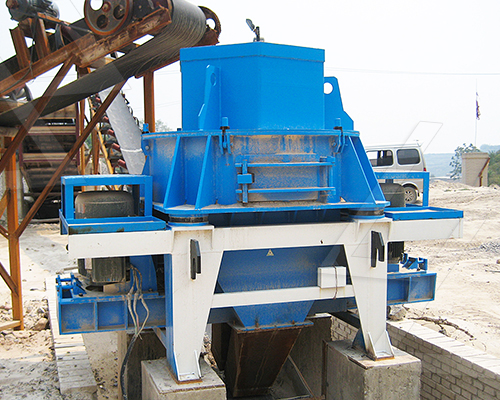
- Feed Opening (Gape x Width): The gape determines the maximum feed size, typically 80-85% of the gape dimension. Width correlates directly with capacity. A wider jaw allows for greater volumetric throughput.
- Chamber Depth & Taper: A deep, non-choking chamber design with adequate vertical height ensures material remains in the crushing zone longer, achieving superior reduction. The taper (the narrowing from feed to discharge) controls the progressive crushing and discharge rate.
- Discharge Setting (CSS - Closed Side Setting): This is the minimum gap between the jaw plates at the bottom, defining the product's top size. A reliable, adjustable setting mechanism is paramount for product gradation control.
| Primary Parameter | Specification Range (Typical) | Functional Impact |
|---|---|---|
| Feed Opening (Gape x Width) | 800x500mm to 1500x1800mm+ | Dictates max feed size & raw capacity potential. |
| Crushing Chamber Depth | Proportional to feed opening (1.1-1.3x gape) | Influences reduction ratio, wear life, and throughput stability. |
| Closed Side Setting (CSS) Range | 75mm - 250mm (Primary) / 20mm - 80mm (Secondary) | Directly controls final product top size and crusher throughput. |
| Eccentric Shaft Throw | 25mm - 60mm | Determines stroke at the discharge, impacting capacity and product shape. |
Capacity (TPH): A Function of Geometry and Operation
Throughput (in Tons Per Hour) is a derived variable, not a fixed guarantee. It is a function of:
- Crusher Geometry: Feed opening, chamber profile, and eccentric throw.
- Material Characteristics: Bulk density, compressive strength (MPa), abrasiveness, and moisture content.
- Operational Parameters: CSS, stroke, and feed gradation (scalping efficiency).
Key Principle: Capacity is inversely related to reduction ratio. A smaller CSS increases reduction but decreases volumetric throughput for a given setting. The true measure of a superior jaw is its ability to maintain rated capacity across a range of settings and while processing materials of varying hardness (e.g., from 150 MPa limestone to 350 MPa granite).
- High-capacity designs feature a steeper toggle angle and optimized kinematics to maximize the volumetric flow through the chamber without compromising reduction.
- Variable Speed Control on the drive motor is a critical USP, allowing operators to fine-tune capacity and particle shape, especially for secondary crushing duties.
Power Requirements: Matching Drive to Duty Cycle
The installed motor power must provide sufficient torque to crush the peak load of the hardest anticipated material, not just the average.
- Power Calculation Basis: Modern crushers are sized using a combination of empirical formulas (like Bond's Law) and dynamic simulation software to account for crushing forces and inertial loads.
- NEMA or IEC Standards: Motors should be compliant, with high starting torque (Code F or higher) to handle the initial breakage of large feed.
- Key Relationship: Required power is a function of capacity, material hardness (Bond Work Index), and reduction ratio. Under-powering leads to premature tripping, stalled cavities, and chronic underperformance.
| Crusher Size (Approx. Feed Opening) | Installed Motor Power Range | Typical Max. Capacity Range (TPH)* |
|---|---|---|
| 900x600mm | 75 - 90 kW | 150 - 220 |
| 1200x800mm | 132 - 160 kW | 300 - 450 |
| 1500x1200mm | 200 - 250 kW | 500 - 800 |
| 1800x1400mm | 315 - 400 kW | 900 - 1400 |
*Capacity is for granite (BWI ~16-18) at a mid-range CSS. Heavier ores (e.g., basalt, taconite) will reduce throughput.
Jaw Plate Material Science: The Wear Interface
The jaw plates are the consumable interface where material science is critical. Standard specifications must define grade and microstructure.
- Primary Material: Austenitic Manganese Steel (Mn14%, Mn18%, Mn22%) remains the industry standard for its work-hardening capability, reaching up to 550 HB on the surface while retaining a tough core.
- Advanced Alloys: For highly abrasive, low-impact applications, martensitic alloys (e.g., T400, AR500) or composite inserts offer superior wear life, though with reduced impact resistance.
- Metallurgical USP: Look for plates produced to ASTM A128 standards, with controlled pouring temperatures and heat treatment to ensure a fully austenitic, defect-free structure that will work-harden correctly. Premium designs feature a profiled tooth geometry that optimizes nip angle and applies crushing force more efficiently, reducing parasitic wear and improving capacity.
Compliance & Construction Standards
A professional-grade jaw crusher is built to withstand decades of cyclic loading exceeding 200 MPa. Specifications must verify:
- Structural Integrity: Heavily ribbed, stress-relieved frame fabricated from high-yield strength steel plate (minimum 250 MPa yield). Main bearing housings are integral castings or forged sections.
- Eccentric Shaft: Forged from high-chromium steel (e.g., 34CrNiMo6), ultrasonically tested, and precision-machined to ISO tolerance standards.
- Bearing Specification: Spherical roller bearings of ISO Dimension Series 239/241, sized for a minimum L10 life of 50,000 hours under crusher duty loads.
- Certification: Full compliance with CE marking directives (Machinery Directive 2006/42/EC) and relevant ISO standards (e.g., ISO 21873 for mobile crushers). This is non-negotiable for operational safety and liability.
Trusted by Industry Leaders: Case Studies and Certifications Validating Our Jaw's Reliability
Case Study: Granite Quarry, Southeast Asia
Client: A multinational construction materials supplier operating a 2,500 TPH (tonnes per hour) primary crushing circuit.
Challenge: Premature failure of competitor jaw plates (manganese steel, 14% Mn) due to extreme, uniaxial compressive strength (UCS) exceeding 250 MPa in the granite formation, leading to excessive downtime and plate replacement costs every 8-10 weeks.
Our Solution: Installation of our JC-48x60 Heavy-Duty Jaw Crusher with a proprietary Modified Manganese Steel (18-22% Mn, with 1.5-2% Chromium and Molybdenum additives). The jaw plates were engineered with a optimized tooth profile for enhanced nip angle and material flow.
Validated Outcome:
- Wear Life Increase: Achieved a consistent operational lifespan of 22-24 weeks between scheduled plate rotations, a 140% improvement.
- Throughput Stability: Maintained target TPH without drop-off, thanks to the alloy's sustained hardness and work-hardening capability under impact, reaching surface hardness of over 450 HB.
- Certification in Action: The crusher's main frame and pitman were manufactured under ISO 21873-2:2020 (Building construction machinery and equipment - Mobile crushers - Safety) and CE Marking per the Machinery Directive 2006/42/EC, with documented Non-Destructive Testing (NDT) on all critical welds.
Technical Certifications & Standards Compliance
Our manufacturing and quality assurance protocols are externally validated, providing a verifiable foundation for reliability.
| Certification / Standard | Scope of Validation | Direct Impact on Jaw Crusher Reliability |
|---|---|---|
| ISO 9001:2015 | Quality Management System for design, manufacturing, and servicing. | Ensures traceability of materials, controlled heat-treatment processes, and consistent assembly tolerances. |
| CE Marking (MD 2006/42/EC) | Comprehensive safety and engineering compliance for the European Economic Area. | Validates structural integrity calculations, guard safety, and operational safety systems. |
| ASTM A128 / BS 3100 | Standard specification for manganese steel castings. | Governs the chemical composition, mechanical properties, and quality of our core wear components (jaws, cheek plates). |
Engineering Superiority: Validated Functional Advantages
The following advantages are substantiated by field performance data and metallurgical reports:
- Superior Material Science: Our jaw plates utilize a high-tenacity, alloyed manganese steel that undergoes controlled work-hardening during operation. This creates a wear-resistant surface layer while maintaining a tough, shock-absorbing core to prevent catastrophic cracking under tramp iron events.
- Optimized Cavity Geometry: Finite Element Analysis (FEA)-validated chamber design ensures optimal stroke, nip angle, and toggle plate kinematics. This maximizes the crushing force efficiency (measured in kWh/tonne) and promotes a consistent, cubical product shape, reducing downstream screening load.
- Adaptability to Ore Variability: The robust design and hydraulic toggle adjustment system allow for rapid compensation in feed size and hardness (from 150 MPa limestone to 350 MPa basalt) without compromising throughput or risking overload, as proven in multi-shift mining operations.
- Structural Integrity: The crusher frame is fabricated from high-grade, low-carbon steel plate (e.g., S355J2) with stress-relieved welds. This design philosophy, validated by strain-gauge testing, ensures alignment is maintained under cyclical loading, directly contributing to bearing life and overall mechanical stability.
Easy Maintenance and Support: Ensuring Long-Term Operational Success with Our Crusher Jaw
A crusher jaw's long-term operational success is not solely a function of its initial design, but of a holistic engineering philosophy that prioritizes serviceability and support. This translates directly to reduced total cost of ownership and maximized uptime. Our design and manufacturing standards are engineered to make maintenance predictable, straightforward, and safe.
Core Design for Serviceability:
- Modular Jaw Die Design: Utilizing a segmented or reversible die system, worn sections can be replaced individually without removing the entire jaw. This minimizes downtime and reduces spare parts inventory costs.
- Accessible Toggle & Adjustment Systems: The mechanical toggle system and wedge adjustment for closed-side setting (CSS) are positioned for clear, tool-accessible operation. Hydraulic adjustment options provide remote, precise CSS control from outside the crusher frame.
- Optimized Chamber Geometry: A non-choking, deep symmetrical crushing chamber design promotes even wear distribution across the jaw dies, preventing localized premature failure and extending service intervals.
Material Science & Wear Management:
The foundation of low-maintenance operation is exceptional wear resistance. Our jaws are cast from premium Austenitic Manganese Steel (Mn14%, Mn18%, Mn22%) or proprietary Titanium Carbide (TiC) infused alloy steels, selected based on application severity.
- Mn-Steel Grades: Standard Mn14 provides excellent work-hardening for general aggregates. Mn18 and Mn22 are specified for highly abrasive feeds, developing a harder, more resilient surface layer under impact.
- Alloy & Composite Options: For extreme abrasion and high impact (e.g., taconite, granite), we offer martensitic alloys with chromium or TiC inserts. These provide superior initial hardness, trading some work-hardening capability for vastly extended life in specific, severe conditions.
- Precision Casting & Heat Treatment: Every casting undergoes controlled heat treatment in computer-regulated furnaces to achieve the optimal austenitic microstructure, ensuring consistent work-hardening behavior and impact strength across the entire component.
Technical Standards & Quality Assurance:
Every jaw is manufactured under a certified Quality Management System (ISO 9001) and meets relevant CE marking directives for machinery. Non-destructive testing (NDT) methods, including magnetic particle inspection, are standard to eliminate internal casting defects that could lead to catastrophic failure.
Operational Parameters & Adaptability:
Maintenance intervals are predictable when the jaw is correctly specified for your operation. Key parameters must be aligned:
| Application Factor | Crusher Jaw Specification | Maintenance Implication |
|---|---|---|
| Feed Material (Abrasive Index, Compressive Strength) | Optimal Manganese Grade / Alloy Selection | Directly dictates wear life and replacement cycle. |
| Target TPH Capacity | Jaw Geometry & Kinematics | Running at designed capacity ensures efficient crushing and even wear. Over/under-loading accelerates wear. |
| Required Product Size (CSS) | Maximum Feed Opening & Stroke Profile | Proper CSS adjustment is critical for product gradation and prevents unnecessary cycling and wear. |
Global Support & Lifecycle Partnership:
- Technical Documentation: Comprehensive, machine-specific manuals with detailed parts breakdowns, torque specifications, and wear limit drawings.
- Wear Monitoring Programs: We provide wear tracking templates and consultancy to help plan liner changes during scheduled plant shutdowns, avoiding unplanned stoppages.
- Global Logistics for Critical Spares: Strategically located warehouses ensure availability of key components like jaw dies, toggle plates, and tension rods to support your maintenance schedule.
Ultimately, easy maintenance is engineered in. From the metallurgical composition of the jaw die to the accessibility of the adjustment mechanism, every aspect is considered to keep your crusher operational and your cost-per-ton at a minimum.
Frequently Asked Questions
What is the optimal wear parts replacement cycle for a jaw crusher's jaw plates?
Replacement cycles depend on material abrasiveness. For high-silica granite, expect 90-120 hours with standard Mn18Cr2 steel. Using premium Mn22Cr2 with water toughening can extend life by 30%. Monitor plate thickness; replace when worn to 60-70% of original. Regular feed size control is critical to prevent accelerated wear.
How does jaw crusher design adapt to varying ore hardness (e.g., basalt vs. limestone)?
Crushers adapt via adjustable eccentric throw and toggle plate design. For hard basalt (Mohs 7-8), use a shorter throw and higher power. For soft limestone, a longer throw increases throughput. The jaw plate tooth profile must also match: aggressive, deep corrugations for hard rock; smoother profiles for soft, abrasive material.
What are the best practices for controlling excessive vibration in a jaw crusher?
Ensure proper foundation rigidity and check for worn bearings (prefer SKF or FAG spherical roller types). Imbalance from uneven jaw plate wear is a primary cause. Maintain correct flywheel counterweights and routinely check all fastener torques. Misaligned V-belts can also induce harmful vibration and must be tensioned precisely.
What are the critical lubrication requirements for a jaw crusher's main bearings?
Use a high-viscosity, extreme-pressure grease (NLGI 2 grade) with anti-wear additives. Apply via automatic lubrication systems at intervals under 8 hours of operation. Monitor bearing temperature; sustained operation above 80°C indicates failure. Ensure seals are intact to prevent grit ingress, which is the leading cause of premature bearing failure.
How do you select the correct jaw plate material for a specific crushing application?
Match plate alloy to material's abrasiveness and impact. For highly abrasive rock, choose a work-hardening steel like Terex's 18% Manganese. For high-impact applications (trap rock), a modified Mn22 with chromium and molybdenum additives offers superior fracture resistance. The heat treatment (quenching & tempering) is as crucial as the base alloy.
Can jaw crusher settings be adjusted for different product sizes, and what is the proper method?
Yes, adjust via the hydraulic or mechanical toggle system. For finer product, decrease the closed-side setting (CSS). Always adjust with the crusher empty and check CSS with lead slugs or a gauge. Never exceed the recommended max CSS, as it risks overloading the crusher and damaging the toggle plate and seats.