Beneath the earth’s surface lies a foundation of immense strength and versatility: basalt. This igneous rock, formed from cooled lava, is a cornerstone of modern construction, prized for its durability and used in everything from aggregate to advanced composite materials. Unlocking this valuable resource, however, demands robust and specialized machinery engineered for resilience and precision. The world of basalt mining equipment is a fascinating intersection of raw geological power and sophisticated technology. From powerful primary crushers that first fracture the dense stone to high-capacity conveyors and screening plants that sort and transport it, each piece of equipment is a critical link in a highly efficient chain. This article delves into the essential machinery that transforms formidable basalt formations into the building blocks of our infrastructure, exploring the innovations that drive productivity and safety in this demanding sector.
Maximizing Yield in Volcanic Terrain: How Our Equipment Transforms Basalt Extraction
Volcanic terrain presents a unique set of challenges for aggregate producers. Basalt's inherent properties—high compressive strength (often 200-300 MPa), significant abrasiveness (7+ on the Mohs scale), and frequent vesicular or columnar jointing—directly impact equipment selection and operational efficiency. Standard machinery suffers from accelerated wear, unplanned downtime, and suboptimal fragmentation, leading to yield loss. Our equipment portfolio is engineered from the ground up to address these specific material science and geotechnical factors, transforming extraction from a battle of attrition into a controlled, high-yield process.
The core engineering philosophy centers on material compatibility and controlled energy application. This is achieved through several key design pillars:
- Advanced Material Science in Wear Components: Critical wear parts are not simply "hardened steel." We utilize proprietary alloy formulations, including high-grade austenitic manganese steel (Mn14, Mn18) with optimized work-hardening characteristics for impact zones, and tungsten carbide-infused alloys for abrasion-dominated surfaces. This multi-material approach ensures components match the specific wear mechanism—impact, abrasion, or a combination—extending service life by 40-60% over standard options in basalt applications.
- Precision Fragmentation Dynamics: Maximizing yield begins at the primary break. Our jaw and gyratory crushers feature kinematics and chamber profiles engineered for basalt. This design promotes inter-particle crushing and creates a natural "rock-on-rock" action within the chamber, reducing wear on manganese liners while producing a consistent, well-shaped output with a lower percentage of undesirable fines or oversize material.
- Terrain-Adaptive Structural Integrity: Equipment frames and chassis are built to ISO 8528 and relevant CE machinery directives for structural integrity. Finite Element Analysis (FEA) optimizes design to handle the dynamic stresses of breaking dense basalt and the torsional loads encountered on uneven volcanic bedrock, ensuring reliability and protecting core components.
- Integrated Process Intelligence: Modern extraction is a system. Our equipment offers integrated sensor packages monitoring crusher load, power draw, and output dimensions. This data enables real-time adjustment of feeder rates and crusher settings to maintain optimal throughput and product gradation, preventing choke-feeding or empty running that wastes energy and capacity.
For primary and secondary crushing stages in basalt operations, the following technical specifications highlight the performance-oriented design:
| Model Series | Recommended Application | Max. Feed Size (mm) | Capacity Range (TPH)* | Key Feature for Basalt |
|---|---|---|---|---|
| PJ-B Series (Primary Jaw) | Primary Blasted Feed | Up to 1500 | 500 - 2,200 | "Quattro Movement" jaw kinematics for higher reduction ratio & reduced liner wear. |
| GC-B Series (Gyratory) | High-Tonnage Primary | Up to 1800 | 1,800 - 5,000 | Hydroset system allows CSS adjustment under load for consistent product size. |
| CI-B Series (Impact Crusher) | Secondary/Tertiary for Less Vesicular Basalt | Up to 800 | 250 - 1,500 | Monobloc rotor design & hydraulic apron adjustment for precise product shaping. |
| CH-B Series (Cone Crusher) | Secondary/Tertiary for Abrasive, Hard Basalt | Up to 350 | 200 - 1,200 | Patented multi-layer crushing chamber and automatic wear compensation. |
*Capacity is dependent on specific feed gradation, hardness, and desired product size.
The result is a measurable transformation in site economics. Operators achieve higher sustained throughput (TPH) with lower cost per ton, as extended maintenance intervals and higher availability directly increase yield from the same reserve. The consistent, in-spec product gradation reduces re-circulation load and improves downstream screening efficiency. Ultimately, this engineering-focused approach de-risks operations in volcanic terrain, providing the predictable performance necessary for long-term reserve planning and asset ROI.
Engineered for Extreme Loads: The Structural Integrity of Our Basalt Mining Solutions
The structural integrity of basalt mining equipment is non-negotiable. Basalt, with a typical Mohs hardness of 6-7 and high compressive strength, generates immense abrasive and impact forces. Our solutions are engineered from the ground up to withstand these extreme loads, ensuring operational continuity, safety, and total cost of ownership.
Core Material Science & Fabrication
The foundation of durability lies in advanced metallurgy and precision manufacturing.
- High-Strength, Abrasion-Resistant Steels: Primary wear components are constructed from quenched and tempered alloy steels and manganese steels (e.g., Hadfield-grade Mn-steel, 400-500 HB wear plates). These materials combine high yield strength with exceptional work-hardening properties, becoming tougher under continuous impact.
- Strategic Material Application: We employ a graded material strategy. High-impact zones receive the toughest alloys, while structural frames utilize high-tensile steel (e.g., S690QL) for maximum strength-to-weight ratio, resisting fatigue and deformation.
- Robust Fabrication & Joining: Critical welds are performed using certified procedures (following ISO 3834, ASME IX). Post-weld heat treatment (PWHT) is applied to critical stress-relieved assemblies to eliminate internal stresses and prevent crack propagation.
Design Philosophy for Load Management
Structural resilience is designed in, not added on.
- Finite Element Analysis (FEA): Every major structural component undergoes iterative FEA simulation under multi-axis loading conditions far exceeding nominal operational specs. This identifies and reinforces potential stress concentrators before fabrication.
- Monobloc & Reinforced Structures: Where applicable, key assemblies like crusher main frames are designed as monobloc or modular, massively reinforced castings or fabrications, eliminating weak points inherent in bolted-together designs.
- Optimized Load Paths: Component geometry is engineered to channel crushing forces directly through the structure's strongest axes, protecting motors, bearings, and auxiliary systems from shock loads.
Functional Advantages in Operation
This engineering translates directly into measurable field performance.
- Sustained High TPH Capacity: Equipment maintains rated throughput (e.g., 600-1200 TPH for primary stations) without structural degradation, even with variable feed size and hardness.
- Reduced Structural Fatigue: The combination of optimal material and design dramatically extends service life for primary structures, often matching the lifecycle of the entire plant.
- Enhanced Safety Margin: Built-in structural redundancy and certified design calculations (CE, ISO 12100) ensure integrity under fault conditions, protecting personnel and assets.
- Adaptability to Ore Variability: The inherent over-engineering allows seamless handling of harder-than-specified basalt seams or occasional tramp material without catastrophic failure.
Technical Parameters: Primary Jaw Crusher Frame
| Parameter | Specification | Standard / Note |
| :--- | :--- | :--- |
| Main Frame Material | S690QL High-Tensile Steel | ISO 6932 / EN 10025 |
| Wear Plate Hardness | 400 - 450 HB | AR400/450, Brinell Hardness |
| Design Factor (Safety Margin) | ≥ 4:1 | Static Load to Yield Strength |
| Fatigue Test Cycles | 2 x 10⁷ cycles at 110% load | ISO 12100 / FEM 1.001 |
| FEA Validation Load | 150% of Max Dynamic Crushing Force | ISO 17348 (Heavy Machinery) |
| Corrosion Protection | SA 2.5 Blast Cleaning + Epoxy Primer | ISO 12944 (C5-M Industrial) |
Optimizing Operational Efficiency: Advanced Technology for Reduced Downtime
Operational efficiency in basalt mining is fundamentally governed by equipment durability and process intelligence. Basalt's high compressive strength (typically 200-350 MPa) and abrasive silica content demand a systems-level approach that integrates advanced material science with predictive operational technology. The goal is to shift from reactive maintenance to a condition-based paradigm, directly increasing mechanical availability and throughput.
Core Technological Pillars for Uptime
-
Wear Part Material Engineering: Standard manganese steel is insufficient for sustained basalt processing. Premium equipment utilizes modified alloys:
- Quenched & Tempered (Q&T) Steels: For crusher jaws, cones, and impactor blow bars, offering superior surface hardness with a tough, shock-absorbing core.
- Ceramic-Matrix Composites: Strategically fused into liner plates for transfer points and chutes, providing exceptional resistance to sliding abrasion.
- Application-Specific Alloy Grading: Different wear zones within a single machine (e.g., primary vs. secondary crushing chamber) are fitted with alloys optimized for the specific type of impact and abrasion encountered.
-
Integrated Condition Monitoring (ICM): Modern crushers and screens are equipped with embedded sensor arrays that move beyond simple temperature alarms.
- Vibration Analysis: Tri-axial accelerometers on bearing housings and crusher frames detect imbalances, misalignment, and bearing degradation at their earliest stages.
- Pressure & Flow Monitoring: Hydroset systems on cone crushers and hydraulic circuits are monitored for pressure trends, indicating chamber conditions and potential seal failures.
- Liner Wear Tracking: Laser profiling or ultrasonic sensors provide remaining life estimates for crusher mantles and concaves, enabling liner changes to be planned during scheduled stops.
-
Process Automation & Crusher Optimization: Automation stabilizes operation at peak efficiency, reducing cyclical overloading and erratic feed that accelerates wear.
- Adaptive Crushing Control: Systems automatically adjust crusher settings (e.g., CSS, rotor speed) in real-time based on power draw and feed size distribution from upstream scanners.
- Intelligent Load Management: PLCs coordinate feeder speed, crusher power, and conveyor rates to maintain a consistent, non-choking feed for optimal TPH and product gradation.
Technical Specifications & Standards Compliance
| System Component | Key Parameter | Industry Benchmark & Relevance |
|---|---|---|
| Primary Jaw Crusher | Feed Opening, CSS Range, Drive Power | Dictates max feed size (typically >1m for basalt) and baseline TPH capacity. Heavy-duty roller bearings are non-negotiable. |
| Secondary Cone Crusher | Head Diameter, Nominal Power, Crushing Chamber Design | Directly linked to product shape and fines generation. High-reduction "quarry" chambers are standard. Must meet ISO 1940-1 balance standards. |
| Horizontal Shaft Impactor (HSI) | Rotor Diameter/Width, Rotor Kinetic Energy (Joules) | Kinetic energy rating determines fracture force for cubical shaping. Welded rotor construction is essential for basalt. |
| Vibrating Screen | Screening Area (m²), Drive Force (kN), Deck Configuration | Adequate sizing prevents bottlenecking. High-G exciters ensure material stratification and efficiency in damp, sticky conditions. |
| Structural & Safety | Frame Design, Guarding, Access | Fabricated steel frames require FEA validation. Full compliance with CE/ISO 21873 (mobile crushers) and ISO 14122 (safety) is mandatory. |
Implementation for Measurable Outcomes
Deploying this technology stack yields quantifiable results. Predictive maintenance driven by ICM data can reduce unplanned downtime by 30-50%. Consistent, automated operation improves specific energy consumption (kWh/tonne) and increases overall system capacity by maintaining optimal crusher cavity levels. The selection of application-specific wear materials extends mean time between failures (MTBF) for critical components, directly lowering cost per ton. Ultimately, the most efficient operation is one where equipment performance is predictable, maintenance is scheduled, and throughput is maximized through engineered reliability.
Precision in Hard Rock Processing: Tailored Components for Superior Material Handling
Precision in hard rock processing is not a luxury but a fundamental requirement for operational viability and long-term asset protection. Basalt, with its high compressive strength, abrasiveness, and potential for high silica content, demands a systems-level approach to material handling where every component is engineered for its specific role in the comminution and transfer chain. The goal is to minimize uncontrolled impact, reduce fines generation at transfer points, and manage the material's natural abrasiveness through targeted material selection and precision engineering.
Core Material Science for Basalt Applications
Component longevity is dictated by the correct application of advanced materials. Standard mild steel is wholly inadequate for sustained basalt handling.
- High-Stress Impact Zones (Primary Crusher Jaws, Cone Liners, Impactor Blows Bars): These components require high toughness to resist fracture from massive compressive forces. Austenitic manganese steel (Mn14, Mn18) remains the benchmark, work-hardening upon impact to form an extremely hard, wear-resistant surface while retaining its ductile core. For ultra-abrasive basalt with lower impact, martensitic chromium steel or composite ceramic/metallic alloys provide superior wear life.
- Abrasion-Dominant Areas (Chute Liners, Skirtboard, Hopper Wear Plates): Here, the primary wear mechanism is sliding abrasion. Quenched and tempered alloy steels (e.g., AR400, AR500) or specialized carbide-imbued cast irons are specified. Their extreme surface hardness provides direct resistance to the cutting and gouging action of basalt fragments.
- Structural Integrity: Main frames, chassis, and support structures for basalt processing equipment are fabricated from high-yield strength steel (e.g., S355, S460) and are designed with finite element analysis (FEA) to withstand dynamic loads and vibrational stresses endemic to hard rock crushing.
Technical Standards and Validation
All critical components and integrated systems must adhere to international standards that guarantee structural integrity, performance, and safety. ISO 21873 for mobile crushers, ISO 9001 for quality management in manufacturing, and CE marking for the European market are non-negotiable baselines. Component-specific standards, such as those for wire rope (ISO 2408) or vibration testing (ISO 10816), further ensure reliability.
Functional Advantages of Tailored Component Systems
- Optimized Material Flow: Engineered chutes with calculated geometry and impact beds eliminate material hang-up and direct the flow centrally onto conveyor belts, drastically reducing spillage and belt wear.
- Dust Suppression Integration: Sealing systems at transfer points are designed in tandem with dust extraction ports, enabling effective capture at the source and maintaining compliance with airborne particulate regulations (e.g., MSHA, OSHA).
- Predictable Maintenance Cycles: With wear components manufactured to precise specifications from known material grades, wear life becomes predictable. This enables just-in-time inventory management and planned downtime, transforming maintenance from a reactive to a strategic operation.
- System-Wide Efficiency Gains: A precision-tailored handling system reduces parasitic power losses from friction and re-circulation, directly contributing to higher throughput (TPH) and lower cost-per-ton metrics. It protects the significant capital investment in primary crushers and screens by ensuring they are fed correctly and operate within design parameters.
Key Technical Parameters for System Specification
When engineering a handling circuit for basalt, the following parameters must be defined to tailor components correctly:
| Parameter | Consideration | Impact on Component Design |
|---|---|---|
| Abrasion Index (Ai) | Measured abrasiveness of the specific basalt deposit. | Determines the minimum required hardness (Brinell/Rockwell) for liners and wear surfaces. |
| Bulk Density | Typically 1.6 - 1.8 t/m³ for basalt. | Sizes hopper volumes, feeder capacity, and structural load calculations for bins and conveyors. |
| Feed Size & Gradation | Maximum lump size from the quarry face. | Dictates the dimensions and impact capacity of primary feed hoppers, grizzly bars, and apron feeder pans. |
| Moisture Content | Can vary significantly. | Influences chute angles, hopper design, and the selection between mechanical and vibratory feeders to prevent bridging. |
| Target Throughput (TPH) | The system's required hourly capacity. | Drives the width, speed, and power of conveyors, as well as the size and duty rating of all transfer points. |
The integration of these factors results in a cohesive material handling circuit. From heavy-duty apron feeders capable of accepting direct dump from 100-ton haul trucks, to impact-resistant primary feed chutes, and cascading systems that control the descent of material to secondary screens, each link is a precision component. This engineered approach is what separates a high-availability, low-operating-cost basalt processing operation from one plagued by unplanned downtime, excessive wear part consumption, and chronic material handling inefficiencies.
Built to Withstand Harsh Environments: Durability and Safety Features Explained
Basalt mining presents a uniquely demanding set of operational challenges. The material's high compressive strength (typically 200-350 MPa) and abrasive silica content necessitate equipment engineered from the ground up for extreme wear resistance and structural integrity. Durability and safety are not secondary features but the foundational engineering parameters for any viable system.
Core Material and Construction Philosophy
The primary defense against basalt's abrasiveness is the strategic use of advanced materials in high-wear zones. Standard mild steel is wholly inadequate.
- High Manganese (Hadfield) Steel: Used for components subject to high-impact crushing, such as jaw crusher liners and cone crusher mantles. This alloy work-hardens under impact, its surface hardness increasing during operation to form a continually renewing wear-resistant layer.
- Abrasion-Resistant (AR) Steel Plate: Deployed for structural wear surfaces in hoppers, feeders, chutes, and truck beds. Grades like AR400 or AR500 (indicating Brinell hardness) provide a hard, through-thickness barrier against sliding abrasion.
- Tungsten Carbide Inserts & Overlays: For the most severe applications, critical wear points are protected with tungsten carbide. This is applied via hardfacing wires in weld overlays or as mechanically fixed inserts, offering exceptional resistance to gouging and grinding wear.
Structural frames are fabricated from high-tensile steel, with design focused on minimizing stress concentrations. Critical welds are full-penetration and undergo non-destructive testing (NDT) such as ultrasonic or magnetic particle inspection to ensure integrity.
Technical Standards and Certifications
Compliance with international standards is non-negotiable for both market access and operational safety. Key frameworks include:
- ISO 21873 (Mobile Crushers): Governs the safety and performance requirements for construction machinery.
- ISO 9001 (Quality Management): Ensures consistent manufacturing and quality control processes.
- Machinery Directive 2006/42/EC (CE Marking): Mandates conformity with essential health and safety requirements for equipment sold in the European Economic Area.
- Mine-Specific Standards: Equipment often incorporates design principles from standards like MSHA (USA) or similar national regulations for guarding, emergency stops, and atmospheric safety in confined spaces.
Mining-Specific Durability Features
Beyond material selection, design implementations directly counter the environment.
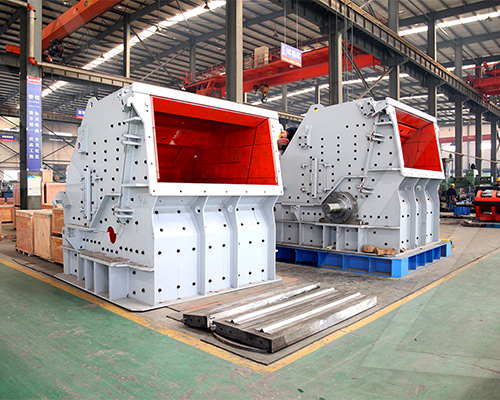
- Sealed and Pressurized Components: Crusher bearings and vibrator motor housings are fitted with labyrinth seals and positive pressure systems to exclude basalt dust, the primary cause of premature bearing failure.
- Adaptive Hydraulics: Crushers utilize hydraulic overload protection systems that instantly release tramp metal or uncrushable material, preventing catastrophic mechanical damage. Adjustment systems allow for quick wear compensation to maintain product gradation.
- Modular, Replaceable Wear Parts: Liners and wear plates are designed as modular components. This allows for strategic replacement of only the worn sections, drastically reducing downtime and maintenance costs compared to replacing entire assemblies.
- Corrosion-Resistant Finishes: After abrasive blasting, structural components receive multi-coat epoxy or polyurethane paint systems resistant to moisture, UV degradation, and chemical exposure.
Integrated Safety Engineering
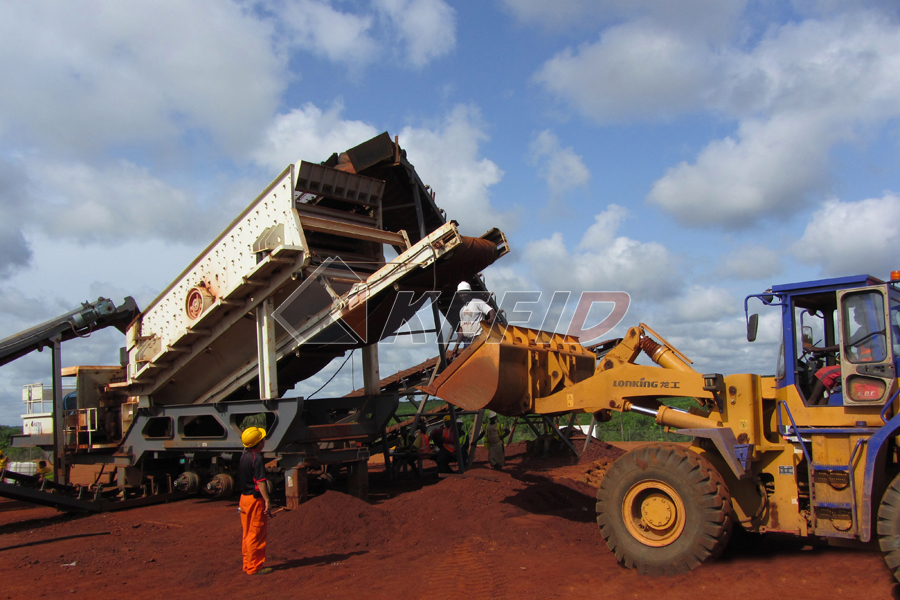
Safety is engineered into the equipment's architecture, not added as an afterthought.
- Fall Protection and Access Systems: Integrated guardrails, non-slip grating, and OSHA-compliant stairways with handrails are standard. Maintenance platforms provide safe, stable access to lubrication and inspection points.
- Remote Monitoring and Diagnostics: Modern equipment features CAN-bus/J1939 systems and IoT sensors providing real-time data on bearing temperature, vibration, hydraulic pressure, and wear status. This enables predictive maintenance and allows operators to address issues before they lead to failure or unsafe conditions.
- Emergency and Lockout/Tagout (LOTO): Multiple, clearly marked emergency stop pull-cords and buttons are positioned around the equipment. Power isolation points with provisions for padlocks ensure safe maintenance under a Zero-Energy state.
- Dust Suppression Integration: Equipment is designed with sealed transfer points and built-in connection ports for dry fog or water spray dust suppression systems, critical for maintaining operator visibility and respiratory health.
Operational Parameters for Basalt
| Equipment Segment | Key Durability Parameter | Typical Consideration for Basalt |
|---|---|---|
| Primary Jaw Crusher | CSS (Closed Side Setting) & Jaw Plate Material | A wider CSS may be used to reduce wear, compensated by secondary crushing. Manganese steel grade is critical. |
| Secondary Cone Crusher | Liner Profile & Crushing Chamber Design | Aggressive cavity designs for high reduction ratios must be balanced with wear life. Automated wear compensation is essential. |
| Horizontal Shaft Impactor | Rotor Design & Hammer Metallurgy | Solid or welded rotor construction. Hammers may be bi-metallic castings with a hard carbide face fused to a tough steel body. |
| Vibrating Screens | Deck Media & Vibration Mechanism | Polyurethane or rubber deck panels reduce blinding and noise. Bearings are oversized with high-temperature grease. |
| Mobile Tracked Plants | Undercarriage & Frame Strength | Heavy-duty crawlers with reinforced rollers and idlers. Frame design must handle dynamic loads from feeding and crushing. |
The ultimate measure of durability is sustained throughput under real-world conditions. Equipment specified for basalt must demonstrate a proven Tons Per Hour (TPH) capacity over the lifecycle of its wear parts, not just at commissioning. This requires a system engineered for total cost of ownership, where structural resilience, strategic material use, and proactive maintenance access converge to ensure operational continuity in the harshest environments.
Streamlining Your Investment: Cost-Effective Maintenance and Support Systems
Effective maintenance is not a cost center but a strategic lever for maximizing asset life and protecting capital expenditure. For basalt mining, characterized by high compressive strength (often 200-300 MPa) and high abrasiveness (Mohs 5-8), equipment longevity is a direct function of material selection, design foresight, and systematic support.
Core Engineering Principles for Reduced Downtime
- Strategic Material Selection: Critical wear components, such as jaw crusher plates, cone crusher mantles/concaves, and impactor blow bars, are fabricated from proprietary alloy steels. These are not generic "hard steel" but engineered materials like modified Hadfield Mn-steel (12-18% Mn) for work-hardening under impact, or chromium-rich martensitic alloys (e.g., 23-28% Cr) for superior abrasion resistance in flow zones. Metallurgical specifications are matched to the specific fracture mechanics and silica content of the deposit.
- Modular & Standardized Design: Key assemblies are designed as self-contained, swappable modules. This allows for the replacement of a complete rotor assembly on an impact crusher or a hydraulic power unit on a mobile plant in a single shift, transforming major rebuilds into planned modular exchanges. Component standardization across equipment models reduces spare part inventory complexity.
- Predictive Maintenance Integration: Modern equipment is pre-equipped with sensor ports and telematics-ready architecture for continuous monitoring of vibration (bearing health), pressure (hydraulic system integrity), temperature (lubrication condition), and wear (liner thickness via ultrasonic probes). This data transitions maintenance from calendar-based to condition-based, preventing catastrophic failure.
Structured Support Systems: Beyond the Spare Part
A cost-effective support system is a documented, proactive framework, not a reactive helpline.
| System Component | Technical & Operational Scope | Direct Impact on TCO |
|---|---|---|
| Pre-commissioning & Training | Site-specific operational protocols, failure mode analysis, and hands-on training for maintenance crews on hydraulic systems, belt tracking, and crusher gap adjustment. | Reduces infant mortality failures, ensures design capacity (TPH) is achieved from day one. |
| Condition Monitoring Services | Remote analysis of telematics data, providing monthly health reports with trend analysis and prioritized action items. Includes recommended thresholds for specific parameters. | Enables just-in-time part ordering and planned downtime, eliminating unplanned stoppages. |
| Strategic Spare Parts Kitting | AI-driven analysis of your operational data and OEM failure statistics to recommend a tiered parts inventory: critical (on-site), essential (regional warehouse), and standard (central supply). | Optimizes capital tied in inventory while ensuring >95% availability for critical path components. |
| Lifecycle Optimization Plans | Contractual programs offering guaranteed performance metrics for wear parts (tonnage/TPH per set), scheduled rebuilds, and technology updates for control systems. | Converts variable operating costs into fixed, predictable costs, aiding long-term financial planning. |
Technical Validation and Compliance
All maintenance procedures and intervals are derived from and validated against ISO 13374 (Condition monitoring and diagnostics of machines) and ISO 20815 (Production assurance and reliability management). Equipment is certified to relevant CE and other regional mining safety directives, ensuring that maintenance activities are codified within a framework of operational safety and technical rigor. The ultimate metric is sustained throughput (TPH) at the target product size, with predictable, linear wear cost per ton—transforming maintenance from an operational variable into a managed constant.
Frequently Asked Questions
How often should wear parts be replaced in basalt crushing equipment?
For primary jaw crushers, high-manganese steel (e.g., ZGMn13Cr2) liners typically last 300,000-500,000 tons. Monitor wear to a 20% thickness loss. Cone crusher mantles in ultra-hard basalt (Mohs 7-8) may require replacement every 150,000 tons. Implement predictive maintenance using laser scanning for optimal scheduling.
How is equipment adapted for varying basalt hardness within a deposit?
Utilize crushers with hydraulic adjustment systems (e.g., Nordberg HP Series) to dynamically change the closed-side setting. For significant hardness shifts, switch jaw plate metallurgy from standard manganese to a modified alloy like TIC inserts. Adjust mainframe hydraulic pressure to compensate for higher crushing forces.
What are the critical vibration control measures for basalt processing plants?
Isolate primary crushers on reinforced concrete foundations with anti-vibration pads. For screens, ensure dynamic balancing of eccentric shafts and use shear rubber spring isolators. Continuous laser alignment of drive motors and crusher shafts is mandatory to prevent harmonic resonance that accelerates structural fatigue.
What are the specialized lubrication requirements for basalt mining machinery?
Cone crushers demand extreme-pressure gear oils (ISO VG 320) with anti-wear additives. Bearings (e.g., SKF or Timken spherical roller types) require lithium complex grease with solid lubricants like molybdenum disulfide. Implement automated, centralized lubrication systems with real-time pressure monitoring to ensure consistent flow under high thermal load.
How do you optimize energy consumption when processing high-abrasion basalt?
Select cone crushers with high reduction ratios to minimize downstream stages. Optimize the eccentric throw speed to match material feed size and hardness. Ensure crushers operate at full choke-feed to utilize inter-particle crushing, which reduces liner wear and improves kWh/ton efficiency by up to 15%.
What maintenance practices extend the life of basalt conveyor systems?
Use multi-ply steel cord belting with abrasion-resistant (AR) covers (minimum 10mm). Employ properly tensioned, ceramic-lined impact beds at loading zones. Implement automated belt misalignment tracking systems and schedule regular pulley lagging inspection with vulcanized ceramic tiles to prevent cover gouging.