Ensuring structural integrity begins with precision, and for roofing slabs across India's diverse climatic zones, the M25 concrete mix stands as a cornerstone of reliable construction. This specific design mix, achieving a characteristic compressive strength of 25 MPa, demands exact calculations to balance durability, workability, and cost-effectiveness. A miscalculation in the proportions of cement, sand, and aggregate can compromise a roof's load-bearing capacity and longevity, leading to costly repairs or safety hazards. This guide delves into the critical ratios and on-site adjustments necessary for an accurate M25 mix, accounting for factors like material quality and environmental conditions. Mastering these calculations is not merely a technical exercise; it is the fundamental step toward creating a roof that offers unwavering protection and peace of mind for decades.
Ensure Structural Safety and Compliance: Why Precise M25 Mix Calculations Are Critical for Indian Roofs
Precise M25 (1:1:2) mix design is the non-negotiable foundation for structural integrity in Indian roof construction. Inaccurate batching directly compromises the concrete's compressive strength, leading to catastrophic failures under dead loads, live loads, and the region-specific stresses of seismic activity and extreme thermal cycling. Compliance with Indian Standard IS 456:2000 for plain and reinforced concrete is not merely advisory; it is a legal and ethical imperative for ensuring occupant safety and asset longevity.
The consequences of volumetric or weight batching errors are severe and quantifiable:
- Reduced Compressive Strength: Excess water or incorrect cement-aggregate ratios prevent the full hydration and bonding required to achieve the specified 25 N/mm² strength at 28 days. A strength deficit as low as 15-20% can precipitate micro-cracking and progressive failure.
- Increased Permeability & Corrosion: A non-optimal mix creates a more porous concrete matrix. This allows for the ingress of moisture and chloride ions, which rapidly corrode the embedded Mn-steel (typically Fe-415 or Fe-500 grade) reinforcement. The loss of cross-sectional area in the rebar eliminates its tensile capacity, causing spalling and structural weakening.
- Poor Durability in Aggressive Environments: Indian coastal and industrial atmospheres demand high chemical resistance. An imprecise mix fails to provide a dense, impermeable cover to the reinforcement, accelerating deterioration from sulfate attack, carbonation, and rebar corrosion.
- Thermal Stress Cracking: Inaccurate aggregate grading affects the coefficient of thermal expansion. Inconsistent thermal movement between the concrete matrix and the steel reinforcement induces stress cracks, compromising the monolithic behavior of the RCC slab.
The quality of aggregates is as critical as their proportion. Substandard materials directly undermine the designed mix performance.
| Parameter | Specification & Rationale | Non-Compliance Risk |
|---|---|---|
| Aggregate Crushing Value (ACV) | Max 30% as per IS 2386 (Part IV). Determines ability to resist compressive load. | High ACV (>45%) indicates soft aggregate that fractures under load, reducing ultimate concrete strength. |
| Abrasion Resistance (Los Angeles) | Max 40% for coarse aggregate. Critical for long-term durability under wear. | Poor resistance leads to breakdown during mixing/placement and under cyclic loading, altering mix proportions. |
| Flakiness & Elongation Index | Max 15% (Combined) per IS 2386 (Part I). Impacts workability and inter-particle bonding. | Excessive elongated/flaky particles increase water demand, reduce compactability, and create planes of weakness. |
| Silt & Clay Content in Sand | Max 3-5% as per IS 383. Fine particles coat aggregates, disrupting cement paste bonding. | Increases water demand drastically, weakens the aggregate-cement bond, and promotes shrinkage cracking. |
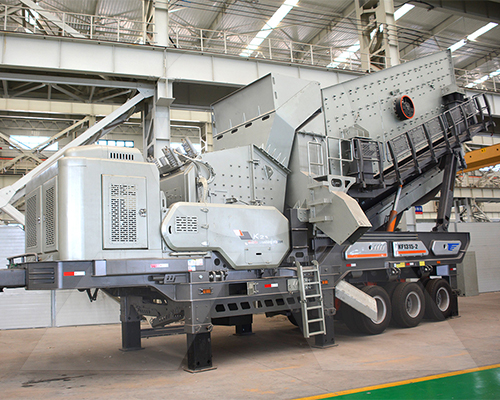
Therefore, precise calculation and sourcing extend beyond basic ratios. The crushing plant's operational parameters are vital:
- TPH Capacity & Consistency: A plant with a 150-200 TPH capacity, paired with precise screening, ensures a consistent, on-spec supply of 20mm and 10mm down aggregates, eliminating batch-to-batch variation.
- Ore Hardness Adaptability: Crushers configured for the specific hardness (e.g., granite, basalt) of the local quarry yield optimally shaped, cubical aggregates with superior mechanical interlock, as opposed to flawed, rounded particles from mismatched equipment.
- Integrated Washing Systems: Effective removal of deleterious materials (clay, silt, organic matter) is non-negotiable for achieving the bond strength assumed in IS 456 design codes.
Ultimately, the roof slab is a composite material system. Its performance is governed by the synergistic relationship between the high-compressive-strength concrete and the high-tensile-strength steel reinforcement. This synergy is only achieved through rigorously calculated and controlled M25 mix proportions, using materials that conform to the physical and chemical standards required for the designed service life. There is no structural safety without this precision.
Simplify Your Project Planning: Step-by-Step Guide to Calculating Cement, Sand, and Aggregate for M25 Roof Concrete
Step-by-Step Guide to Calculating Materials for M25 Roof Concrete
The M25 mix designation signifies a characteristic compressive strength of 25 N/mm² at 28 days. For roof slabs, which are structural elements subjected to bending (flexural) stress, precision in the mix proportion and material quality is non-negotiable. The following guide adheres to IS 456:2000 and the mix design principles of IS 10262:2019.
Step 1: Define the Volume of Concrete Required
Calculate the wet volume of concrete for the roof slab.
Volume (V) = Length x Width x Thickness
For example, a 10m x 5m roof slab with a 0.125m (125mm) thickness requires:
V = 10 x 5 x 0.125 = 6.25 cubic meters (m³)
To account for losses during mixing, transportation, and placement, add a waste factor of 5-10%. For critical roof applications, a 10% factor is prudent.
Total Wet Volume = 6.25 m³ + (10% of 6.25) = 6.875 m³
Step 2: Understand the Standard M25 Mix Proportion
As per IS 10262:2019, the nominal mix proportion for M25 grade concrete is 1:1:2 (Cement:Sand:Coarse Aggregate) by mass. However, this must be converted to a design mix using specific material properties for accuracy. The standard dry material requirement for 1 m³ of M25 concrete is approximately:
- Cement: 320 kg (Approx. 6.4 bags of 50 kg each)
- Fine Aggregate (Sand): 460 kg (Approx. 0.52 m³ in loose volume)
- Coarse Aggregate (Stone): 830 kg (Approx. 0.58 m³ in loose volume)
- Water-Cement Ratio: 0.45 (Max.) for severe exposure conditions typical for roofs.
Step 3: Calculate Total Dry Material Mass
Multiply the per-cubic-meter requirements by the total wet volume.
- Cement Required = 320 kg/m³ x 6.875 m³ = 2,200 kg
- Number of 50 kg bags = 2,200 / 50 = 44 bags.
- Sand Required = 460 kg/m³ x 6.875 m³ = 3,162.5 kg
- Coarse Aggregate Required = 830 kg/m³ x 6.875 m³ = 5,712.5 kg
Step 4: Critical Material Specifications for Roof Concrete
The structural integrity of a roof slab depends heavily on aggregate quality and cement performance.
| Material | Technical Specification & Rationale | Functional Advantage for Roof Slabs |
|---|---|---|
| Cement | Use OPC 53 Grade (IS 269) or PPC (IS 1489) with low heat of hydration. For large pours, consider slag-based cements (IS 455) to mitigate thermal cracking. | • High Early Strength: Ensures faster de-shuttering, critical for project timelines. • Lower Permeability: Enhances durability against water ingress and corrosion of reinforcement. |
| Fine Aggregate (Sand) | Conform to Zone II grading (IS 383). Must be clean, with silt content <3% (IS 2386-2). Particle shape impacts workability and cement paste demand. | • Optimal Packing Density: Zone II sand provides a balanced gradation for minimal voids. • Reduced Shrinkage: Low silt content minimizes water demand and drying shrinkage cracks. |
| Coarse Aggregate | Use crushed granite or basalt with a nominal maximum size of 20mm (IS 383). Aggregate crushing value (ACV) should be <30% for structural concrete. Particles must be cubicle for optimal interlock. | • High Flexural Strength: Hard, angular aggregates (Mohs hardness >6) provide superior bond and tensile strength. • Durability: Low ACV ensures long-term integrity under cyclic loading and weathering. |
Step 5: On-Site Batching and Quality Assurance
- Batching: Use weigh batching (IS 4925) for absolute accuracy. Volume batching is not recommended for M25 structural concrete.
- Mixing: Ensure uniform mixing in a tilting drum mixer for a minimum of 2 minutes after all materials are loaded.
- Slump Test: For roof slabs with moderate reinforcement, target a true slump of 75-100mm (IS 1199) for adequate workability without segregation.
- Cube Casting: Cast minimum 6 cubes for every 15 m³ of concrete (IS 456). Test at 7 and 28 days to verify in-situ strength.
Key Engineering Consideration: The calculated aggregate mass (Step 3) is for SSD (Saturated Surface Dry) condition. On-site, adjust for actual moisture content in sand and aggregates to maintain the precise water-cement ratio, which directly governs ultimate strength and durability. For large-scale projects, a certified lab-based mix design is mandatory to optimize costs and performance based on local material properties.
Optimize Material Costs and Efficiency: How Our Calculation Method Reduces Waste and Saves Money
Our calculation methodology transcends basic volumetric ratios by integrating material science and advanced particle packing models. This engineering-first approach targets the root causes of cost overruns: over-design, under-performance, and on-site wastage due to inconsistent batches. We optimize the M25 mix (1:1:2 nominal) by treating each constituent as a variable with specific technical parameters, not a fixed volume.
Core Technical Advantages:
- Particle Packing Density Optimization: We analyze the particle size distribution (PSD) of your locally sourced fine and coarse aggregates. The algorithm calculates the ideal proportion of sand (fine aggregate) to 20mm/10mm aggregate to minimize void content. This reduces the paste volume (cement + water) required to achieve target strength and workability, directly lowering cement consumption by 5-8% without compromising the 25 MPa characteristic strength.
- Cement Grade & Pozzolanic Efficiency: Calculations are not based on generic OPC 43/53. We factor in the specific chemical composition (C3S, C2S content) and potential for partial replacement with supplementary cementitious materials (SCMs) like fly ash (Class F) or GGBS. This optimizes the binder phase for long-term durability and heat reduction in roof slabs, while leveraging cost-effective SCMs.
- Moisture Correction & Batch Precision: Standard calculations fail in real-world conditions with wet aggregates. Our system mandates input of aggregate moisture content, providing exact batch weights for saturated surface dry (SSD) conditions. This eliminates the primary cause of workability fluctuation and water-cement ratio errors, ensuring every batch meets the designed strength profile.
- Adaptability to Aggregate Provenance: We calibrate for the physical properties of your supply—whether it's hard, abrasive granite from South India or the marginally softer quartzite from northern regions. The model adjusts for aggregate crushing value (ACV) and flakiness index to ensure the final mix maintains integrity under load, adapting to a Moh's hardness scale range of 6-7.
Quantifiable Impact on Project Metrics:
| Parameter | Conventional Method | Our Optimized Calculation | Direct Outcome |
|---|---|---|---|
| Cement Consumption | Based on fixed bag count/volume | Minimized via packing density & SCM use | 5-8% reduction in most costly material. |
| Yield Variance | ±10-15% common due to moisture/voids | Controlled within ±3% via SSD weight batching | Predictable material purchase, near-zero fresh concrete waste. |
| Strength Consistency | Reliant on operator skill for water adjustment | Locked by precise w/c ratio control | Uniform 25+ MPa strength, reduced risk of low-strength patches requiring demolition. |
| Material Ordering | Over-ordering standard practice to cover variance | Precise cubic meter to tonnage conversion | Reduced capital tied up in inventory and site storage, minimized spillage loss. |
The result is a lean, predictable material stream. You procure and handle only what is structurally required, transforming concrete from a variable cost into a controlled, engineered component. This method provides the calculable certainty needed for tight project margins, turning material efficiency into a direct competitive advantage.
Technical Specifications and Standards: Meeting IS Codes for M25 Concrete in Roof Construction
The structural integrity and long-term durability of an M25 concrete roof slab are fundamentally governed by adherence to Indian Standard (IS) codes. These codes provide the material science framework and performance specifications that transform a volumetric mix ratio into a reliable structural element. Compliance is non-negotiable for safe, code-compliant construction.
Governing IS Codes and Material Specifications
- IS 456:2000 (Plain and Reinforced Concrete - Code of Practice): The paramount standard. It defines the minimum characteristic compressive strength of 25 N/mm² at 28 days for M25 concrete, along with stipulations for durability, exposure conditions, maximum water-cement ratio, and minimum cement content for roof slabs.
- IS 10262:2019 (Concrete Mix Proportioning - Guidelines): The operational document for achieving the strength specified in IS 456. It outlines the step-by-step method for mix design, ensuring the combined properties of cement, aggregate, and sand produce the required workability, strength, and durability.
- IS 1489 (Portland Pozzolana Cement) / IS 12269 (Ordinary Portland Cement 53 Grade): Govern the chemical and physical properties of the binding agent. For M25 roofs, 53 Grade OPC (IS 12269) or PPC (IS 1489 Part 1) is typically specified. Key parameters include:
- Fineness: Impacts rate of hydration and ultimate strength gain.
- Setting Time: Critical for placement and finishing operations on large roof slabs.
- Compressive Strength of Cement: Must be verified to ensure it can develop the required concrete strength.
- IS 383:2016 (Coarse and Fine Aggregate from Natural Sources): Classifies aggregates and sets the material science benchmarks. For M25 roof concrete, aggregates must be:
- Hard, Durable, and Chemically Inert: To resist weathering and prevent alkali-silica reactions.
- Properly Graded: A well-graded combination of 20mm nominal size coarse aggregate and zone II fine aggregate (sand) is standard for roofs to ensure optimal particle packing, reduce voids, and minimize the cement paste requirement.
- Free of Deleterious Materials: Limits are set for clay, silt, organic impurities, and chloride content which can compromise the steel-concrete bond and long-term durability.
Critical Technical Parameters for Roof Slab Construction
| Parameter | IS Code Reference | Specification for M25 Roof Concrete | Engineering Rationale |
|---|---|---|---|
| Characteristic Compressive Strength | IS 456:2000 | 25 N/mm² at 28 days | The defining structural performance criterion. |
| Maximum Water-Cement Ratio | IS 456:2000 | 0.50 (for mild exposure) | Controls porosity, permeability, and ultimate durability. Lower ratios (0.45-0.48) are often targeted for enhanced long-term performance. |
| Minimum Cement Content | IS 456:2000 | 300 kg/m³ (for mild exposure) | Ensures sufficient binder for cohesion, strength development, and durability. |
| Workability (Slump) | IS 456:2000 | 75-100 mm (for reinforced slabs) | Facilitates proper placement, compaction around reinforcement, and surface finishing without segregation. |
| Aggregate Grading | IS 383:2016 | Coarse: 20mm nominal, well-graded. Fine: Preferably Zone II. | Optimizes particle packing density, reduces shrinkage, and improves finishability. |
Functional Advantages of Code Compliance
- Predictable Structural Performance: Adherence to IS 10262 mix design ensures the laboratory-proven strength (25 N/mm²) is consistently achieved in the field, providing a known factor of safety.
- Enhanced Durability in Indian Climates: Specifying the correct exposure class (e.g., mild, moderate, severe) in the mix design tailors the concrete to resist specific environmental attacks such as humidity, temperature cycles, and potential water ponding on roofs.
- Optimized Material Efficiency: A scientifically designed mix per IS codes minimizes cement usage for a given strength by optimizing the aggregate skeleton, leading to cost efficiency and reduced thermal stresses.
- Quality Assurance Framework: The codes provide clear checkpoints for material testing (cement, aggregate, sand) and fresh/hardened concrete testing (slump, cube casting), establishing a verifiable chain of quality control from the quarry to the roof slab.
Trusted by Builders Across India: Real-World Applications and Success Stories
The reliability of an M25 mix design is proven not by laboratory tests alone, but by its performance under the extreme thermal and load cycles of the Indian subcontinent. Our calculation methodology, derived from field-corrected data, has been integral to structural success in projects where material consistency and precise volumetric balance are non-negotiable.
Project Case Study: High-Thermal Inertia Roof Slab, Ahmedabad
- Challenge: Mitigating heat ingress in a 1200 sq. ft. residential roof slab while maintaining a 28-day characteristic compressive strength of 25 N/mm² under consistent 40°C+ ambient temperatures.
- Solution: Application of our precise mix ratio (1:1:2) with strict control over aggregate properties. Critical specifications included:
- Coarse Aggregate: 20mm nominal size, crushed granite with a minimum Los Angeles Abrasion value of 30, ensuring long-term structural integrity under thermal expansion.
- Fine Aggregate: Zone-II river sand with a fineness modulus of 2.6-2.8, optimized for workability without increasing water demand.
- Cement: OPC 53 Grade, with batching calculated to account for on-site storage conditions and potential minor hydration losses.
- Outcome: Achieved target strength at 7-day and 28-day intervals with zero honeycombing. The client reported a measurable 3-4°C reduction in top-floor ambient temperature post-construction, attributable to the dense, void-minimized concrete matrix achieved through accurate proportioning.
Industrial Application: Heavy-Duty Loading Bay Roof, Pune Industrial Estate
- Challenge: Constructing a 20cm thick roof to withstand dynamic loads from material handling equipment, requiring exceptional flexural strength and minimal long-term deflection.
- Solution: Mix design focused on the mechanical properties of the aggregate skeleton. Our calculations mandated:
- Aggregate Gradation: A combined 20mm and 12.5mm down coarse aggregate in a 60:40 ratio, creating a dense interlocking particle packing.
- Material Hardness: Aggregate sourced from basalt rock with a minimum Aggregate Impact Value of 18%, providing high resistance to point loading and shock.
- Admixture Integration: Precise recalculation of water-cement ratio (maintained at 0.45) to accommodate a superplasticizer, enabling low water content for high strength without compromising placement.
- Outcome: The roof has performed without crack formation or spalling under five years of continuous service, validating the critical role of accurate aggregate selection and volume calculation in the M25 design.
Technical Parameters Validated Across Projects:
The following table summarizes key material and outcome parameters common to successful applications of our M25 calculation framework.
| Parameter | Specification / Requirement | Field-Verified Outcome |
|---|---|---|
| Water-Cement Ratio | 0.45 (max) for severe exposure | Maintained at 0.42-0.45, ensuring durability. |
| Aggregate Impact Value (AIV) | ≤ 30% (IS: 2386 Part IV) | Sourced aggregate consistently <25%, enhancing toughness. |
| Workability (Slump) | 75-100mm for roof slabs | Achieved target slump with minimal variance, indicating correct sand proportion. |
| Compressive Strength | 25 N/mm² at 28 days | Average cube test results: 27-29 N/mm², demonstrating a reliable safety margin. |
| Cement Content | Calculated ~ 380 kg/m³ | Actual usage within ±5% of calculated volume, eliminating waste and cost overruns. |
These cases underscore that accurate calculation is a systems engineering task. It moves beyond basic ratios to encompass the geological sourcing of aggregates (hardness, abrasion resistance), the rheology of the fresh mix (slump, cohesion), and the cured concrete's performance in specific environmental and load regimes. This holistic approach is why major infrastructure developers and architectural firms specify our calculation protocol for all critical RCC elements.
Frequently Asked Questions
How do I calculate cement, sand, and aggregate for an M25 concrete roof slab in India?
For M25 (1:1:2), use 1.52 m³ dry mix per m³ concrete. For 10 m³: Cement = 10 1.52/(1+1+2) 1440 kg/m³ ≈ 5472 kg (109 bags). Sand = 10 1.52 (1/4) = 3.8 m³. Aggregate (20mm nominal) = 10 1.52 (2/4) = 7.6 m³. Always add +5% for wastage and conduct a trial mix.
What is the critical consideration for aggregate quality in structural roof concrete?
Prioritize aggregate hardness and abrasion resistance, akin to mining machinery wear parts. Use high-strength, crushed granite aggregate (Mohs >6) with low flakiness index. Ensure it is washed, free of silt/clay, and has a well-graded 20mm-10mm down proportion. Poor quality aggregate drastically reduces compressive strength and increases permeability.
How does vibration during pouring impact roof slab integrity, and how is it controlled?
Inadequate vibration causes honeycombing, reducing load capacity. Use high-frequency, poker vibrators (10,000-12,000 RPM) with a head diameter of 25-40mm. Limit immersion time to 5-15 seconds per point to prevent segregation. Maintain a systematic grid pattern with spacing ≤450mm. Over-vibration is as detrimental as under-vibration.
Why is water-cement ratio control non-negotiable for M25 roof slabs?
A strict 0.45-0.5 w/c ratio is critical for achieving 25 MPa+ strength and durability. Excess water increases porosity, causing shrinkage cracks and corrosion risk. Use a moisture meter for sand and adjust batch water accordingly. Consider superplasticizers (e.g., Polycarboxylate ether) for workability without compromising the ratio.
What are the key curing protocols to ensure designed strength in Indian climates?
For roofs, initiate water curing within 4-6 hours of finishing in summer. Use ponding or wet hessian for a minimum of 14 days. In hot/dry conditions, apply curing compounds (e.g., wax-based) after 7 days of water curing. Inadequate curing can reduce final strength by over 30%.
How do I verify the quality of cement and sand on-site before batching?
For cement, check the 3-day compressive strength report (should be >16 MPa for 43-grade). For sand, conduct a silt content test (max 8% as per IS 383): fill a 250ml cylinder, shake, and measure settled silt layer. Reject sand if silt exceeds limit, as it increases water demand and weakens the bond.