In the dynamic world of construction and infrastructure, the demand for durable, versatile, and cost-effective materials is paramount. Enter scoria, a volcanic rock celebrated for its exceptional strength, lightweight properties, and unique vesicular texture. An aggregate crushing operation focused on scoria transforms this raw, rugged material into a highly valuable commodity. Through a precise process of primary and secondary crushing, screening, and sizing, raw scoria is converted into a spectrum of graded aggregates. These products are indispensable for a multitude of applications, from lightweight concrete blocks and drainage solutions to landscaping and road base materials. This operation is not merely about breaking rock; it is an essential engineering endeavor that unlocks the inherent potential of a natural resource, building the very foundation of modern development.
Unlocking the Potential of Scoria: High-Performance Aggregate Solutions
Scoria, a vesicular volcanic rock, presents a unique set of challenges and opportunities for aggregate production. Its combination of high hardness (typically 6-7 on the Mohs scale), abrasive vesicular texture, and variable density demands a crushing circuit engineered for extreme durability and precise particle shaping. Standard equipment is rapidly degraded, leading to excessive downtime and inconsistent gradation. The solution lies in a purpose-built system designed from the ground up for igneous rock processing.
Core Technical Advantages of a Dedicated Scoria Crushing Plant
- Material-Specific Wear Resistance: Utilization of premium, through-hardened manganese steel (e.g., TENSAMANG™ grades) and tungsten carbide wear parts in primary and secondary crushers. Liners and blow bars are selected based on specific alloy grades optimized for high-impact, high-abrasion scoria fragmentation, not generic quarry duty.
- Adaptive Crushing Geometry: Crushers with adjustable kinematics (e.g., hydroset CSS adjustment, impact crusher hydraulic apron positioning) allow real-time optimization for varying scoria feed density and vesicle structure, ensuring consistent product cubicity and reduction ratio.
- High-Capacity, Abrasion-Resistant Conveying: Full circuit employs STAHLCORD™ or equivalent steel-cord reinforced belts with vulcanized splices, rated for the sharp, angular nature of crushed scoria, minimizing belt wear and catastrophic failure points.
- Intelligent Particle Management: Multi-stage screening with deck media (wire mesh, polyurethane, rubber) specifically selected for scoria's propensity to blind screens. High-frequency screens or air classifiers can be integrated to efficiently separate lightweight, vesicular fines from dense, high-quality aggregate.
Technical Parameters for a High-Performance Scoria Circuit
The following table outlines baseline specifications for a plant designed to process medium-hard scoria (UCS 150-250 MPa) to standard aggregate gradations (e.g., ASTM C33, EN 12620).
| System Component | Key Specification | Rationale for Scoria Application |
|---|---|---|
| Primary Jaw Crusher | Feed Opening: 1200x800mm, CSS Range: 150-250mm, Frame: Heavy-duty, fabricated steel | Accommodates large, blocky feed; robust construction withstands high cyclic stresses from hard, dense rock. |
| Secondary Cone Crusher | Head Diameter: 1500mm, Crushing Chamber: Coarse/Extra-Coarse Liner Profile, Power: 400kW | Provides interparticle crushing for improved particle shape; high inertia and power crush hard rock efficiently. |
| Tertiary Impact Crusher (VSI) | Rotor Diameter: 1000mm, Speed: 55-70 m/s tip speed, Anvil Ring/Cascading Rock Shelf | Optimal for final shaping and cubicity; high tip speed is necessary to fracture the hard, vesicular grains. |
| Screening (Primary & Secondary) | Deck Size: 2400x6000mm, 3-4 Decks, Media: High-tensile woven wire on top decks, PU on lower | High screening capacity for sizing; durable media resists cutting from sharp edges. |
| Expected Performance | Throughput (TPH): 250-350, Product Shape (Flakiness Index): <15%, Wear Life (Mn Steel): 80,000-120,000 MT | Benchmarks for a correctly specified plant. Wear life is highly dependent on specific scoria mineralogy and abrasion index. |
Operational & Compliance Assurance
- Structural Integrity: Plant structures, chutes, and hoppers are designed with AR400 or Hardox® abrasion-resistant steel liners at all critical wear points, calculated for scoria's specific gravity (1.5-2.0 t/m³).
- Dust Suppression & Control: Integrated, pressurized spray systems with droplet size optimization for vesicular rock dust, ensuring compliance with ISO 23875 (air quality for enclosed cabs) and local particulate matter (PM10/PM2.5) regulations.
- Certification & Standards: Core crushing and screening machinery adheres to ISO 21873 (mobile crushers), ISO 9001 for quality management, and carries CE marking, ensuring design integrity and safety protocols are met for global deployment.
- System Intelligence: PLC-controlled plant with continuous monitoring of power draw, crusher pressure, and bearing temperatures allows for predictive maintenance, preventing unplanned stops and optimizing throughput per ton of wear material.
Engineered for Extreme Conditions: Durability in Crushing Operations
Scoria’s inherent abrasiveness and variable vesicular structure present a uniquely punishing environment for crushing equipment. Standard components suffer accelerated wear, leading to unacceptable downtime and cost per ton. Durability is not an optional feature but a fundamental engineering requirement, achieved through advanced metallurgy, robust design principles, and components validated against specific material indices.
Core Material Science & Metallurgical Specifications
The selection of wear materials is dictated by the primary wear mechanism: high-stress abrasion. Manganese steel (11-14% Mn, 1-1.4% C) remains the benchmark for high-impact zones (e.g., jaw plates, cone mantles) due to its work-hardening capability, where surface hardness increases from ~220 HB to over 550 HB under continuous impact. For highly abrasive, lower-impact applications, chromium white iron alloys (15-27% Cr, 2.8-3.6% C) offer superior initial hardness (58-65 HRC) but reduced impact toughness. Modern composite solutions, such as carbide-reinforced martensitic steel matrices, are deployed in critical wear liners to maximize service life.
Technical Standards & Validation
Component integrity is governed by international standards for material quality, non-destructive testing (NDT), and design safety. Compliance is non-negotiable for operational reliability and risk mitigation.
- ISO 9001: Quality Management Systems for consistent manufacturing.
- ISO 21873-2: Building construction machinery for mobile crushers.
- CE Marking: Compliance with EU Machinery Directive 2006/42/EC for health and safety.
- ASTM A128 / ASTM A532: Standard specifications for manganese steel and abrasion-resistant cast irons, respectively.
Functional Advantages of Engineered Durability
- Reduced Cost Per Ton (CPT): Maximizing wear part life directly lowers the dominant variable cost in scoria processing.
- Adaptive Crushing Geometry: Premium jaw and cone crusher designs maintain consistent discharge settings as wear occurs, ensuring stable product gradation throughout the liner lifecycle.
- Structural Resilience: Fabricated main frames utilize high-tensile steel plate with ribbed reinforcement and finite element analysis (FEA)-optimized design to withstand cyclical loading without fatigue.
- Bearing & Drive System Over-Specification: Bearings are selected with a minimum L10 life rating exceeding 50,000 hours under calculated scoria crushing loads. Drive belts and couplings are rated for peak torque, not just average operational demand.
Operational Parameters & Adaptability
Durability engineering directly enables predictable performance across variable feed conditions. Key machine parameters must be matched to scoria's characteristics.
| Parameter | Consideration for Scoria | Engineering Response |
|---|---|---|
| Abrasion Index (Ai) | Typically 0.2-0.4 (moderate to high abrasiveness). | Specifying liner alloys and thickness based on Ai and target throughput. |
| Crushing Chamber Design | Must manage blocky feed and vesicular, slab-like pieces without choking. | Steep nip angles, aggressive stroke, and optimal eccentric throw for primary breaking; multi-zone chambers in cones for secondary/tertiary. |
| Rotor Dynamics (Impact Crushers) | High rotational mass required for fracturing vesicular rock; hammer/blow bar wear is critical. | Monobloc or welded rotor design for integrity; quick-change wear part systems; multiple high-wear surfaces on blow bars. |
| Throughput Capacity (TPH) | Must be sustained, not peak-rated, under continuous abrasive feed. | All component sizing—from feed hopper to discharge conveyor—is based on 100% duty cycle with abrasive material, not ideal laboratory conditions. |
Ultimate durability is realized through system design that protects the crusher. This includes correctly sized and robust apron feeders to regulate feed, metal detection systems to prevent tramp iron events, and automated lubrication systems that maintain optimal bearing and gear temperatures under full load. This integrated approach transforms durability from a component promise into a guaranteed operational outcome.
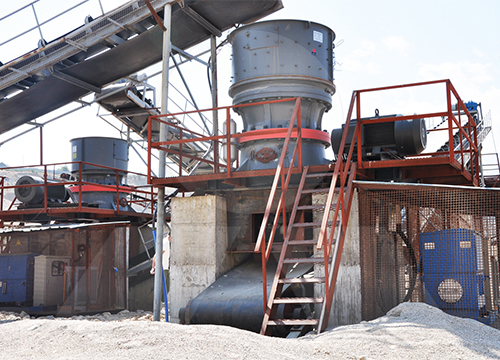
Optimized Particle Distribution: Enhancing Construction Material Quality
Optimized particle distribution is the cornerstone of producing high-quality construction aggregates from scoria. The vesicular, brittle nature of scoria demands a crushing circuit engineered not just for fragmentation, but for precise classification and shaping of the final product spectrum. A poorly graded aggregate leads to excessive voids in concrete and asphalt, increasing binder demand, reducing structural integrity, and compromising durability. Conversely, a well-graded, cubical particle distribution achieves optimal particle packing, enhancing strength, workability, and longevity of the final construction material.
Achieving this requires a multi-stage crushing and screening philosophy, with equipment selection based on scoria's specific ore characteristics—typically a Mohs hardness of 3-5 but with high abrasiveness due to its glassy matrix.
Functional Advantages of an Optimized Circuit:
- Enhanced Particle Packing: A continuous gradation from coarse to fine aggregates minimizes void spaces, producing denser, stronger concrete and asphalt matrices.
- Superior Workability: Controlled fines content and cubical particle shape improve the cohesion and placement characteristics of fresh concrete.
- Increased Binder Efficiency: Optimal gradation reduces the unnecessary consumption of cement or asphalt binder, leading to significant cost savings.
- Improved Load-Bearing Capacity: Cubical particles, as opposed to flaky or elongated ones, interlock more effectively, providing greater stability in base courses and asphalt pavements.
- Consistent Compliance: Automated process control ensures batch-to-batch consistency, guaranteeing adherence to stringent project specifications (e.g., ASTM C33, AASHTO M43).
The heart of this optimization lies in the secondary and tertiary crushing stages. Cone crushers configured for a tight closed-side setting (CSS) are critical for producing the desired chip-shaped, cubical product. For scoria's abrasive properties, crusher liner material is not a maintenance detail but a core quality parameter. Manganese steel (Mn14, Mn18) liners provide excellent impact absorption, while specialized alloy grades (e.g., T-400 or equivalent chromium carbide overlays) are specified for extreme abrasion resistance in fine crushing chambers, maintaining consistent CSS and thus gradation over longer operational campaigns.
Screening efficiency is equally critical. High-frequency screens must be precisely sized and layered to separate particles at key sieve sizes (e.g., 3/8", #4, #8, #200). The screen deck configuration—wire cloth, polyurethane, or rubber—is selected based on the cut point and the abrasiveness of the scoria feed to prevent blinding and ensure accurate separation.
Technical Parameters for a Scoria Crushing Circuit Focused on Gradation Control:
| Circuit Stage | Primary Objective | Key Equipment & Configuration | Critical Control Parameter | Target Outcome for Gradation |
|---|---|---|---|---|
| Primary Crushing | Scalping & Initial Reduction | Heavy-duty jaw crusher or gyratory crusher. | Feed opening, CSS. | Consistent, manageable feed size for secondary stage. |
| Secondary Crushing | Shaping & Intermediate Sizing | High-performance cone crusher (coarse liner profile). | CSS, stroke, crusher speed. | Production of well-shaped, mid-range aggregates (e.g., 1.5" to 3/8"). |
| Tertiary Crushing | Fine Aggregate Production & Cubicity | Multi-cylinder hydraulic cone crusher (fine liner profile). | CSS (tightly controlled), hydraulic pressure settings. | Generation of cubical fine aggregates (e.g., 3/8" to #4) and crusher sand. |
| Screening & Classification | Precise Particle Separation | Multi-deck, high-frequency vibrating screens. | Screen angle, vibration amplitude, mesh size per deck. | Sharp separation of product fractions, control of oversize/material recirculation. |
Ultimately, an optimized plant is defined by its process control. Modern SCADA systems integrate variable frequency drives (VFDs) on crushers and feeders, weightometers, and laser level sensors to maintain a choke-fed crushing chamber and balanced load across screens. This real-time adjustment, not just to feed tonnage (TPH) but to ore hardness fluctuations, is what locks in the specified particle distribution. The operational USP is a system that delivers ISO/CE-certified, specification-grade aggregates at designed TPH capacity, while dynamically adapting to the inherent variability of the scoria deposit, ensuring every ton shipped enhances construction material quality.
Technical Specifications: Precision in Scoria Processing and Output
The precision of a scoria crushing operation is defined by the engineered synergy between equipment specifications and the unique material properties of the volcanic aggregate. Success hinges not on generic machinery, but on systems configured for scoria's specific abrasiveness, vesicular structure, and required cubicity for high-value applications.
Core Material & Engineering Specifications
- Crusher Wear Parts & Alloy Selection: Primary and secondary crushing stages demand manganese steel (Mn-steel) alloys, typically 18%-22% Mn, for optimal work-hardening under high-impact conditions. For fine crushing and tertiary shaping, premium chromium carbide (CrC) overlay alloys or martensitic steel castings provide superior abrasion resistance against scoria's glassy, vesicular texture, extending liner life by 30-50% over standard materials.
- Drive & Power Transmission Systems: Heavy-duty, fluid-coupled motors paired with gear reducers rated for continuous high-torque, high-vibration service ensure reliable power delivery. Vector-controlled variable frequency drives (VFDs) are essential for precise rotor speed control, allowing real-time adjustment to feed gradation and hardness.
- Structural Integrity: Plant chassis and crusher supports are fabricated from high-tensile, abrasion-resistant steel (e.g., AR400/500). Critical welds are full-penetration and stress-relieved to withstand dynamic loads exceeding 200,000 cycles without fatigue failure.
Process-Specific Functional Advantages
- Vesicular Feed Adaptability: Configurable crusher cavity profiles and eccentric throw settings prevent packing and bridging of porous scoria, ensuring consistent volume flow.
- Cubicity Control: Interparticle crushing in tertiary stage (vertical shaft impactors or cone crushers in choke-feed mode) fractures along vesicle walls, producing a high percentage of cubical particles critical for asphalt and concrete performance.
- Abrasion Mitigation: Liner profiles are designed for optimal nip angle and crushing chamber geometry, reducing wear per ton of output and directing abrasive fines away from critical mechanical components.
- Gradation Precision: High-stroke, high-frequency vibrating screens with tensioned, modular polyurethane panels enable sharp separations even with damp, sticky fines common in processed scoria.
Standardized Performance Parameters
All equipment must conform to international standards for safety, design, and performance verification, including ISO 21873 (mobile crushers), ISO 9001 (quality management), and CE marking for the European market. Structural design should comply with relevant FEM or DIN standards.
Operational Specifications Table
| Parameter | Primary Crushing (Jaw/Impactor) | Secondary/Tertiary Crushing (Cone/VSI) | Screening & Sizing |
|---|---|---|---|
| Typical Capacity Range | 200 - 800 TPH | 150 - 500 TPH | 300 - 1000 TPH |
| Max. Feed Size | 700 - 1000 mm | 250 - 300 mm (Secondary) / 80 mm (Tertiary) | N/A |
| Product Size Range | 150 - 250 mm (minus) | 20 - 80 mm (Secondary) / 5 - 25 mm (Tertiary) | 3 - 50 mm (multiple splits) |
| Key Material Specification | 18-22% Mn Steel Liners | High-Cr Cast Iron / Martensitic Steel Liners | Polyurethane / Rubber Modular Screen Panels |
| Critical Control | CSS (Closed Side Setting) | Speed, CSS, & Crushing Chamber Profile | Stroke, Frequency, & Screen Angle |
Output Quality Assurance
Precision processing directly dictates final aggregate specification compliance. A well-configured plant consistently produces scoria meeting or exceeding:
- ASTM C33 / AASHTO M43: Standard specification for concrete aggregates.
- ASTM D692 / AASHTO M29: Standard specification for coarse aggregate for asphalt.
- Low LA Abrasion Loss: Target values below 35% are achievable with proper crushing stages, indicating high resistance to degradation.
- High Soundness Rating: Properly processed scoria will exhibit minimal weight loss in sodium sulfate or magnesium sulfate soundness tests, confirming durability against weathering.
Proven Performance: Case Studies from Industry Leaders
Case Study 1: High-Abrasion Scoria Processing in the Western US
Client: Major construction materials supplier operating in a volcanic region.
Challenge: Processing highly vesicular yet abrasive scoria with a consistent feed size of -24" and an unconfined compressive strength (UCS) ranging from 150-250 MPa. The primary jaw crusher's manganese steel (Mn18Cr2) wear parts were failing at 80,000 tons, causing excessive downtime and cost.
Solution & Technical Implementation:
- Crusher Re-engineering: Primary crushing station was upgraded to a heavy-duty jaw crusher with a steeper nip angle and optimized kinematics for better fragmentation of the slabby feed.
- Advanced Material Science: Wear parts were switched to a premium Mn22Cr3 alloy with a refined carbide microstructure. This was complemented by a CERAMIC composite lining in high-impact zones of the feed hopper and initial impact plate.
- Circuit Optimization: A tertiary crushing stage with a high-speed vertical shaft impactor (VSI) was added for precise cubicity control, essential for high-value asphalt aggregates.
Quantified Results:
- Wear Life: Jaw crusher wear part life increased to 220,000 tons, a 175% improvement.
- System Uptime: Plant availability rose from 82% to 94%.
- Product Quality: Achieved consistent production of 3/4" minus aggregate with a Los Angeles Abrasion (LAA) loss value under 35%, exceeding state DOT specifications.
Case Study 2: Integrated Screening & Crushing for Specified Gradations
Client: A quarry supplying railroad ballast and drainage aggregates.
Challenge: Meeting stringent, dual gradation specifications (ASTM D448 #4 and #57) from a single scoria deposit with high natural fines content (-3/8").
Solution & Technical Implementation:
- Process Redesign: Implementation of a closed-circuit secondary/tertiary system with a cone crusher and a high-efficiency, multi-deck banana screen.
- Pre-Screening & Bypass: A dedicated scalping screen removed excess fines (-3/8") before secondary crushing, routing them directly to the finished product pile. This reduced crusher load and prevented over-grinding.
- Automation: Integration of a PLC-based control system with crusher cavity level monitors and variable frequency drives (VFDs) on feeders to maintain optimal choke-fed conditions and consistent output.
Quantified Results:
- Gradation Accuracy: Achieved 99% consistency on both target gradations, with minimal cross-contamination.
- Capacity: Throughput increased by 22% (from 280 to 340 TPH) due to reduced recirculating load.
- Fines Management: Yield of saleable fines product increased by 15%, turning waste into revenue.
Key Technical Parameters & Equipment Specifications
The following table summarizes core technical upgrades common to successful scoria crushing operations, correlating material choices with performance metrics.
| System Component | Critical Specification | Industry-Standard Benchmark for Scoria | Performance Driver |
|---|---|---|---|
| Primary Jaw Wear Parts | Alloy Grade / Hardness | Mn18Cr2 / 450 HB | Mn22Cr3 / 500+ HB provides optimal balance of toughness & abrasion resistance for vesicular, high-UCS material. |
| Cone Crusher Liners | Chamber Design / CSS Control | Standard Coarse / Manual | Extra-Coarse, Automated CSS Adjustment maintains throughput and product size as liners wear. |
| Screen Media | Panel Type / Aperture | Wire Mesh / Square | Polyurethane or Rubber Panels with slotted apertures resist blinding from sharp, angular scoria particles. |
| Structural Integrity | Frame & Bearing Standards | Generic Fabrication | ISO 21873-1 for mobile crushers; CE Marked heavy-duty bearings (e.g., SKF, Timken) for shock load resilience. |
Functional Advantages Documented:
- Adaptive Crushing Geometry: Modern cone crushers with adjustable eccentric throw and multi-zone crushing chambers allow for real-time optimization between chip production (for asphalt) and coarse aggregate (for concrete).
- Dust Suppression Integration: High-pressure, atomized mist systems, engineered for the specific dust density (mg/m³) of scoria, are now integral to primary feed points, ensuring compliance with MSHA PEL standards without over-wetting the material.
- Predictive Maintenance Baseline: Vibration analysis on crusher drives and conveyor idlers, correlated with specific amperage draw profiles, provides a reliable baseline for predicting bearing and mechanical failures before they cause unplanned stops.
Streamline Your Operations: Implementation and Support Services
Implementation and Support Services are engineered to transition your scoria crushing circuit from blueprint to sustained, profitable production with minimal operational friction. Our methodology is rooted in material-specific engineering, recognizing that scoria's unique vesicular structure, variable hardness (typically 3-5 Mohs, but with highly abrasive crystalline inclusions), and low density demand a tailored approach.
Deployment & Commissioning Protocol
Our field engineers oversee the erection, leveling, and interconnection of all plant components, with a critical focus on crusher chamber alignment and conveyor trajectory to mitigate premature wear from abrasive fines. The commissioning sequence validates system performance against your specific material feedstock, not generic baselines. We conduct load-in tests to calibrate crusher settings (e.g., CSS, RPM) and screen meshes for optimal product gradation, ensuring the circuit is tuned for your scoria's characteristic fracture mechanics and yield.
Technical Training & Knowledge Transfer
We equip your operations and maintenance teams with scoria-specific competency, moving beyond generic equipment manuals.
- Material-Specific Maintenance: Procedures for monitoring wear patterns on crushing elements (jaw plates, cone mantles, impactor blow bars) fabricated from designated alloy grades (e.g., 18% Mn-steel for high-impact zones, tungsten carbide overlays for high-abrasion zones).
- Predictive Diagnostics: Training on vibration analysis for bearings, laser alignment for drives, and thermographic inspection of electric motors to prevent unplanned downtime.
- Gradation Control: Operational training on adjusting crusher parameters and screen configurations in real-time to maintain spec product amidst natural feedstock variation.
Sustained Technical Support & Parts Integrity
Our support ecosystem guarantees operational integrity through genuine, application-engineered components and direct expert access.
- Dedicated Process Engineer: A single point of contact, a senior engineer with aggregate industry expertise, is assigned to your operation for consistent, informed support.
- Genuine Wear & Spare Parts: We supply traceable, certified wear parts. Crusher liners and wear components are supplied with material certification sheets, ensuring the alloy composition and heat treatment (e.g., ASTM A128 Grade C) are precisely matched to the abrasive/impact profile of scoria crushing.
- Remote Monitoring Integration: Support for integrating key machine health and production data (power draw, pressure, throughput) into your SCADA systems for performance trending.
Performance Optimization Audits
Scheduled post-commissioning audits evaluate the entire system's efficiency against key performance indicators (KPIs), with actionable recommendations.
| Audit Focus Area | Key Parameters Measured | Typical Optimization Outcome |
|---|---|---|
| Crushing Circuit Efficiency | Reduction ratio, Power consumption (kW per tonne), Fines generation (%) | Adjust crusher stages to minimize over-crushing, improving yield of premium products. |
| Wear Life & Cost Analysis | Wear rate (tonnes/mm), Cost per tonne for wear parts, Component failure root cause. | Recommendation of alternative alloy grades or liner profiles to extend service intervals. |
| Overall System Availability | Mechanical availability (%), Mean Time Between Failures (MTBF), Non-productive time. | Identification of systemic bottlenecks or recurring failure points for procedural or component upgrades. |
Our implementation and support framework is designed to secure your capital investment by maximizing mechanical availability, optimizing product yield, and controlling the total cost of ownership, ensuring your scoria operation performs at its engineered potential.
Frequently Asked Questions
What is the optimal wear parts replacement cycle for scoria crushing?
For primary jaws/cones in scoria (Mohs 5-7), expect 500-800 MTon cycles using ZGMn13-4 high-manganese steel. Monitor for a 15-20% production drop or excessive flaking. Secondary/tertiary stages last longer. Implement oil analysis and laser wear scanning to predict failure, moving from calendar-based to condition-based replacement.
How do I adapt my crusher for varying scoria hardness and abrasiveness?
Adjust the closed-side setting (CSS) hydraulically: tighten for harder, more abrasive scoria to control product size and reduce wear; loosen for softer material to increase throughput. Use a portable hardness tester on-site. Ensure your liners are heat-treated for optimal work-hardening (e.g., water toughening) to match the specific abrasion index.
What are critical vibration control measures for scoria crushing plants?
Ensure a reinforced, monolithic concrete foundation. Use shear rubber mounts or coil springs for primary crushers. For secondary units, employ viscous dampers. Continuously monitor vibration with tri-axial sensors; immediate shutdown if velocity exceeds 12 mm/s RMS. Imbalance from uneven wear is the most common cause.
What are the specific lubrication requirements for crushers processing scoria?
Use ISO VG 320 extreme pressure (EP) gear oil for gyratory crushers and ISO VG 150 for cone crusher bearings. For jaw crusher bearings, a lithium-complex grease with 3% MoS2 is recommended. Maintain oil temperature below 60°C and perform monthly spectrometric oil analysis to detect silicon (abrasion) and iron (wear) contamination.
How do I select the right liner profile for scoria aggregate shaping?
For cubical product, use a fine chamber liner with a steeper mantle in cone crushers. For base material, a standard coarse chamber is sufficient. Prioritize chrome-molybdenum alloy steel (e.g., 4130) for tertiary stages where shaping is critical. Profile selection directly impacts crushing efficiency and particle shape index.
What bearing maintenance is crucial in high-dust scoria environments?
Seal integrity is paramount. Use labyrinth seals with positive-pressure air purge systems. Specify premium bearings like SKF Explorer or Timken with enhanced clearance (C4). Implement automatic, single-point lubrication systems with high-viscosity, dust-resistant grease. Monitor bearing temperature trends; a sustained 10°C rise indicates impending failure.