Beneficiation machines required for copper ore – the essential equipment for turning raw, low‑grade rock into a market‑ready concentrate – can be grouped into three functional stages: size reduction, particle classification, and selective separation. In practice, a modern copper‑ore processing plant will employ a primary crusher, a secondary crusher or impact crusher, a grinding mill (often a SAG or ball mill), a classifier (hydrocyclone or spiral separator), and a flotation circuit that includes rough, scavenger and clean cells, followed by thickening and filtration units. Ancillary devices such as magnetic separators, dense‑media separators, and de‑watering equipment complete the flow sheet. The choice of each machine depends on ore mineralogy, feed size, desired recovery, and plant capacity, but the combination listed above represents the baseline configuration for most copper‑flotation operations worldwide.
1. Primary and Secondary Size‑Reduction Equipment
The first step in copper‑ore beneficiation is to break the mined rock into fragments that can be handled by downstream equipment. Jaw crushers or gyratory crushers are the most common primary crushers; they accept feed up to 600 mm and produce a product typically in the 10–30 mm range. Their robust design and simple wear‑part geometry make them suitable for the abrasive nature of many copper deposits.
For secondary reduction, plants often use cone crushers, impact crushers, or roll crushers. Cone crushers excel when the ore is relatively hard and require a fine product (≤ 5 mm) for efficient grinding. Impact crushers are preferred for softer, more friable ores because they generate a higher proportion of fines, which can reduce the subsequent grinding load. In high‑capacity installations, a primary‑secondary crushing circuit may be arranged in a closed‑loop arrangement, where oversize material from the secondary crusher is returned to the primary crusher for re‑crushing, thereby improving overall throughput and reducing energy consumption.
2. Grinding Mills – From Coarse to Fine Particles
After crushing, the ore must be ground to liberate copper minerals (primarily chalcopyrite, bornite, and chalcocite) from the gangue. The most widely used grinding equipment in copper plants are semi‑autogenous grinding (SAG) mills and ball mills. A typical SAG mill, with a diameter of 4–6 m and a length‑to‑diameter ratio of 1.5–2.0, operates with a small charge of steel balls and relies on the ore itself to act as grinding media. This configuration can handle feed sizes up to 40 mm and achieve a product size of 75–150 µm.
For finer grinding, a ball mill is placed downstream of the SAG mill. Ball mills are capable of producing a product in the 10–30 µm range, which is necessary for optimal flotation performance. Modern plants often integrate high‑pressure grinding rolls (HPGR) or vertical roller mills as an alternative to SAG mills, especially when energy efficiency is a priority; HPGRs can achieve comparable liberation with 20–30 % less specific energy consumption. .jpg)
3. Classification – Controlling Particle Size Distribution
The output of the grinding circuit is a slurry that contains a broad spectrum of particle sizes. Proper classification ensures that only particles fine enough to respond to flotation are sent to the flotation cells, while oversize material is returned to the mill for further grinding. Hydrocyclones are the workhorse classifiers in copper plants. A typical hydrocyclone operates at a pressure drop of 15–30 kPa and can achieve a cut‑size (d₅₀) of 20–40 µm.
In plants where a tighter size control is required, spiral classifiers or mechanical screens may be employed in parallel with hydrocyclones. The classification stage is critical because an excess of coarse particles can depress copper recovery, while an over‑abundance of ultrafine particles can increase reagent consumption and reduce flotation kinetics. 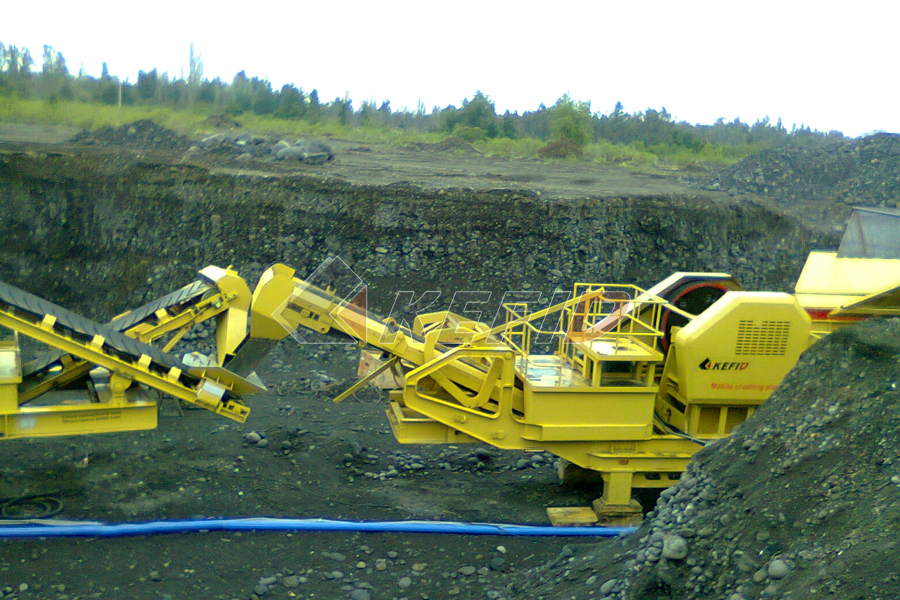
4. Flotation Circuit – Selective Separation of Copper Minerals
Flotation is the cornerstone of copper ore beneficiation. A typical circuit consists of three sequential cell types:
-
Rougher cells – where the bulk of copper minerals are recovered. Rougher cells operate at high air flow rates (0.2–0.4 m³ min⁻¹ m⁻³ slurry) and use collectors such as xanthates, along with frothers like MIBC, to generate a stable froth.
-
Scavenger cells – designed to capture copper that escaped the roughers. Scavengers run at lower air flow and higher reagent concentrations to maximize recovery of the remaining copper.
-
Cleaner cells – used to upgrade the concentrate by removing residual gangue. Cleaners typically employ a lower pulp density (30–35 % solids) and a more selective reagent regime, often adding depressants (e.g., sodium cyanide) to suppress remaining sulfide minerals that are not of interest.
The flotation circuit is supported by pulp conditioning equipment (mixers, agitators, and reagent dosing stations) that ensure uniform distribution of chemicals and maintain the required pH (usually 9–10 for copper sulfide flotation).
5. Ancillary Separation and Dewatering Equipment
Even after flotation, the copper concentrate contains entrained water and fine gangue that must be removed before shipping. Thickeners and scrubbers are used to increase the solids content of the slurry to 50–55 % by weight. The thickened slurry then passes through filter presses or belt filters to achieve a final moisture content of 10–12 %.
For ores that contain magnetite or other magnetic gangue, a magnetic separator placed upstream of the grinding circuit can reduce the load on downstream equipment and improve overall recovery. In deposits where the copper mineral is intergrown with heavy silicates, a dense‑media separator (DMS) can be employed after crushing to pre‑concentrate the ore, thereby reducing the volume of material that must be ground and floated.
6. Plant Design Considerations
When selecting the specific models and capacities of the machines described above, engineers must balance several factors:
- Ore mineralogy – Oxide ores may require less aggressive grinding and can be processed by simple gravity‑separation equipment, whereas sulfide ores demand fine grinding and robust flotation circuits.
- Feed size and hardness – High‑hardness ores (Mohs > 6) often necessitate a larger primary crusher and a more powerful SAG mill, while softer ores can be handled with impact crushers and lower‑energy grinding media.
- Target recovery and grade – Plants aiming for > 90 % copper recovery typically incorporate multiple stages of flotation and fine‑tuned reagent schemes, which in turn increase the required capacity of the flotation cells and thickening equipment.
- Energy efficiency – Modern plants increasingly adopt HPGRs, variable‑frequency drives on crushers, and high‑efficiency motors to lower specific energy consumption, which can be as high as 20–30 kWh t⁻¹ for traditional SAG‑ball mill circuits.
- Environmental constraints – Dust‑control systems on crushers, water‑recycling loops for the flotation circuit, and tailings‑management facilities must be integrated from the outset to meet regulatory standards.
7. Conclusion
In summary, the beneficiation of copper ore relies on a well‑coordinated suite of machines: primary and secondary crushers for size reduction, SAG/ball or HPGR mills for grinding, hydrocyclones (or equivalent classifiers) for particle‑size control, a multi‑stage flotation circuit for selective copper recovery, and thickening‑filtering equipment for final dewatering. Ancillary devices such as magnetic separators and dense‑media separators may be added to improve feed quality and reduce downstream load. The exact configuration and capacity of each machine are dictated by ore characteristics, desired recovery, and economic or environmental constraints, but the equipment list above forms the backbone of virtually every modern copper‑flotation plant.