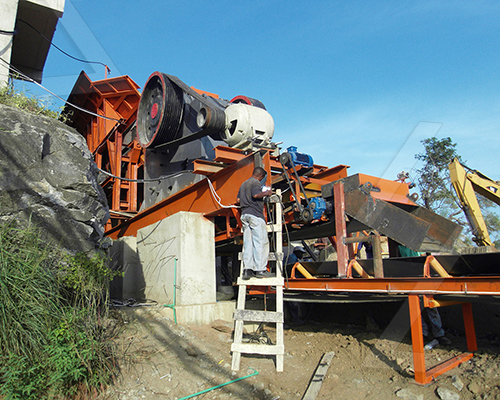
New Zealand's mining sector stands as a dynamic force, where rugged landscapes yield not only precious minerals but also a wealth of innovation. From the coal fields of the Waikato to the gold-bearing veins of the South Island, the industry relies on a sophisticated ecosystem of products and services engineered for efficiency, safety, and environmental stewardship. This includes everything from heavy-duty extraction machinery and advanced geological surveying technology to specialised chemicals for mineral processing and cutting-edge software for operational management. As the sector navigates a future focused on sustainable practice and technological integration, the products supporting it are evolving rapidly. This exploration delves into the essential tools, technologies, and solutions that power New Zealand's extractive industries, highlighting the ingenuity that drives productivity from the ground up.
Maximising Operational Efficiency: How Our Mining Products Drive Productivity in NZ
Operational efficiency in New Zealand's diverse mining sector—from the hard rock of the Coromandel to the abrasive sands of the West Coast—demands equipment engineered for extreme duty cycles and variable geology. Our product line is developed from the ground up to meet this challenge, integrating advanced material science and precision engineering to directly reduce downtime and increase throughput.
The core of our offering is a range of proprietary alloy steels and wear-resistant materials, specifically formulated for NZ mining conditions.
- High-Stress Manganese Steel Components: Our Hadfield-grade manganese steel (11-14% Mn) is work-hardening, achieving surface hardness exceeding 550 HB under impact, ideal for gyratory crusher mantles, jaw plates, and shovel dippers in gold and iron ore applications.
- Abrasion-Resistant Alloy Liners: For high-wear zones in ball mills, cyclones, and slurry pipelines, we supply quenched & tempered alloy steel plates (Brinell 400-500) and chromium carbide overlays, significantly extending service life in processing abrasive silica and ironsands.
- Precision Ground Engaging Tools (GET): Our GET systems for excavators and loaders use forged, through-hardened alloy steel, providing superior fracture resistance and wear profile retention in fragmented rock and overburden.
Our designs are validated against international technical standards, ensuring structural integrity and performance predictability. Key certifications include ISO 9001 for quality management and CE marking for compliance with EU safety, health, and environmental directives. Critical wear parts are subjected to non-destructive testing (NDT) per AS/NZS ISO 17638 (penetrant testing) and 17640 (ultrasonic testing).
The primary productivity gains are realized through measurable performance parameters and system-level advantages.
- Increased Throughput (TPH): Optimized cavity designs in our crusher wear parts and improved flow characteristics in our slurry components reduce bottlenecks, directly boosting processing plant capacity.
- Adaptability to Ore Hardness: Product grades are selected based on the Abrasion Index (AI) and Work Index (WI) of the specific ore body, ensuring optimal wear life versus impact resistance for operations dealing with both competent greywacke and softer, clay-bound materials.
- Reduced Mean Time to Repair (MTTR): Our modular component design and precision machining allow for faster, safer change-outs. Standardized fitting and clear OEM compatibility minimize installation errors and equipment off-hire time.
- Total Cost of Ownership (TCO) Focus: While initial investment is a factor, the extended service intervals and reliable performance of our products lead to a lower cost per tonne mined over the operational lifecycle.
For specific applications, the technical selection is guided by quantifiable data. The following table outlines key parameters for primary crusher liner selection based on ore characteristics:
| Ore Type / Application | Recommended Alloy | Key Mechanical Property | Expected Wear Life Improvement (Baseline) | Primary Benefit |
|---|---|---|---|---|
| High-Abrasion, Low-Impact (e.g., Ironsands) | Martensitic Chromium Steel | Hardness: 650-750 HB | 30-40% | Superior abrasion resistance for consistent grading. |
| High-Impact, Moderate-Abrasion (e.g., Quartz-rich Gold Ore) | Austenitic Manganese Steel | Toughness: >200 J Impact Energy | 20-30% | Work-hardening surface withstands repeated fracture forces. |
| Corrosive & Abrasive (e.g., Acidic Coal Measures) | Nickel-Chromium White Iron | Corrosion Resistance + Hardness: 600-650 HB | 50-60% | Combined resistance to chemical attack and mechanical wear. |
Ultimately, our engineering philosophy is to provide deterministic performance. By specifying exact material grades, manufacturing to stringent tolerances, and validating against operational data from NZ sites, we deliver the predictable, high-uptime performance required to maximize the productivity and profitability of your mining operation.
Engineered for Harsh Conditions: Durability and Reliability in NZ's Mining Environments
The operational integrity of mining equipment in New Zealand is non-negotiable. From the abrasive, high-silica sands of the West Coast to the corrosive, wet environments of Northland, machinery must withstand extreme mechanical and chemical stress. Our product engineering philosophy is rooted in material science and validated against international standards to ensure structural resilience and sustained throughput.
Core Engineering Principles:
- Advanced Material Selection: Critical wear components are fabricated from proprietary abrasion-resistant (AR) steel grades, often exceeding 400-500 Brinell hardness. For impact zones, we specify high-grade manganese steel (11-14% Mn) for its unique work-hardening capability, which increases surface hardness under repeated impact. Corrosion-resistant alloys are specified for all structural fasteners and hydraulic line fittings.
- Design Validation: Structural designs are validated via Finite Element Analysis (FEA) to identify and reinforce potential fatigue points. Dynamic load testing simulates the variable forces experienced during tramming, loading, and processing.
- Component-Level Sealing: IP66/IP67-rated seals and pressurized cabin systems are standard to exclude dust and moisture, protecting sensitive electronics and hydraulic systems. This is critical for maintaining uptime in New Zealand's high-rainfall regions.
Functional Advantages for NZ Sites:
- Adaptability to Ore Variability: Crusher jaws, cone mantles, and screen decks are available in multiple material grades to match the specific abrasion index (Ai) and impact energy of the ore body, from soft coal to hard gold-bearing quartz.
- Sustained Throughput: Engineered wear life directly correlates to consistent tonnage-per-hour (TPH) output. Optimized chamber designs and liner profiles maintain calibrated product size distribution over longer operational cycles.
- System Integration & Safety: Designed for compatibility with NZ mine site protocols, featuring standardized interfaces for monitoring sensors, guarding for safe maintenance, and designs that facilitate rapid, safe component change-outs.
Technical Specifications & Standards Compliance
| Component Category | Key Material/Standard | Primary Performance Metric | Typical Application in NZ |
|---|---|---|---|
| Wear Liners (Primary Crushing) | Austenitic Manganese Steel (AMS 11-14%) | Impact toughness, work-hardening to ~550 BHN | Gyratory & jaw crushers for hard rock (gold, iron sand) |
| Abrasion-Resistant Plates | AR400F / AR500F Steel Plate | Brinell Hardness (400-500), yield strength | Truck bodies, hoppers, chutes in high-silica environments |
| Screening Media | Polyurethane / Rubber / Hardened Steel | Cut-point accuracy, wear life (tons processed) | Classifying iron sand, coal, or aggregate |
| Hydraulic Systems | ISO 4406 Fluid Cleanliness Standards | Particle count control, seal compatibility | All mobile plant (excavators, haul trucks) in wet conditions |
| Structural Fabrication | AS/NZS 1554.1 for welding, ISO 12944 for corrosion protection | Fatigue life, corrosion resistance (C5-M category) | Conveyor structures, plant support frames in coastal mines |
Reliability is engineered in from the outset. It is a function of selecting the correct material grade for the specific wear mechanism, validating the design against the expected load spectrum, and ensuring all protective systems meet or exceed the environmental classification of the site. This approach minimizes unplanned downtime and delivers a predictable, lower total cost of ownership over the asset's lifecycle.
Advanced Safety and Compliance: Protecting Your Workforce with NZ-Tested Solutions
Safety in New Zealand mining is non-negotiable, governed by a stringent regulatory framework that demands equipment to be both inherently safe and demonstrably compliant. Our solutions are engineered to exceed these baseline requirements, integrating advanced material science and robust design to create a primary layer of protection for personnel. This focus on engineered safety directly enhances operational continuity by preventing catastrophic failure and unplanned downtime.
The core of this protection lies in the strategic application of specialized materials. Critical wear components, such as crusher liners, screen decks, and chute linings, are fabricated from proprietary alloy steels.
- High-Stress Component Alloys: For impact zones, we utilize modified Hadfield manganese steels (e.g., 14% Mn, 18% Mn with Cr/Mo additions) that work-harden under repeated impact, achieving surface hardness exceeding 550 HB. This provides exceptional resistance to deformation and fatigue cracking in high-tonnage primary crushing applications.
- Abrasion-Resistant Composites: In high-wear, sliding abrasion environments—such as slurry handling—components are constructed from ultra-high hardness (500-600 HB) quenched and tempered alloy steels or ceramic-metal matrix composites. These materials resist the cutting/gouging wear caused by New Zealand's often hard and abrasive ore types, from West Coast iron sands to hard rock quartz.
- Structural Integrity: Mainframes and load-bearing structures are fabricated from normalized low-alloy steel plates with high notch toughness, ensuring they withstand dynamic loads and vibrational stresses without brittle fracture.
All equipment is designed, manufactured, and documented to comply with, and typically surpass, recognized international and local standards. This provides a verifiable safety audit trail.
- CE Marking & ISO 9001: Full compliance with the Machinery Directive (2006/42/EC) for CE marking, supported by comprehensive technical construction files. Our integrated quality management system is certified to ISO 9001, ensuring traceability and consistency.
- AS/NZS Compliance: Designs are rigorously assessed against relevant AS/NZS standards for structural safety, guarding, and pressure equipment, ensuring seamless integration into the New Zealand operational and regulatory context.
- Design Validation: Critical designs are validated via Finite Element Analysis (FEA) for stress distribution and fatigue life, ensuring safety factors are maintained under maximum rated loads, including shock loads from tramp metal.
The functional safety advantages of this technical approach translate into tangible site benefits.
- Predictable Wear Life & Reduced Failure Risk: The use of specified, grade-controlled wear materials allows for accurate wear life modeling. This enables planned maintenance, removing personnel from hazardous areas for liner changes on a scheduled basis, rather than in response to unpredictable, catastrophic failure.
- Integrated Guarding & Safe Access: Guards, walkways, and maintenance platforms are not add-ons but are designed as part of the primary structure. They provide safe, clear access for inspection and routine tasks, isolating personnel from moving parts and fall hazards.
- Dust & Noise Mitigation by Design: Sealing systems on crushers and screens are engineered for containment, reducing respirable dust. Structural damping and acoustically lined enclosures are designed to lower noise emissions, protecting against hearing loss.
- Stability & Integrity: A low center of gravity and a wide footprint, calculated for specific ground conditions, ensure operational stability. Internally, redundant load paths and protected hydraulic/electrical systems prevent single-point failures from escalating into safety incidents.
| Safety Feature | Technical Parameter / Standard | Direct Workforce Benefit |
|---|---|---|
| Primary Frame Integrity | FEA-verified, min. safety factor of 4.0 on yield strength under dynamic load. AS/NZS 4324.1 compliance. | Eliminates risk of structural collapse under shock loading or fatigue. |
| Liner Retention System | Hydraulic bolt tensioning to precise pre-load (e.g., 70% of bolt yield). Monitored via torque/tension charts. | Prevents liner detachment events; enables secure, tool-controlled installation/removal. |
| Rotating Mass Guarding | Guards designed to test standards for containment (e.g., EN ISO 14120). Minimum gap tolerances to prevent access. | Contains projectile fragments; prevents contact with crusher flywheels or screen drives. |
| Emergency Stop System | Category 1, PL e per ISO 13849-1. Hard-wired, redundant circuits with manual reset. | Provides failsafe, immediate shutdown from multiple station points in a hazardous event. |
Ultimately, advanced safety is a function of reliability. Equipment that performs predictably under the rated capacity—whether processing 800 TPH of alluvial gravel or 350 TPH of hard rock quartzite—removes personnel from unplanned, high-risk intervention scenarios. Our NZ-tested solutions are engineered to provide that reliability through material specification, standards compliance, and hazard-mitigating design, creating a inherently safer working environment.
Technical Specifications and Customisation: Tailored Products for Your Mining Needs
Our engineered products are defined by material specifications that directly combat the primary wear mechanisms in New Zealand mining: high-impact abrasion from hard rock and corrosive wear in wet, high-saline environments. We do not offer generic solutions; every component is specified from the alloy up.
Core Material Specifications
- Primary Wear Components (Crusher Jaws, Liners, Bucket Teeth): Fabricated from premium quenched & tempered alloy steels (e.g., T-400, AR-500) or high-grade manganese steel (11-14% Mn). Selection is based on a detailed analysis of your ore's compressive strength (MPa) and abrasion index (Ai), ensuring optimal balance between hardness for abrasion resistance and ductility to withstand impact without brittle failure.
- Screening Media (Polyurethane Panels, Rubber Decks): Formulated from specific polymer grades (e.g., ASTM Standard Polyurethane, Natural Rubber Blends). Compound hardness (Shore A), tensile strength, and elongation properties are selected to match material size, impact energy, and the required cut-point to maximize throughput and service life.
- Slurry & Pipeline Components: Utilise ultra-high molecular weight polyethylene (UHMW-PE) or chrome-white-iron alloys for severe slurry applications. These materials provide a low coefficient of friction and exceptional resistance to corrosive and erosive wear in tailings and processing circuits.
Technical Standards & Certification
All manufacturing and quality assurance processes adhere to internationally recognised standards, providing verifiable performance benchmarks and safety compliance.
- ISO 9001:2015 certified quality management systems govern production.
- CE Marking applied where applicable, indicating conformity with health, safety, and environmental protection standards for products sold within the EEA.
- Non-Destructive Testing (NDT): Critical load-bearing components undergo mandatory ultrasonic (UT) and magnetic particle (MT) inspection to internal standards exceeding AS/NZS ISO 17637 and 17638.
Mining-Specific Functional Advantages
- Throughput-Optimised Design: Geometry of wear parts is engineered to maintain or increase original equipment manufacturer (OEM) rated tonnes-per-hour (TPH) capacity, preventing bottlenecks from poorly flowing profiles.
- Adaptability to Ore Body Variance: Designs are customised for specific ore characteristics—whether handling the high-density, abrasive qualities of West Coast iron sands or the variable hardness of Otago schist. This includes adjustable wear part configurations to extend liner life across different phases of a mine's life cycle.
- Modular & Replaceable Systems: Implement segmented liner designs and quick-change systems to drastically reduce downtime during maintenance shifts. Critical wear zones can be replaced independently of entire assemblies.
- Integration & Compatibility: Custom fabrication ensures precise dimensional conformity to OEM equipment, including Metso, Sandvik, and Caterpillar, as well as legacy and hybrid plant setups.
Customisation Parameters
The following table outlines key variables addressed during the product specification process to deliver a tailored solution.
| Parameter Category | Key Variables Considered | Typical Outcome / Customisation |
|---|---|---|
| Material & Ore | Ore Type (e.g., Gold Ore, Iron Sand), Abrasion Index (Ai), Compressive Strength, Moisture Content, pH Level | Selection of alloy grade, polymer compound, or ceramic matrix to target specific wear mechanisms. |
| Equipment & Process | Crusher Model & Chamber Geometry, Feed Size (F80), Product Size (P80), Required TPH, Screen Deck Angle & Vibration G-Force | Optimised part geometry for flow and capacity; reinforcement in high-wear zones; adjustment of panel aperture design. |
| Operational | Maintenance Schedule, Shift Pattern, Target Service Life, Available Handling Equipment | Modular design for faster change-outs; balanced cost-per-tonne over part life; weight and lifting lug placement. |
Proven Performance in NZ Mines: Case Studies and Client Testimonials
Our engineered wear components are specified for their predictable performance in New Zealand's diverse and abrasive mining environments. The following case studies and direct client feedback validate our material science and design principles under operational load.
Case Study: West Coast Alluvial Gold Operation
- Challenge: Severe, continuous abrasion from high-silica gravels in screening and slurry handling systems, leading to premature failure of standard AR400 liners.
- Solution: Implementation of a custom quenched & tempered low-alloy boron steel (Q&T Boro 400) for trommel screen sections and slurry pump liners. This material offers a superior combination of surface hardness (400 HB) and core toughness, resisting both abrasion and impact cracking.
- Technical Outcome: Achieved a 320% increase in service life compared to the previous supplier. The consistent wear profile of the Q&T steel maintained optimal screening efficiency, supporting a sustained throughput of 850 TPH.
Case Study: North Island Quarry & Aggregate Producer
- Challenge: Unpredictable wear life and catastrophic failure of primary jaw crusher plates when processing highly variable volcanic rock (Basalt to Andesite, 180-280 MPa compressive strength).
- Solution: Deployment of 18% Manganese steel (Mn18Cr2) jaw dies. This austenitic manganese steel work-hardens in service from approximately 220 HB to over 550 HB at the wear surface, dynamically adapting to the changing ore hardness.
- Technical Outcome: Crusher plate life stabilized, with change-out intervals extending by 2.2x. This reduced unplanned downtime and provided a reliable wear cost per tonne metric. Plant managers reported a marked improvement in product shape consistency due to the maintained profile of the work-hardened Mn-steel.
Client Testimonials on Performance & Support
"The switch to their proprietary chromium carbide overlay (CCO) plates for our tailings pipeline elbows was data-driven. Their engineers presented a wear-rate analysis based on our slurry density and particle size distribution. The result was a quantifiable reduction in maintenance cycles from 6 weeks to over 5 months, which is a direct operational cost saving." – Maintenance Superintendent, Otago Gold Plant
"We require full traceability and certification for all mill liners. Their ISO 9001:2015 certified manufacturing and provision of mill test certificates (MTCs) for every batch of high-carbon chrome-moly steel gives our engineering team confidence. The liners meet the calculated charge trajectory profiles, ensuring optimal grinding efficiency in our SAG mill." – Plant Engineer, Waikato Coal Operation
Documented Functional Advantages:
- Material Integrity: All alloy grades are melt-controlled to precise chemistries, with heat treatment processes validated to achieve specified hardness, yield, and impact toughness values.
- Design Precision: Components are engineered using laser-scanned cavity data and Finite Element Analysis (FEA) to manage stress concentrations, preventing premature failure at bolt holes and edges.
- Supply Chain Reliability: Certified to CE Mark and AS/NZS standards where applicable, with a local NZ inventory of high-wear items to support critical path maintenance schedules.
Frequently Asked Questions
How often should wear parts like crusher liners be replaced in NZ's abrasive conditions?
Replace high-manganese steel (e.g., Hadfield Grade 1) liners every 500-1,000 operational hours, depending on silica content. Monitor wear profiles with laser scanning. Use hardfacing for critical edges to extend life. Always source OEM-specified grades to maintain material integrity and crushing efficiency.
How do I select machinery for varying ore hardness (Mohs 3-8) in a single site?
Opt for equipment with adjustable hydraulic settings and variable-frequency drives. For jaw crushers, specify different jaw plate alloys: manganese steel for <Mohs 5, and boron steel for higher hardness. Cone crushers should have automated CSS adjustment for real-time adaptation to feed material changes.
What are best practices for controlling harmful vibration in heavy-duty screens and crushers?
Implement a predictive maintenance schedule using wireless vibration sensors (e.g., SKF or Schenck). Ensure proper foundation isolation with anti-vibration pads and dynamic balancing of rotors during service. For screens, regularly check and tension polyurethane screen mats to prevent resonant frequencies.
What lubrication specifications are critical for NZ's humid and dusty mining environments?
Use synthetic, high-viscosity-index lubricants with extreme pressure (EP) additives. For bearings (prefer SKF or FAG), adhere to strict re-greasing intervals based on ultrasonic condition monitoring. Seal critical points with labyrinth or ceramic seals to prevent moisture and particulate ingress.
How can I optimize hydraulic system performance in extreme temperature fluctuations?
Utilise hydraulic oils with a high viscosity index (VI > 150) and install oil coolers with thermostatic controls. Regularly check and adjust system pressure relief valves to OEM specs (typically 250-300 bar for breakers). Implement desiccant breathers on reservoirs to manage condensation.
What is the most effective strategy for managing conveyor belt wear in high-tonnage operations?
Employ multi-ply steel cord belts with abrasion-resistant (AR) covers (minimum 10mm). Use properly aligned ceramic-lined impact idlers at loading points. Implement automated belt tracking systems and conduct regular thermographic scans to identify premature wear from misalignment or seized rollers.