In the realm of industrial minerals, antimony stands as a critical element, powering everything from flame-retardant materials to advanced semiconductor technology. Unlocking this valuable resource begins at the antimony ore crusher plant, the essential gateway where raw, extracted material is transformed into a manageable commodity. This facility is far more than a simple collection of machinery; it is a meticulously engineered hub where primary crushing, screening, and secondary reduction processes converge to liberate the precious antimony from its host rock. The efficiency and precision of this initial processing stage are paramount, directly influencing downstream recovery rates, operational costs, and final product quality. Understanding the design and function of a modern antimony ore crusher plant is, therefore, fundamental for any operation seeking to optimize yield and navigate the complexities of this vital supply chain.
Maximizing Antimony Recovery: How Our Plant Optimizes Ore Processing Efficiency
The primary challenge in antimony beneficiation is the preservation of coarse, liberated stibnite (Sb₂S₃) particles during comminution. Over-grinding creates fines that are unrecoverable via conventional gravity separation, directly reducing overall plant yield. Our crushing circuit is engineered to maximize the generation of optimally-sized feed for downstream concentration by precisely controlling fragmentation and minimizing slimes production.
Core Engineering Philosophy: Selective Liberation & Throughput Stability
The plant design prioritizes a high reduction ratio primary crushing stage to accept run-of-mine (ROM) ore, followed by controlled, staged comminution. This approach minimizes unnecessary work on already-liberated material. System stability is paramount; consistent feed size and tonnage are maintained to ensure downstream jigs, shaking tables, or flotation cells operate at peak efficiency. Fluctuations in crusher output directly compromise recovery rates.
Material & Construction Specifications
Component durability is non-negotiable for abrasive antimony ores, which often contain quartz and other hard gangue minerals.
- Primary Jaw Crusher: Features a fixed jaw and swing jaw fabricated from high-strength, abrasion-resistant manganese steel (Mn14Cr2 or equivalent). The geometry of the crushing chamber is designed for a deep, aggressive nip angle to handle large, slabby ROM feed without bridging.
- Secondary Cone Crusher: Utilizes a heavy-duty head and concave liner set in a similar high-grade manganese alloy. The lube system is engineered to ISO 4406 cleanliness standards, with integrated thermal management to maintain optimal viscosity and bearing protection under high-load, continuous operation.
- Structural Fabrication: The plant chassis and hoppers are constructed from reinforced, wear-lined plate steel. Critical stress points are fortified, and the design adheres to CE marked structural integrity standards for dynamic loading.
Operational Parameters & Adaptability
The plant's efficiency is defined by its calibrated performance within a defined envelope of ore characteristics.
| Parameter | Specification Range | Impact on Recovery |
|---|---|---|
| Feed Capacity (TPH) | 50 - 500 TPH (modular) | Ensures matched throughput from mine face to mill, preventing bottlenecks. |
| Max Feed Size | Up to 750mm | Accepts direct ROM feed, eliminating need for pre-sizing at the pit. |
| Product Size Range | Adjustable 10mm - 40mm | Optimized for downstream gravity pre-concentration; minimizes over-crushing. |
| Ore Hardness Adaptability | Up to 250 MPa Compressive Strength | Handles variable orebody geology without compromising reduction ratio or liner life. |
Key Functional Advantages for Recovery Optimization
- Inter-Stage Screening Integration: A closed-circuit design with precise sizing screens removes liberated, target-size material early, routing only oversize back to the crusher. This drastically reduces recirculating load and energy consumption per ton of product.
- Advanced Drive & Control Systems: Variable-frequency drives (VFDs) on crusher motors allow for real-time adjustment of eccentric speed or rotor kinetics to match ore hardness and feed gradation. PLC-based automation maintains choke-fed conditions for optimal inter-particle crushing and consistent product shape.
- Wear Monitoring & Liner Life: Predictive wear-part management, based on operational hour and throughput data, allows for scheduled liner changes during planned downtime. This prevents unexpected failure and the associated loss of product specification control.
- Dust Suppression & Material Containment: Integrated spray systems at transfer points control dust, which can carry fine antimony values. Sealed chutes and skirt boards ensure all material reports to the process stream, eliminating environmental loss of product.
Ultimately, recovery is a function of how effectively the crushing plant prepares the ore. Our systems are not merely size reducers; they are the first and most critical concentration stage, engineered to deliver a consistent, optimally-sized feed that maximizes mass pull and grade in the subsequent separation circuits.
Engineered for Tough Materials: Superior Crushing Performance on Antimony Ores
Antimony ores, primarily stibnite (Sb₂S₃), present a unique set of challenges for comminution. Their inherent brittleness and often complex, abrasive gangue minerals—such as quartz, calcite, and barite—demand crushing solutions engineered for high-impact stress and sustained wear resistance. Standard crusher components will rapidly degrade under these conditions, leading to excessive downtime, contamination from worn metal, and uncontrolled particle size distribution that compromises downstream processing efficiency.
Our plant's crushing circuit is built around a material science-led approach, selecting and hardening components to match the specific abrasion and impact profile of antimony-bearing rock.
Core Material Specifications & Construction:
- High-Grade Manganese Steel (Mn14, Mn18Cr2, Mn22): Jaw plates, cone mantles, and concaves are cast from modified Hadfield manganese steel. These alloys work-harden under continuous impact, the surface hardness increasing from approximately 220 HB to over 500 HB during operation, creating a continually renewing wear-resistant surface ideal for the shattering of brittle antimony ore.
- Chromium-Molybdenum Alloy Steel (e.g., 4130, 4340): Used for crusher shafts, frames, and eccentric assemblies. These alloys provide an optimal balance of high tensile strength, toughness, and fatigue resistance to withstand the cyclical high-tonnage loads without deformation.
- Ceramic Composite Liners: In key chute and hopper areas subject to high-velocity abrasive sliding wear, we integrate alumina ceramic liners. Their extreme hardness (≈9 Mohs) provides superior protection against abrasion from quartz-rich gangue, significantly outlasting conventional steel plates.
Engineering for Performance & Reliability:
- Adaptive Crushing Geometry: Crusher cavity profiles are optimized not for generic rock but for the typical fracture mechanics of antimony ore. This ensures efficient nip angles and reduction ratios, maximizing throughput while minimizing recirculating load and power draw per ton.
- Precision Tolerance & Assembly: All major rotating assemblies (eccentrics, bearings) are machined to ISO 286 tolerance standards. This precision minimizes vibrational harmonics, reduces non-productive energy loss, and extends bearing life—critical for maintaining consistent closed-side settings (CSS) for product size control.
- Integrated Overload Protection: Hydraulic adjustment and clearing systems on primary and secondary crushers provide instantaneous relief from tramp metal or uncrushable material, preventing catastrophic damage. Systems automatically reset to the original CSS, ensuring uninterrupted product gradation.
Operational Advantages for Antimony Processing:
- Controlled Particle Liberation: Consistent, cubical output from the crushing stages generates clean fractures along mineral boundaries. This promotes superior liberation of stibnite from gangue in subsequent grinding circuits, directly enhancing recovery rates.
- Reduced Contaminant Generation: The optimized wear resistance of alloy components drastically lowers the introduction of iron fines into the ore stream. This is a critical consideration for downstream flotation processes, where iron contamination can complicate reagent schemes and affect concentrate purity.
- High Uptime in Abrasive Environments: The combination of material selection and robust design directly translates to extended service intervals for wear parts. This predictability allows for planned maintenance, aligning with processing schedules to maximize plant availability (typically >92%).
Technical Parameters for Primary Crushing Unit (Example):
| Parameter | Specification | Rationale for Antimony Ore |
|---|---|---|
| Model (Jaw Crusher) | JC120 | Capacity-to-footprint ratio for medium-scale operations. |
| Feed Opening | 1200 x 830 mm | Accepts run-of-mine antimony ore with typical top-size. |
| Max Feed Size | 750 mm | Handles blocky ore from primary blasting. |
| Power Rating | 160 kW | Provides sufficient torque for high compressive strength inclusions. |
| Approx. Capacity Range | 280 - 480 TPH | Variable based on ore hardness (Mica Index), moisture, and feed gradation. |
| Main Frame Construction | Fabricated STE 460 steel | High yield strength for dynamic loading. |
| Jaw Plate Material | Mn18Cr2 | Optimal work-hardening grade for abrasive, impact service. |
The plant's design philosophy ensures the crushing module is not a bottleneck but a foundational, high-availability asset. It delivers a predictable, spec-compliant feed to the milling circuit, which is the first critical step in maximizing the economic recovery of antimony concentrate.
Tailored Solutions: Customizable Configurations for Your Mining Operation
The crushing circuit is the primary interface with your ore body. A generic plant design introduces inefficiency, accelerates wear, and constrains recovery. Our engineering approach is based on modular, customizable configurations that are specified from your mine plan data and ore characterization.
Core Customization Parameters
Every configuration begins with a detailed analysis of your specific material. Key determinants include:
- Ore Hardness & Abrasiveness (Bond Work Index, SiO₂ Content): Dictates the selection of crusher type, rotational speed, and the required alloy for wear parts.
- Feed Size Distribution (F80): Determines the primary crusher aperture and the necessary pre-screening logic.
- Target Product Size (P80): Drives the selection of secondary/tertiary crushing stages and closed-circuit screen specifications.
- Moisture and Clay Content: Influences feeder design, chute angles, and the potential integration of washing or scrubbing modules.
- Required Throughput (TPH): Scales the entire plant footprint, motor power ratings, and material handling capacities.
Technical Specification & Component Selection
| Configuration Tier | Primary Crushing | Secondary/Tertiary Crushing | Key Wear Material Specification | Typical Capacity Range |
|---|---|---|---|---|
| High-Abrasion, Hard Ore | Heavy-Duty Jaw Crusher (ISO 21873-1) | Hydraulic Cone Crusher (Multi-Cylinder) | Manganese Steel (Mn18Cr2 / Mn22Cr2) liners, alloyed steel hammer heads. | 100 - 600 TPH |
| Moderate, Variable Ore | Jaw Crusher or Gyratory Crusher | Impact Crusher or Single-Cylinder Cone | High-Chromium Cast Iron (Cr26, Cr28) blow bars, martensitic steel wear plates. | 50 - 300 TPH |
| Friable, Low-Abrasion Ore | Jaw Crusher | Heavy-Duty Hammer Mill | Tungsten Carbide-tipped hammers, AR400 steel liner plates. | 50 - 200 TPH |
Functional Advantages of a Tailored Configuration
- Optimized Comminution Circuit: Achieves target reduction ratios with minimal energy consumption per ton (kWh/t), directly lowering operational expenditure.
- Predictable Wear Life: Matching wear part metallurgy (e.g., ASTM A128 Manganese Steel, ISO 13521 grades) to your ore's abrasion index extends mean time between failures (MTBF) and stabilizes maintenance scheduling.
- Adaptable Layout: Modular design allows for stationary, semi-mobile, or track-mounted plants. Layouts are engineered for your site's topography, ensuring efficient material flow and access for maintenance.
- Integrated Automation Readiness: Designs are pre-configured for PLC-based control systems, enabling automatic setting adjustment (ASRi for cone crushers), feed regulation, and performance monitoring for consistent P80 output.
- Regulatory & Safety Compliance: All structural and electrical components are engineered to meet CE, ISO 9001, and relevant mining safety standards, with built-in access platforms, guarding, and dust suppression system interfaces.
Final plant specification is a collaborative process, culminating in detailed flow sheets, general arrangement drawings, and guaranteed performance metrics based on your provided ore samples and production targets.
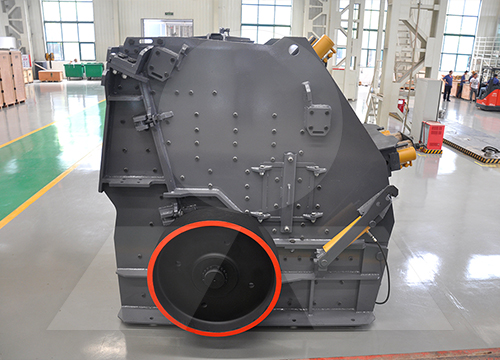
Built to Last: Durable Construction for Continuous, Low-Maintenance Operation
The operational integrity of an antimony ore processing circuit hinges on the mechanical durability of its primary crushing stage. Antimony ores, often associated with quartz, pyrite, and other abrasive gangue minerals, present a significant wear challenge. Our crusher plants are engineered from the ground up to withstand this harsh environment, prioritizing structural integrity and wear-part longevity to maximize uptime and minimize total cost of ownership.
Core to this philosophy is the strategic application of advanced materials in high-wear zones. Critical components are not generic steel but are specified based on a detailed analysis of the ore's abrasion index and impact characteristics.
- Primary Crushing Jaws & Liners: Fabricated from modified high-manganese steel (Mn14Cr2, Mn18Cr2) or martensitic alloy steel with ceramic inserts. These materials work-harden under impact, developing a continuously renewing surface that resists the gouging and grinding wear from siliceous antimony ore.
- Frame & Housing: The main frame is a single-piece, stress-relieved steel casting or a heavily ribbed, welded fabrication from high-tensile steel plate (Q345B or equivalent). This monolithic construction eliminates potential failure points at bolted connections, ensuring alignment is maintained under extreme cyclical loading.
- Shafts & Bearings: Forged alloy steel shafts (e.g., 42CrMo) are heat-treated for optimal core toughness and surface hardness. They are supported by oversized, heavy-duty spherical roller bearings with integrated labyrinth seals and automated grease lubrication systems, designed for high static and dynamic load ratings exceeding calculated forces by a significant safety margin.
- Drive & Guards: Robust V-belt or direct hydraulic drives transmit power efficiently, protected by fully enclosed, bolt-on safety guards constructed from thick-gauge steel, ensuring operator safety and system integrity.
This material selection is validated through adherence to international engineering and quality standards, including ISO 9001 for quality management systems and CE marking for conformity with EU safety, health, and environmental requirements. Component manufacturing and assembly follow documented weld procedures (WPS/PQR) and non-destructive testing (NDT) protocols.
The direct functional advantages of this durable construction translate into measurable site benefits:
- Extended Mean Time Between Failures (MTBF): Reduced frequency of wear-part changes and major overhauls directly increases plant availability.
- Predictable Maintenance Scheduling: Superior wear life allows for planned maintenance during scheduled stops, eliminating unexpected breakdowns.
- Lower Lifetime Operating Costs: While initial investment may be higher, the reduced cost of spare parts, labor, and lost production time results in a lower cost per ton crushed over the plant's lifespan.
- Consistent Product Gradation: Maintained structural rigidity and wear profile ensure discharge settings remain stable, providing a consistent feed size to downstream grinding circuits.
For primary jaw crusher units, which form the backbone of most antimony ore crushing plants, durability is quantified through both design parameters and proven performance metrics.
| Component / System | Technical Specification / Material Grade | Performance Implication |
|---|---|---|
| Main Frame | High-tensile steel plate (Min. Yield Strength 345 MPa), ribbed construction | Absorbs high cyclic loads; maintains bearing & jaw alignment for consistent gap setting. |
| Jaw Plates | ZGMn18Cr2 (Standard), AR-400 Steel with ceramic composite (Severe Abrasion) | Optimized balance between impact toughness and abrasion resistance for maximum liner life. |
| Eccentric Shaft | Forged 42CrMo, hardened and precision ground | Withstands torsional and bending stresses; ensures smooth, reliable oscillation. |
| Bearing Rating | Spherical roller, L10 life calculation > 50,000 hours | Exceeds industry standard, ensuring bearing reliability under continuous, high-load operation. |
| Adjustment Range | Wide mechanical or hydraulic range (e.g., 100-250mm) | Provides operational flexibility to adapt to varying feed sizes and product requirements. |
| Typical Capacity Range | 150 - 800+ TPH (model dependent) | Engineered to handle required throughput with a durability factor applied to all load calculations. |
Ultimately, this engineered durability ensures the plant can reliably process the target tonnage (TPH) of hard, abrasive antimony ore year after year. The design inherently adapts to variable ore hardness and feed size without compromising mechanical integrity, forming a solid, low-maintenance foundation for the entire mineral processing operation.
Technical Specifications: Precision Engineering for Consistent Output Quality
The consistent production of a high-quality, spec-compliant antimony ore product is a direct function of the crusher plant's engineering precision. This is achieved through the rigorous specification of materials, adherence to international mechanical standards, and the design of systems that tolerate the specific abrasiveness and occasional tramp metal present in antimony deposits.
Core Mechanical & Material Specifications
- Crushing Chamber & Liners: Fabricated from high-grade, quenched & tempered manganese steel (Mn14Cr2, Mn18Cr2, or equivalent). This material work-hardens under impact, continuously developing a harder, wear-resistant surface that extends service life in highly abrasive stibnite (Sb₂S₃) ore applications.
- Main Frame & Eccentric Assembly: The main frame is a single-piece, high-integrity steel casting or fabricated from heavy-duty steel plate (minimum yield strength of 355 MPa). The eccentric shaft is forged from high-alloy steel, precision-machined to ISO tolerance standards, and supported by oversized spherical roller bearings with continuous, automated grease lubrication.
- Drive System: Utilizes high-torque, IE3 or higher efficiency electric motors coupled to durable V-belts or direct drive systems. TPH capacity is determined by motor power (kW/HP), crusher cavity geometry, and closed-side setting (CSS), with typical primary jaw crusher units ranging from 90-250 kW for capacities of 50-400 TPH.
- Adjustment & Safety Systems: Hydraulic or mechanical shim systems for precise CSS adjustment control final product top size. Non-intrusive, automated tramp metal release and clearing systems protect the crusher from uncrushable material, minimizing downtime and catastrophic damage.
Key Functional Advantages for Antimony Ore Processing
- Adaptability to Ore Variability: Engineered to handle fluctuations in feed size and hardness (typically 150-250 MPa compressive strength for stibnite-bearing rock) without significant loss of throughput or product consistency.
- Optimized Particle Shape: Precision-machined crushing surfaces and chamber geometry promote inter-particle crushing, yielding a more cubical product that improves downstream grinding efficiency and reduces slimes generation.
- Predictable Wear Management: Standardized, symmetrical liner designs allow for rotation and replacement in sets, providing predictable maintenance intervals and ensuring consistent product gradation throughout the liner's life cycle.
- Structural Integrity: Finite Element Analysis (FEA)-optimized designs ensure dynamic load stability under cyclical crushing forces, preventing fatigue failure and maintaining alignment for consistent operation.
Representative Technical Parameters
| Component | Specification | Typical Range / Standard |
|---|---|---|
| Primary Crusher Type | Jaw Crusher (CJ Series) or Gyratory Crusher | Feed opening: 750x1060mm to 1500x1800mm |
| Max Feed Size | 80-85% of crusher feed opening | 600mm to 1400mm |
| Drive Motor Power | Dependent on model & capacity | 90 kW - 450 kW |
| Closed Side Setting (CSS) Range | Hydraulic or mechanical adjustment | 75mm - 250mm (Primary) |
| Capacity (TPH) | @ defined CSS & bulk density (2.6-2.8 t/m³) | 150 - 1,200 TPH |
| Main Bearing | Spherical Roller Bearing | ISO 15 / AFBMA Standard |
| Frame Construction | High-Strength Steel Plate / Cast Steel | Minimum 355 MPa Yield Strength |
| Safety Standard | Machine Directive, CE Marking | EN ISO 12100:2010 |
Compliance & Certification
Critical structural components and assembly processes conform to international standards for mechanical safety (CE, GOST) and welding integrity (EN ISO 3834, ASME IX). Electrical components and motor assemblies carry relevant IEC/Ex certifications for deployment in standard or regulated mining environments.
Proven Reliability: Industry-Leading Safety and Support for Your Investment
Our crusher plants are engineered for continuous operation in abrasive antimony ore processing, where unplanned downtime directly impacts profitability. Reliability is not an abstract claim but a function of material selection, design adherence to international standards, and systematic support protocols.
Core Engineering for Abrasive Service
- Critical Wear Component Specification: Jaw plates, cone mantles, and concaves are cast from modified manganese steel (Mn14Cr2, Mn18Cr2) or specialized high-chrome white iron alloys. These materials are selected for optimal balance between hardness and toughness, resisting the gouging and abrasion typical of stibnite-bearing ore.
- Structural Integrity: Fabricated chassis and crusher bodies use high-tensile, abrasion-resistant steel plates at stress points. All major welds are performed to procedure and subjected to non-destructive testing (NDT) to prevent fatigue failure.
- Drive & Bearing Systems: Heavy-duty, oversized roller bearings are specified for all primary crusher and screen shafts. Dust-proof labyrinth seals and centralized grease lubrication systems ensure bearing life under high-load, high-dust conditions.
Certified Safety & Operational Guarding
- Full Compliance: Plants are designed and constructed to meet ISO 12100:2010 (Safety of machinery) and relevant CE marking directives for machinery. Guarding on all rotating parts, drives, and conveyor nip points is integral, not an add-on.
- Fail-Safe Hydraulics: Clearing and adjustment systems on cone and impact crushers utilize hydraulic circuits with pressure relief and lock-out valves, allowing safe chamber clearing and setting changes under zero-load conditions.
- Modular Walkways & Access: Platforms, ladders, and maintenance walkways are designed per ISO 14122 standards, providing safe, 360-degree access for inspection and routine service.
Technical Support & Lifecycle Management
Our commissioning and support structure is designed to protect the functional integrity of your plant.
| Support Phase | Key Activities & Deliverables |
|---|---|
| Pre-Installation | Foundation drawing review, plant layout optimization for your ore characteristics, and comprehensive lubrication & wear parts schedule. |
| Commissioning | Supervised erection, no-load and load testing, operator training on safety systems and routine maintenance, performance baseline documentation. |
| Operational Support | Remote monitoring assistance, predictive maintenance scheduling based on actual TPH and ore hardness (Mohs scale), guaranteed wear parts availability. |
| Performance Audits | Annual recommended inspection of mechanical and safety systems, wear pattern analysis, and crushing chamber optimization recommendations. |
Operational Adaptability
- Capacity Range: Plants are configured for specific throughputs (e.g., 50 TPH, 200 TPH, 500 TPH) with appropriate crusher cavity designs and feeder capacities to handle your mine plan's volume.
- Hardness & Feed Size Flexibility: Crusher models are selected based on the compressive strength (typically 150-250 MPa for antimony ores) and maximum feed size of your ROM material. Adjustable crushing chambers and variable speed feeders allow for tuning to varying ore conditions.
- Dust Mitigation Integration: Plants are pre-equipped with sealed chutes, dust encapsulation points, and connector flanges for integration with dry fog or baghouse dust suppression systems, critical for operator safety and environmental compliance.
Frequently Asked Questions
What is the optimal replacement cycle for jaw crusher wear parts in antimony ore processing?
Replace jaw plates and cheek plates every 400-600 operational hours for high-silica antimony ores. Use ZGMn13-4 high-manganese steel with water toughening treatment. Monitor wear via regular thickness gauging. Premature failure often indicates incorrect feed size or excessive tramp metal.
How do I configure a crusher for varying antimony ore hardness (Mohs 3-6)?
For soft oxidized ore (Mohs ~3), reduce crusher speed and increase discharge opening. For hard, sulfide-rich ore (Mohs ~6), increase hydraulic pressure on cone crusher clamping cylinders by 10-15% and utilize extra-coarse cavity liners. Always verify settings with ore sample testing.
What are the best practices for controlling crusher plant vibration with abrasive antimony ore?
Ensure foundation mass is 2.5x equipment mass. Use shear rubber pads or spring isolators under the crusher base. Dynamically balance the rotor after every mantle/liner change. Persistent vibration typically signals uneven feed, worn main bearings (prefer SKF or FAG), or broken foundation bolts.
What specialized lubrication is required for cone crushers in this application?
Use ISO VG 320 extreme-pressure (EP) synthetic gear oil with anti-wear additives. Maintain oil temperature below 55°C via integrated air coolers. Filter particles above 10 microns. For bearings, a lithium complex grease with Molybdenum Disulfide (MoS2) is critical for high-load, low-speed conditions.
How to prevent choke-feeding and ensure consistent throughput?
Implement a frequency-controlled vibrating feeder synchronized with crusher motor amperage. Keep the crushing chamber at 70-80% capacity. Use a PLC to auto-adjust feed rate if power draw exceeds 90% of rated motor load. Install a metal detector on the feed conveyor to prevent uncrushables.
What is the most effective liner profile for cone crushers processing antimony ore?
For secondary/tertiary crushing, use a non-choking, curved "bowl" liner profile in 18% Manganese steel with chrome carbide overlay. This design balances throughput and product shape. The steeper head angle improves nip and reduces slippage on hard, abrasive ore, extending liner life by 15-20%.