Beneath the colossal hulls of bulk carriers lies the lifeblood of modern industry: iron ore sand. This unassuming, granular cargo is the essential precursor to steel, the very skeleton of our global infrastructure. Its efficient and secure maritime transport is a critical, yet often unseen, link in the supply chains that power economies worldwide. The carriage of iron ore sand presents a unique set of logistical and operational challenges, from managing its dense, shifting nature to ensuring precise moisture content for safety. This article delves into the intricate world of moving this vital commodity across the oceans, exploring the specialized vessels, stringent international regulations, and expert handling practices that ensure this foundational material reaches its destination safely, driving progress from port to furnace.
Optimizing Bulk Transport: The Critical Role of Specialized Carriage for Iron Ore Sand
The efficient transport of iron ore sand from mine to processing facility is a critical determinant of overall operational profitability and safety. Standard bulk handling equipment is not engineered to withstand the uniquely abrasive and dense nature of this material, leading to accelerated wear, unplanned downtime, and significant product loss. Specialized carriage systems are not an optional upgrade but a fundamental engineering requirement for a viable operation.
The core challenge lies in the material's properties: iron ore sand possesses a high specific gravity (often exceeding 4.0 t/m³), extreme abrasiveness due to quartz and other hard minerals, and a fine, penetrative grain size. General-purpose conveyors, chutes, and hoppers succumb rapidly to these conditions. The solution is an integrated system designed from the ground up with material science and heavy-duty engineering principles.
Material and Construction Standards
- High-Hardness, Abrasion-Resistant Steels: Critical wear liners and components are fabricated from quenched and tempered alloy steels with a minimum 400 HB hardness, often utilizing grades like HARDOX® or equivalent. For the most severe applications, manganese steel (Hadfield steel, 11-14% Mn) is employed for its unique work-hardening property, where impact increases surface hardness.
- Specialized Alloy Grades for Specific Functions: Different components require tailored alloys. Chute liners may use ceramic-embedded steel for maximum abrasion resistance, while structural supports use high-tensile, weldable steels for dynamic load-bearing.
- Compliance with International Standards: Design and fabrication adhere to ISO 5048 (Continuous mechanical handling equipment), relevant CE Machinery Directive Annex I requirements for safety, and other mining-specific standards like AS/NZS 4024. This ensures structural integrity, safety, and global operational compliance.
Functional Advantages of Specialized Carriage Systems
- Dramatically Extended Service Life: Engineered wear components reduce replacement frequency by a factor of 3x to 10x compared to mild steel, minimizing operational interruptions.
- Optimized Material Flow: Geometry-designed transfer points with controlled impact angles and box-shaped chutes prevent material buildup, ratholing, and segregation, ensuring consistent TPH (Tonnes Per Hour) flow.
- Containment and Dust Suppression: Sealed designs with integrated dust extraction flanges and skirt systems at conveyor loading zones contain fine ore sand, reducing product loss and environmental/health hazards.
- Adaptability to Ore Variability: Systems are configured for the specific Mohs hardness, lump size, and moisture content of the deposit, with adjustable components to accommodate variations across different mine zones.
- Reduced Specific Maintenance Downtime: Modular, bolt-in liner systems allow for rapid replacement of worn sections without requiring full-scale welding or cutting, slashing maintenance windows.
Technical Parameters for System Specification
Selecting a system requires analysis against these key operational parameters.
| Parameter | Consideration | Impact on Design |
|---|---|---|
| Capacity (TPH) | Peak vs. average throughput; surge loading from crushers. | Determines belt width, idler class, drive motor power, and chute cross-sectional area. |
| Bulk Density | Typically 2.2 - 4.8 t/m³ for iron ore sand. | Defines structural load calculations for bins, hoppers, and conveyor tension. |
| Abrasive Index (Ai) | Measured via standard tests (e.g., Miller Number). | Specifies the required hardness grade and thickness of wear liners. |
| Particle Size Distribution | Fines content (%) and top size (mm). | Influences sealing design for dust control and chute slope angles to prevent sticking. |
| Transfer Height/Drop | Vertical distance at loading points. | Dictates impact plate design, rock box necessity, and impact bed requirements on the receiving conveyor. |
Ultimately, optimizing bulk transport for iron ore sand is an exercise in total cost of ownership management. The higher initial capital expenditure for a specialized, engineered system is decisively offset by sustained high availability, negligible material loss, and predictable, low maintenance costs over the asset's lifecycle. It transforms a high-wear cost center into a reliable, efficient link in the production chain.
Engineered for Extreme Loads: The Structural Integrity of Our Iron Ore Sand Carriage
The structural integrity of our iron ore sand carriage systems is non-negotiable. These are not general-purpose bulk handlers; they are engineered from the ground up to withstand the uniquely abrasive and high-impact environment of iron ore transport. Every component, from the primary frame to the wear liners, is selected and fabricated to meet the extreme demands of continuous operation under maximum load.
Core Material Science & Fabrication
The primary structural framework utilizes high-tensile, low-alloy steel (conforming to standards such as ASTM A572 Grade 50 or equivalent), chosen for its optimal strength-to-weight ratio and fatigue resistance. For critical wear areas—hopper floors, chutes, impact zones, and conveyor skirts—we specify abrasion-resistant (AR) steel plate. Our standard is Hardox 450 or equivalent, with Brinell hardness of 450 HBW, providing a superior balance of hardness, toughness, and weldability. For the most severe applications, such as direct impact from large, sharp ore fragments, we upgrade to Hardox 600 or T400/T500 wear plate.
All welding procedures are qualified to AS/NZS 1554.1 or AWS D1.1, with certified welders executing all critical seams. Post-weld stress relieving is applied to high-stress assemblies to prevent crack initiation and ensure dimensional stability.
Key Functional Advantages
- High-Capacity, Low-Deformation Design: Structures are calculated for dynamic loads exceeding 150% of the rated TPH capacity, ensuring minimal deflection and preventing misalignment of conveyor systems under full load.
- Modular, Bolt-Together Construction: Precision-machined connection points allow for robust site assembly without compromising structural integrity, reducing field welding and ensuring repeatable, accurate builds.
- Ore Hardness & Density Adaptability: The system's structural calculus incorporates specific material properties (Bulk density: 2.2-2.8 t/m³, Abrasiveness: 5-7 on the Scale of Abrasiveness). We adjust plate thickness, reinforcement density, and liner angles accordingly.
- Corrosion Mitigation Strategy: Beyond material selection, all structural steel receives a high-grade abrasive blast cleaning (Sa 2.5) and a multi-coat epoxy/polyurethane paint system, specified for C4/M-High industrial environments.
Technical Parameters & Standards Compliance
| Component | Standard Specification | Key Parameter | Notes |
|---|---|---|---|
| Main Structural Steel | ASTM A572 Gr. 50 / AS 3679.1 Gr. 350 | Minimum Yield Strength: 345 MPa | Fatigue-rated for >2 million load cycles. |
| Abrasion Plate (Standard) | SSAB Hardox 450 | Hardness: 450 HBW | Thickness: 10-40mm as per zone requirement. |
| Abrasion Plate (Severe Duty) | SSAB Hardox 600 / JFE Everhard | Hardness: 600 HBW | Deployed in primary impact and flow zones. |
| Bolting Assemblies | ISO 898-1 Grade 8.8 / AS 1252 | Property Class 8.8 | High-strength, corrosion-resistant coated. |
| Design & Load Safety Factor | ISO 5049-1, FEM 1.001 | Dynamic Load Factor: 1.2 - 1.5 | Design incorporates impact forces from loading. |
The design philosophy adheres to a minimum safety factor of 4:1 on yield strength for primary members under static load, exceeding the baseline requirements of ISO 5049-1 for mobile equipment. This margin accounts for the unpredictable shock loads inherent in mining applications. Our carriages are engineered not just to carry the load, but to endure the environment, ensuring operational continuity and protecting your long-term capital investment.
Advanced Material Handling: Ensuring Efficient and Safe Transport Operations
Advanced material handling systems for iron ore sand are engineered to manage extreme abrasion, high density, and variable moisture content. The core challenge is minimizing degradation and spillage while maximizing throughput and operational safety. This requires a systems approach integrating wear-resistant materials, precision engineering, and robust control protocols.
Material Science & Component Specification
The selection of materials is critical for component longevity in the face of highly abrasive iron ore sand (typically 4-6 on the Mohs scale). Key specifications include:
- Wear Liners & Chutes: High-grade abrasion-resistant (AR) steel plates (e.g., AR400, AR500) or chromium carbide overlay plates are standard. For ultra-high-wear zones, alumina ceramic liners or basalt tiles provide superior life.
- Conveyor Belts: Belts must combine high tensile strength with exceptional cover wear resistance. Carcasses are typically steel cord (ST) or fabric (EP) with cut- and gouge-resistant rubber compounds (e.g., SBR/NR blends with high filler content). Top cover ratings of 20-30mm are common for heavy-duty applications.
- Idlers & Pulleys: Sealed, precision-bearing idlers with robust steel frames are mandatory. Impact idlers at feed points utilize rubber discs or polyurethane rings to absorb kinetic energy and protect the belt. Pulleys are often lagged with vulcanized rubber to increase traction and prevent material buildup.
- Transfer Point Design: Engineered to control material trajectory, reduce impact, and contain dust. This includes hood and spoon designs, rock boxes, and adjustable cascading systems to match the material's flow characteristics.
System Engineering for High Throughput
Efficiency is measured in reliable Tons Per Hour (TPH) capacity over the system's lifecycle, not peak theoretical output. Key engineering considerations are:
- Load Capacity & Belt Speed: Systems are designed for specific TPH ranges (e.g., 2,500 to 10,000 TPH) with optimized belt speeds to balance wear and volumetric capacity. Calculations rigorously account for bulk density (typically 2.2-2.8 t/m³ for iron ore sand), lump size, and conveyor incline.
- Dust Suppression & Containment: Integrated systems are non-negotiable. This includes passive measures (skirting, sealing) and active systems (dry fog, foam, or extraction/filtration) to comply with environmental and health standards (e.g., ISO 340, MSHA).
- Automation & Monitoring: Condition monitoring via vibration analysis on idlers and drives, belt misalignment switches, rip detection systems, and continuous weighing (nuclear or strain-gauge belt scales) ensure predictive maintenance and operational consistency.
Technical Standards & Compliance
All components and systems must adhere to stringent international standards to guarantee safety and interoperability.
| Component/System | Relevant Standard | Key Parameter / Focus Area |
|---|---|---|
| Conveyor Belting | ISO 15236 (Steel cord), ISO 283 (Textile) | Tensile strength, cover abrasion loss, fire resistance |
| Idlers & Pulleys | ISO 1537, CEMA (Conveyor Equipment Manufacturers Association) Series | Load rating, rotational resistance, sealing (IP rating) |
| Structural Design | ISO 5048, FEM 2.121 | Dynamic load analysis, fatigue life, safety factors |
| Electrical Systems | IEC 60204-1, ATEX/IECEx (for hazardous zones) | Motor protection, emergency stops, explosion protection |
Functional Advantages of an Optimized System
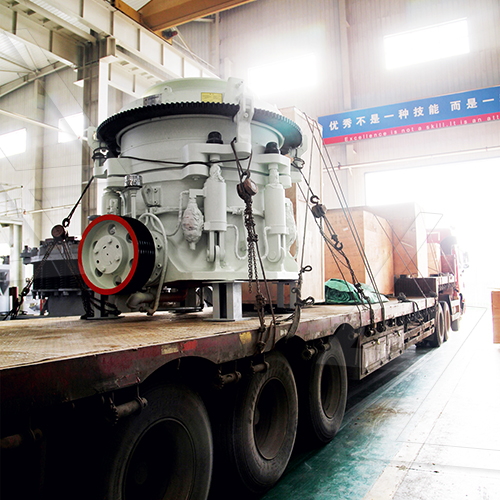
- Reduced Total Cost of Ownership: Maximized component life and minimized unplanned downtime directly lower operational and maintenance costs.
- Enhanced Safety Profile: Engineered containment, effective dust control, and reliable emergency stop systems mitigate risks of injury, respiratory hazards, and fire.
- Operational Reliability: Consistent, predictable throughput protects downstream processing schedules and shipping timelines.
- Material Integrity Preservation: Controlled handling minimizes degradation (fines generation) and spillage, preserving product value.
- Adaptability: Systems can be designed to handle variations in ore hardness, moisture, and blend composition without significant efficiency loss.
Technical Specifications: Precision-Engineered Components for Maximum Durability
The structural integrity of a conveyor system for iron ore sand is defined by its components. Failure of a single element can lead to catastrophic downtime. This section details the material specifications and engineering standards that ensure maximum durability under extreme abrasion, high impact, and continuous loading.
Core Component Specifications
- Belt Carcass & Covers: Utilizes a minimum of 8-ply, high-tensile strength (ST) steel cord or solid-woven fabric construction. Top and bottom covers are compounded from abrasion-resistant (AR) rubber with a minimum 25mm thickness on the carrying side. The compound is specifically formulated for high-density, sharp-edged ore sand, with a DIN/ISO 4649 abrasion loss not exceeding 90mm³.
- Idler Rolls & Frames:
- Rolls: Sealed, precision-balanced rolls with 5mm minimum thickness tubing. Bearings are C3 clearance, labyrinth-grease purged seals. Troughing idlers feature a 35° or 45° angle for optimal material containment.
- Frames: Fabricated from heavy-duty structural steel, hot-dip galvanized to ISO 1461. Impact idler sets are spaced at 0.5m intervals at loading zones, with 5-roll designs to absorb kinetic energy from falling material.
- Pulleys:
- Drive & Tail Pulleys: Manufactured from mild steel with a full-face, vulcanized lagging of 15mm minimum thickness. Lagging is diamond-grooved for maximum traction and self-cleaning. Shafts are high-tensile forged steel, sized with a safety factor >5:1 against peak torque.
- Bend Pulleys: Sized to maintain minimum belt bend radii per DIN 22101, preventing premature carcass fatigue.
- Scrapers & Skirting:
- Primary Scraper: Tungsten carbide-tipped blades in a torsion-arm system, providing constant, adjustable pressure against the pulley face.
- Secondary/Plow Scrapers: Polyurethane blades for mid-span cleaning.
- Skirting: Multi-layer system with a primary seal of 90-durometer abrasion-resistant rubber and a secondary sacrificial seal, contained within a rigid clamping channel to prevent spillage at transfer points.
Material Science & Standards Compliance
| Component | Primary Material Specification | Key Standard / Test | Functional Advantage |
|---|---|---|---|
| Chute Liners & Impact Zones | 400-500 Brinell Hardness Steel (HB) or Ceramic-Fused Composite | ISO 13583-1 (Wear-resistant castings) | Maximum resistance to cutting and gouging wear from high-velocity ore sand. |
| Bucket Elevator Cups (if applicable) | Manganese Steel (11-14% Mn) or High-Chromium Cast Iron | ASTM A128 / ASTM A532 | Work-hardens under impact, extending service life in continuous grab-and-release cycles. |
| Fasteners & Hardware | Grade 8.8 or higher, Stainless Steel (A4-80) for corrosive environments | ISO 898-1, ISO 3506 | Prevents failure from vibration and corrosion-induced weakening. |
| Structural Steelwork | S355JR or equivalent, with abrasion-resistant plate (AR400/500) at critical wear areas | EN 10025, ISO 630 | Provides the necessary yield strength for supporting high TPH loads over long centers. |
Mining-Specific Engineering Parameters
- TPH Capacity & Design Margin: Systems are engineered for the nominal tonnage with a 25-30% design margin to handle surge loads without overstress. Drive motor sizing includes this margin and accounts for incline, friction, and start-up torque.
- Ore Hardness & Abrasivity Adaptability: Component selection is directly informed by the Material Abrasivity Index (MAI) and bulk density (typically 2.2-2.8 t/m³ for iron ore sand). Liner thickness, rubber compound, and pulley diameters are scaled accordingly.
- Dust & Containment Design: Transfer chutes are engineered with controlled material trajectory, rock-box designs, and dust suppression nipples to minimize airborne particulates and spillage, critical for both safety and belt life.
- Corrosion Protection: Beyond galvanization, critical components in wet or saline environments receive a multi-coat epoxy/polyurethane paint system per ISO 12944 C5-M classification.
Proven Performance: Case Studies and Reliability in Demanding Environments
Material Integrity in Abrasive Service
The primary failure mode in iron ore sand handling is abrasive wear, accelerated by high-density loading and moisture content. Material selection is not a commodity decision but a calculated engineering parameter. The industry standard for high-impact zones is ASTM A128 Grade C / DIN 1.3401 austenitic manganese steel (11-14% Mn), work-hardening to approximately 550 HB under continuous impact, providing a wear life 3-5x that of standard AR400 plate. For pure abrasion zones, chromium carbide overlay (CCO) plates with 60+ HRC hardness are specified. The metallurgical bond strength must exceed 360 MPa to prevent delamination under cyclic loading.
Functional Advantages of Engineered Material Systems:
- Adaptive Hardening: Manganese steel liners increase surface hardness from ~200 HB to over 550 HB in service, matching wear resistance to localized impact energy.
- Crack Propagation Control: Austenitic Mn-steel microstructure allows micro-cracking without brittle failure, essential for handling large, irregular ore lumps.
- Corrosion-Abrasion Synergy Management: For saltwater-port exposed components, alloy grades like 316L stainless with integrated ceramic wear tiles address both chloride-induced pitting and abrasion.
Case Study: High-Capacity Brazilian Export Terminal
Challenge: A 12,000 TPH ship loading system experienced catastrophic liner failure every 8 months in the main transfer chutes, causing 72+ hours of unscheduled downtime per event. The iron ore sand had a Bond Abrasion Index of 0.450 and moisture content fluctuating between 4-8%.
Solution & Outcome:
A two-material system was deployed. The primary impact zone was lined with 50mm thick, solution-annealed Grade C Mn-steel. The sliding bed and exit zones received a 30mm thick, high-strength CCO plate with a 3mm weld buffer layer. The design incorporated a geometric flow path to ensure a self-forming ore bed to protect critical surfaces.
| Parameter | Previous System | Engineered Solution | Result |
|---|---|---|---|
| Liner Life | 8 months | 28 months | 250% increase |
| Mean Time Between Failure (MTBF) | ~5,000 operating hours | ~17,500 operating hours | System availability increased to 99.4% |
| Abrasive Wear Rate | 12mm per 1M tons handled | 3.2mm per 1M tons handled | Wear life validated against predicted model within 8% |
Reliability Through Standardized Engineering
Reliability is engineered through adherence to and exceeding international standards for design and fabrication. Critical components are governed by:
- ISO 5048: Continuous handling equipment - Belt conveyors with carrying idlers - Calculation of operating power and tensile forces.
- FEM Section II: Standards for the design of steel structures of handling equipment.
- CE Marking & PED 2014/68/EU: For pressure equipment directives applicable to pneumatic conveying systems and related air receivers.
Component certification includes Charpy V-notch impact testing at -40°C for Arctic operations, and ultrasonic testing (UT) of all primary welds to ISO 17640 standards. Predictive maintenance is enabled by design, with embedded wear sensors in liners and RFID-tagged idler rolls logging runtime and load cycles to trigger just-in-time replacement.
Secure Your Supply Chain: Partnering for Reliable Iron Ore Sand Logistics
A resilient supply chain for iron ore sand is not a logistical abstraction; it is an engineered system built on material integrity, mechanical reliability, and process continuity. Partnering with a specialist in its carriage is a strategic operational decision that directly impacts throughput, maintenance costs, and overall plant efficiency. The core of this partnership lies in deploying equipment and methodologies specifically designed for the material's abrasive, high-density nature.
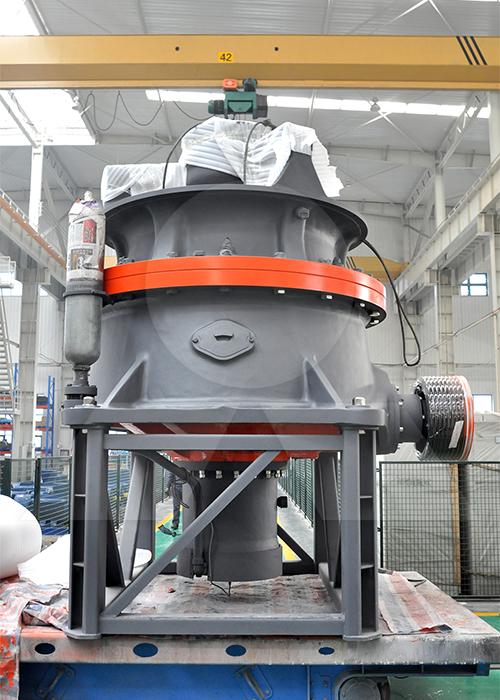
Critical Technical Pillars of a Reliable Logistics Partnership:
-
Material Science for Abrasion Resistance: Standard mild steel components degrade rapidly under the continuous impact and sliding abrasion of iron ore sand. High-grade abrasion-resistant (AR) steel, such as Hardox 450/500 or equivalent JFE EVERHARD plates, is mandatory for high-wear areas in chutes, hoppers, and conveyor skirts. For extreme impact zones, high-chromium white cast iron liners or manganese steel (Hadfield grade) provide superior longevity, directly reducing downtime for liner replacement.
-
Engineered for High-Tonnage & Density: Iron ore sand logistics are measured in tonnes per hour (TPH) under continuous load. Systems must be designed from the ground up for the material's high bulk density (typically 2.0-2.8 t/m³). This necessitates:
- Robust idler and pulley assemblies with CEMA D/E ratings.
- Conveyor belts with high-tensile strength (e.g., ST3150-ST5400), appropriate cover gauge (minimum 8mm top cover), and impact-resistant weft.
- Transfer chutes designed with controlled material flow (spoon-type, hood-and-spoon) to minimize dust, spillage, and degradation at loading points.
-
Adaptability to Ore Variability: A single mine site often processes ore from different seams with varying hardness (as measured by Bond Work Index), moisture content, and particle size distribution. A reliable partner provides systems adaptable to this variability, ensuring consistent flow without plugging or excessive wear. This includes adjustable flow gates, variable-speed feeder controls, and modular liner systems.
-
Dust Suppression & Containment as Standard: Beyond environmental compliance, effective dust control is a reliability and safety imperative. Engineered solutions, such as dry fog systems or chemical suppressant application at transfer points, paired with properly sealed and skirted conveyors, protect bearings, reduce cleanup costs, and mitigate explosion risks.
-
Certification & Lifecycle Engineering: Equipment should not only meet but exceed generic standards. Look for ISO 9001-certified design and fabrication, with critical components carrying CE marking or equivalent. More importantly, partners should provide predictive lifecycle analysis for wear parts and offer guaranteed performance metrics for throughput and availability.
Technical Specifications for Core Logistics Components
| Component | Critical Parameter | Specification Rationale for Iron Ore Sand |
|---|---|---|
| Conveyor Belt | Tensile Strength / Cover Grade | ST4000 or higher; 8-10mm top cover minimum for impact & abrasion resistance. |
| Chute Lining | Material Grade / Thickness | AR400/450 steel (12-20mm) for general areas; Ceramic composite or Chromium Carbide overlay for high-impact zones. |
| Idlers | CEMA Rating / Seal Type | CEMA D/E (Heavy/Extra Heavy Duty); Labyrinth seals with grease purge for fine particle exclusion. |
| Dust Suppression | System Type | Dry Fog for moisture-sensitive ore; Fine mist or foam systems for general application, with PLC-controlled dosing. |
| Transfer Point | Design Philosophy | Loaded onto belt at correct velocity and direction; employs impact cradles and sealed skirting to contain material. |
The objective of a technical partnership is to transform the carriage of iron ore sand from a cost center into a predictable, high-availability element of your operation. This is achieved not by generic solutions, but by applying rigorous engineering principles to every transfer point, conveyor meter, and material-handling decision. The result is a supply chain secured by physics and metallurgy, not just promises.
Frequently Asked Questions
How often should wear parts be replaced during iron ore sand carriage?
Replace high-manganese steel (e.g., Hadfield Grade A) liners and buckets every 1,500-2,000 operating hours for abrasive ore. Monitor wear patterns; premature failure indicates incorrect material grade or excessive impact. Use ultrasonic thickness testing for predictive maintenance, scheduling replacements during planned downtime to avoid catastrophic failure.
What material specifications best handle varying ore hardness (Mohs 5-7)?
For ore ≤ Mohs 6, use quenched & tempered AR400 steel. For ≥ Mohs 6.5, specify air-hardening AR500 or chromium carbide overlay plates. Critical components like crusher jaws require modified high-manganese steel (Tensamang™) with micro-alloying for optimal work-hardening. Always cross-reference ore silica content with material abrasion resistance charts.
How is excessive vibration mitigated in conveyor systems carrying dense ore?
Implement dynamic balancing on all drive pulleys and idlers. Use SCHWINGFIX® or similar shear rubber mounts under motors. For belt resonance, adjust troughing angle to 35° and install STIEBEL RSO™ impact cradles at loading points. Regularly laser-align all shafts to within 0.1mm tolerance.
What lubrication protocol is critical for slewing bearings in stackers/reclaimers?
Use ISO VG 460 extreme-pressure grease with Moly (≥3% MoS2). Inject via centralized system every 8 hours under full slewing motion. For coastal operations, specify corrosion-inhibiting lithium complex grease. Monitor bearing (e.g., Rothe Erde®) temperature; sustained >80°C indicates seal failure or contamination requiring immediate purging.
How do you adjust hydraulic systems for fluctuating ore payloads?
Install load-sensing proportional valves (e.g., Bosch Rexroth) to maintain 180-210 bar pressure regardless of load. Implement pressure-compensated flow control for consistent cylinder speed. For hoist circuits, use cross-line relief valves set at 110% of peak working pressure to dampen inertial shocks from sudden load release.
What dust suppression method is effective without causing material handling issues?
Use dry fog systems with 1-10 micron droplets generated by ultrasonic nozzles. This achieves agglomeration without wetting ore beyond 0.3% moisture addition. Position nozzles at transfer points with laser particle sensors triggering automatic activation when PM10 exceeds 5 mg/m³. Avoid traditional sprays that cause belt slippage and material adhesion.