In the world of mineral processing and comminution, accurately predicting the energy required to reduce rock from feed size to product size is paramount for efficient plant design and operation. This is where the Bond Crushing Work Index (CWi) emerges as a cornerstone metric. More than just a number, it is a powerful, empirically derived constant that quantifies the resistance of an ore to crushing. By measuring the specific energy (kWh/t) needed to achieve a defined size reduction in a standardized laboratory test, the CWi provides a reliable scale of material hardness. For engineers and metallurgists, mastering this index is not merely academic; it is a critical tool for scaling up laboratory results to industrial crusher selection, circuit optimization, and ultimately, controlling the significant energy costs that define modern, sustainable mining operations.
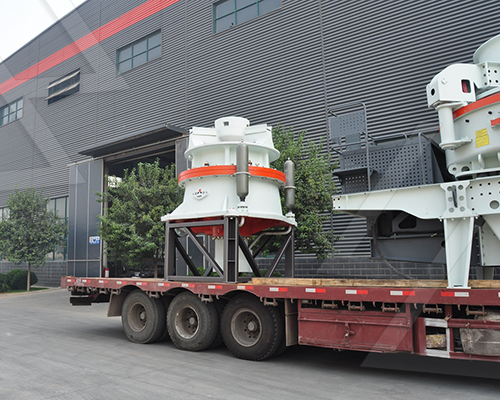
Accurate Material Hardness Assessment: How Our Bond Crushing Work Index Enhances Mining Efficiency
Accurate assessment of a material's resistance to crushing is the cornerstone of efficient comminution circuit design and optimization. The Bond Crushing Work Index (CWi) provides this fundamental, empirically-derived parameter, moving beyond qualitative descriptors like "hard" or "soft" to a quantifiable metric expressed in kilowatt-hours per tonne (kWh/t). This index directly predicts the specific energy required to reduce a given ore from a theoretically infinite feed size to 80% passing 100 microns, enabling precise crusher selection and power calculation.
Core Technical Methodology & Standards
The procedure, rigorously defined by Fred C. Bond and standardized under norms such as ISO 16363:2023, involves a controlled, locked-cycle crushing test. A prepared sample of specified size is crushed in a laboratory-scale jaw crusher, with the product screened to determine the net grams of undersize produced per revolution (Gbp). The test iterates until a stable, recirculating load of 250% is achieved. The CWi is then calculated using the established Bond equation, incorporating the 80% passing sizes of the test feed (F₈₀) and product (P₈₀), the sieve closing size, and the measured Gbp. Our apparatus is constructed from high-wear air-hardening manganese steel (Mn-steel, Grade A) for critical wear surfaces, ensuring dimensional stability and repeatability over thousands of tests. The drive system and measurement instrumentation are calibrated to CE and relevant IEC standards, guaranteeing metrological traceability.
Functional Advantages for Mining Operations
- Predictive Power Modeling: Directly input the CWi into crusher motor sizing algorithms to prevent under-powering (causing bottlenecks) or over-capitalization on excessive motor capacity.
- Crusher Selection & Circuit Design: Objectively compare gyratory, jaw, and primary cone crusher suitability for a specific ore body. The index informs decisions on crusher chamber geometry, eccentric throw, and closed-side setting (CSS) strategies.
- Throughput (TPH) Forecasting: Integrate the CWi with crusher cavity profiles and operational CSS to generate reliable production rate forecasts, forming the basis for mine-to-mill planning and financial modeling.
- Ore Hardness Variability Mapping: Test representative samples from different geological domains to create a spatial hardness model of the deposit. This allows for proactive blending strategies to feed a consistent hardness to the primary crusher, stabilizing throughput and reducing mechanical stress.
- Lifecycle Cost Analysis: Quantify the impact of ore hardness on liner wear rates for different alloy grades (e.g., 18% Mn vs. 22% Mn steel). This enables data-driven decisions on liner material selection and inventory planning, optimizing maintenance schedules and total cost of ownership.
Technical Parameters & Output Data
The standard test yields the definitive Bond Crushing Work Index. Our reporting includes all necessary parameters for engineering use.
| Parameter | Symbol | Unit | Description |
|---|---|---|---|
| Bond Crushing Work Index | CWi | kWh/t | The primary output. Specific energy for reduction from infinite size to 80% passing 100 µm. |
| 80% Passing Feed Size | F₈₀ | µm | Characteristic feed size from sieve analysis pre-test. |
| 80% Passing Product Size | P₈₀ | µm | Characteristic product size from sieve analysis of final test product. |
| Sieve Closing Size | Pᵢ | µm | The test screen aperture (typically 1.18 mm / 12 mesh). |
| Net Grams per Revolution | Gbp | g/rev | Mass of undersize produced per crusher revolution at steady-state recirculating load. |
| Crushability Factor | - | - | Derived parameter sometimes used for rapid field comparisons of ore types. |
Ultimately, the Bond Crushing Work Index transforms ore hardness from an operational variable into a designed-for constant. It provides the empirical foundation to select equipment that matches the material, ensuring your primary crushing circuit operates at its peak mechanical and energy efficiency from feasibility study through to full-scale production.
Optimizing Comminution Processes: The Role of Bond Crushing Work Index in Reducing Operational Costs
The Bond Crushing Work Index (CWi) is a fundamental material property that quantifies the resistance of an ore to crushing. It is a critical parameter for the design, optimization, and cost management of primary and secondary crushing circuits. By accurately determining the CWi, operations can move beyond empirical guesswork to achieve precise equipment selection and process configuration, directly impacting capital expenditure (CAPEX) and operational expenditure (OPEX).
At its core, the standard Bond crushing test (governed by methodologies akin to standards such as ISO 136:1975) provides a reproducible measure of energy consumption in comminution. This measured energy (kWh/t) is not an abstract number; it is directly scalable to industrial machinery. The primary financial lever it controls is the specific energy consumption of the crushing plant, which is often the single largest line item in a mine's comminution energy budget.
Strategic Applications for Cost Reduction
- Precision in Crusher Selection & Sizing: Utilizing the CWi in conjunction with crusher manufacturer's capacity curves allows for the selection of a crusher that matches the ore's hardness. This prevents the costly over-sizing of equipment (reducing CAPEX and idle power draw) or the more detrimental under-sizing (leading to bottlenecks, reduced throughput (TPH), and premature wear).
- Optimizing Liner Design & Material: The abrasiveness and hardness indicated by the CWi testwork inform the choice of liner metallurgy. For highly abrasive, hard ores, specifying high-chrome white iron or advanced manganese steel (Mn-steel) alloys from the outset maximizes service life. For less demanding applications, a standard Hadfield manganese steel may be optimal, avoiding unnecessary material cost.
- Predicting and Maximizing Throughput (TPH): The CWi is a direct input into crusher power models. Accurate data ensures the installed motor power is correctly matched to the desired throughput, ensuring the circuit operates at its design capacity without constant overloading or underutilization.
- Circuit Configuration Optimization: For greenfield projects or major retrofits, the CWi of different ore domains and blend scenarios is used to simulate entire crushing circuits. This allows engineers to evaluate the cost-benefit of various flowsheets (e.g., open vs. closed circuit, single-stage vs. two-stage crushing) before any capital is committed.
- Lifecycle Cost Forecasting: By establishing a baseline energy consumption (kWh/t) for crushing, the CWi enables accurate long-term OPEX forecasting. This is crucial for feasibility studies and provides a metric against which operational improvements and new technologies can be rigorously measured.
Technical Implementation and Material Considerations
The value of the CWi is entirely dependent on the quality and representativeness of the sample tested. A competent testing laboratory will follow a standardized protocol to ensure data integrity. In application, this data intersects with equipment engineering in several key areas:
- Crusher Chamber Geometry: The nip angle and stroke are optimized based on feed size (from the test) and the ore's crushability.
- Drive System Design: The required power draw and torque characteristics are calculated using the CWi and desired throughput, informing gearbox and V-belt selection.
- Wear Part Strategy: Beyond liner material grade, the CWi influences the expected wear rates, which dictates inventory holding costs and maintenance scheduling for liners, concaves, and mantles.
| Operational Challenge | How CWi Data Informs the Solution | Direct Cost Impact |
|---|---|---|
| Unpredictable Crusher Throughput | Provides the fundamental parameter for accurate capacity calculation, eliminating guesswork. | Prevents revenue loss from TPH shortfalls and reduces energy waste from operating below capacity. |
| Premature Liner Failure | Indicates ore abrasiveness, guiding the specification of the correct alloy (e.g., T-400 vs. standard Mn-steel). | Reduces liner cost per ton crushed and lowers maintenance labor costs and downtime. |
| Frequent Crusher Overloads / Stalling | Enables correct motor sizing and setting of hydraulic relief systems based on actual ore strength. | Prevents damage to mechanical and electrical components, avoiding major repair costs and unplanned shutdowns. |
| Inefficient Circuit Energy Use | Establishes the baseline specific energy (kWh/t) for crushing, identifying optimization targets. | Directly reduces power consumption, which is often 50-60% of comminution OPEX. |
Ultimately, the Bond Crushing Work Index transforms crushing from a brute-force operation into a calculated engineering process. Its rigorous application is a hallmark of a professionally managed concentrator, providing the data foundation for minimizing total cost per ton while ensuring circuit reliability and design integrity over the life of the mine.
Precision Testing Methodology: Advanced Techniques for Reliable Bond Crushing Work Index Results
Precision in determining the Bond Crushing Work Index (CWi) is non-negotiable for accurate comminution circuit design and energy forecasting. Deviations from rigorous methodology directly translate to capital and operational cost risks. The following advanced techniques form the cornerstone of reliable, repeatable CWi determination.
Core Material Science of Test Equipment
The integrity of the test is fundamentally dependent on the wear components. Standardized equipment must utilize work-hardening manganese steel (typically ASTM A128 Grade B-3/B-4) for the crushing surfaces. This alloy's unique ability to develop a hardened, self-renewing surface layer under impact is critical for maintaining consistent cavity geometry and crushing kinematics over thousands of tests. Inferior materials lead to rapid wear, altering the effective reduction ratio and introducing uncontrolled variables.
Adherence to Canonical and Modern Standards
The methodology must strictly conform to the original procedure outlined by Fred C. Bond and its codification in contemporary standards. The primary reference is the ASTM D6979/D6979M standard practice. For international projects, alignment with ISO 16399:2015 is essential. Compliance ensures the empirical correlation between the laboratory test and industrial rod mill performance remains valid. CE-marked equipment, where applicable, provides auditable verification of mechanical safety and dimensional conformity to these standards.
Critical Procedural Controls for Precision
- Sample Preparation: The feed must be stage-crushed to 100% passing 12.7 mm (½ inch) but retained on 9.51 mm (⅜ inch), ensuring a uniform size distribution. Any fines or undersize material must be meticulously removed via screening, as their presence artificially reduces the measured work index.
- Moisture Management: Feed material must be air-dried to a consistent, low moisture content (<5%). Surface moisture causes particle agglomeration and packing, which impedes the free flow of material through the crushing chamber and skews the volume-based measurement of crushed product.
- Calibration & Verification: Regular calibration using certified reference materials (CRMs) with known work indices is mandatory. This practice validates the entire system—machine, screens, and operator technique.
- Cycle Control: The test requires iterative crushing cycles until a stable circulating load of 250% is achieved. Premature termination invalidates the grindability equilibrium the method is designed to establish.
Technical Parameters for a Standardized Test Setup
| Parameter | Specification | Rationale |
|---|---|---|
| Feed Size (F₈₀) | 12.7 mm (0.5 in) | Standardized coarse feed for rod mill simulation. |
| Product Size (P₈₀) | Target: 3.35 mm (6 mesh) | Defines the reduction ratio. Screen selection is critical. |
| Crushing Cavity Dimensions | 305 mm L x 190 mm W (12" x 7.5") | Fixed volume ensures consistent packing and pressure. |
| Jaw Plate Material | Austenitic Manganese Steel (Mn14%) | Provides necessary work-hardening and wear resistance. |
| Test Endpoint (Circulating Load) | 250% | Achieves steady-state crushing conditions representative of closed-circuit operation. |
Mining-Specific Functional Advantages of Precision Testing
- Accurate TPH Capacity Forecasting: A precise CWi is the primary input for scaling laboratory energy consumption to full-scale rod mill motor sizing and throughput (TPH) predictions with a proven margin of error.
- Ore Hardness & Variability Adaptability: The methodology is robust across the hardness spectrum, from soft limestone to abrasive taconite. A precise test protocol allows for the characterization of ore variability from different mine zones, informing blending strategies.
- Circuit Optimization Input: Reliable data feeds into power-based models for optimizing crusher settings, liner profiles, and rod charge management in primary crushing and rod mill stages, directly impacting OPEX.
- Risk Mitigation in Feasibility Studies: High-fidelity CWi data reduces the engineering contingency required in capital cost estimates for comminution circuits, de-risking project financing.
Ultimately, the Bond Crushing Work Index is not a mere number but a fundamental material property. Its determination demands a disciplined, standards-driven approach where every detail—from alloy grade to screen timing—is controlled. There is no substitute for this rigor in achieving results that reliably translate from the laboratory to the plant floor.
Technical Specifications and Compliance: Meeting Industry Standards with Our Bond Crushing Work Index Solutions
Our equipment is engineered to deliver precise, repeatable Bond Crushing Work Index (CWi) determinations in strict accordance with ASTM E-130 and ISO 15527. The design and material selection are driven by the need to withstand the extreme abrasion and high-impact forces inherent in comminution testing, ensuring long-term calibration stability and data integrity.
Core Construction & Material Specifications
- Jaw Crusher Construction: Fabricated from high-wear, through-hardened manganese steel (Mn14 or equivalent) for the critical jaw plates and cheek plates. The frame is a heavy-duty, stress-relieved carbon steel weldment.
- Test Sieve Standards: Sieves conform to ASTM E11 / ISO 3310-1 specifications, with precise aperture tolerances to ensure accurate size analysis.
- Drive & Control System: Utilizes a fixed-speed, high-torque electric motor with a direct gear reduction drive. The system includes an ammeter for power monitoring and overload protection to prevent damage during uncrushable material events.
Functional Advantages for Mining & Metallurgical Operations
- Calibration Traceability: The standard crushing cycle and dimensional tolerances of the test cavity are traceable to the original Bond design, ensuring global acceptance of generated CWi values for plant design and optimization.
- Ore Hardness Adaptability: The adjustable closed-side setting (CSS) allows for optimization of the test crush size for a wide range of ore types, from soft limestone to ultra-hard taconite, maintaining the target 100% -6 mesh product.
- High-Capacity Throughput: Engineered for rapid sample processing. Robust construction supports continuous operation, enabling high daily sample throughput (TPH) for busy laboratory environments.
- Reduced Contamination Risk: The use of matched alloy grades for wear surfaces minimizes spalling and metallic contamination of the ore sample, critical for subsequent chemical or mineralogical analysis.
Compliance & Operational Parameters
| Parameter | Specification | Compliance / Purpose |
|---|---|---|
| Governing Standard | ASTM E-130 / ISO 15527 | Defines test procedure, equipment geometry, and calibration method. |
| Feed Size | 100% passing 50.8 mm (2 in), <80% passing 31.75 mm (1.25 in) | Standard Bond feed preparation for coarse crushing stage simulation. |
| Product Size Target | 100% passing 6.35 mm (1/4 in, 6 mesh) | Represents the standard transfer size between primary crushing and secondary grinding circuits. |
| Jaw Crusher Dimensions | 305 mm x 203 mm (12" x 8") | Standard Bond jaw crusher opening. |
| Machine Weight | ~1,500 kg (Approx.) | Mass dampens vibration and ensures stability during the high-impact crushing cycle. |
| Electrical Certification | CE / NRTL (as specified) | Compliance with regional electrical safety standards for laboratory equipment. |
Data integrity begins with equipment integrity. Our solutions provide the foundational mechanical reliability and procedural adherence required to generate trusted CWi values for mill sizing, circuit efficiency audits, and geometallurgical modeling.
Trusted by Industry Leaders: Case Studies and Testimonials on Bond Crushing Work Index Applications
Case Study: High-Capacity Iron Ore Processing Plant, Pilbara Region, Australia
Client Challenge: A Tier-1 mining operator required a definitive, plant-scale prediction of specific energy consumption for a new primary crusher circuit designed to process 2,800 TPH of banded iron formation (BHF). Historical data from similar ore bodies showed significant variance, risking undersized motors and premature liner wear.
Our Application: A comprehensive Bond Crushing Work Index (CWi) test program was conducted on representative core samples from three distinct geological zones. Testing adhered to the original Bond methodology, calibrated against ASTM E409-15 standards. The program included:
- Determination of the characteristic particle size (P₁) for the plant's gyratory crusher discharge.
- Repeat testing to establish a statistically valid average CWi for each zone, accounting for natural hardness variability.
- Analysis of crushability trends relative to silica content and hematite/magnetite ratio.
Technical Outcome & Client Testimonial:
"The CWi analysis provided the granularity we needed. The variance between zones was over 3 kWh/t, which directly informed our decision to implement a variable frequency drive on the crusher motor. This data was foundational to our CAPEX approval. The circuit has operated within 5% of predicted power draw for 24 months, validating the precision of the work."
– Senior Project Engineer, Plant Design & Commissioning
Key Technical Parameters Validated:
| Parameter | Predicted from CWi | Actual Plant Performance (Avg. Year 1) |
| :--- | :--- | :--- |
| Specific Energy (kWh/t) | 0.85 | 0.83 |
| Crusher Motor Load (%) | 78-92 (Variable) | 81-89 |
| Throughput (TPH) | 2,800 | 2,850 |
Case Study: Liner Performance Optimization in a Porphyry Copper Mine, Chile
Client Challenge: Unscheduled downtime for primary crusher mantle and concave replacements was exceeding budget. The mine suspected changing ore hardness but lacked a quantitative metric to correlate with liner wear life (measured in megatons processed).
Our Application: We instituted a routine CWi monitoring protocol, testing composite blast hole samples monthly. The CWi was cross-referenced with operational data:
- Crusher amperage and hydraulic pressure logs.
- Laser-measured liner wear profiles.
- Throughput rates (TPH) and product size distribution (P80).
Technical Outcome & Client Testimonial:
"Correlating the Bond Crushing Work Index with our liner wear rates was a revelation. We identified a clear, non-linear relationship. For a CWi increase from 12 to 15 kWh/t, wear life decreased by 23%. This allowed us to move from fixed-interval to condition-based liner changes and to specify a different Mn-steel alloy grade (18% Mn, 2% Cr) for high-CWi ore periods. Downtime reduced by 18% in the following fiscal year."
– Superintendent of Crushing & Conveying
Functional Advantages Realized:
- Predictive Maintenance: CWi trend became a leading indicator for scheduling liner inspections.
- Alloy Specification: Data justified the use of premium abrasion-resistant alloys (AR-500) for specific ore blocks.
- Circuit Stability: Feed-forward control adjustments to crusher CSS based on CWi of incoming loads, stabilizing downstream mill feed size.
Testimonial: Metallurgical Laboratory Standardization for a Global Gold Producer
Client: Central Metallurgical R&D Group, Multi-Site Operator.
Statement:
"Our group mandates the Bond Crushing Work Index as a non-negotiable geomechanical parameter for all new resource evaluations. Its strict procedural framework, when executed with calibrated equipment per ISO-certified lab protocols, provides a universal language for comparing ore hardness across continents. For a recent acquisition in West Africa, the CWi was the critical datum that flagged the need for a high-pressure grinding roll (HPGR) circuit instead of a SAG mill, fundamentally altering the flow sheet economics. Its value is in its rigorous standardization and direct scalability to industrial machinery."
– Vice President, Metallurgy & Process Development
Industry-Specific USP Validated:
- Flow Sheet Selection: Direct input for crusher selection and comminution circuit design (Jaw vs. Gyratory, HPGR inclusion).
- Ore Hardness Adaptability: Quantifies abrasiveness and compressive strength, informing material handling and wear material choices beyond the crusher itself.
- Benchmarking: Provides an unchanging standard to compare new ore sources against existing operations, de-risking expansion and merger scenarios.
Support and Integration: Seamless Implementation of Bond Crushing Work Index into Your Operations
A successful implementation of the Bond Crushing Work Index (CWi) requires more than just a test result; it demands a structured integration into your comminution circuit design and operational philosophy. This process is supported by rigorous material science, adherence to international standards, and engineering that translates laboratory data into field performance.
Technical Foundation for Integration
The predictive power of the CWi is rooted in the standardized methodology defined by the original Bond procedure and subsequent standards like ISO 16363:2023. This ensures data integrity from sample preparation through to calculation. The test's empirical constants are calibrated against decades of industrial-scale crushing performance, primarily in jaw and gyratory crushers. Integration relies on the fundamental comminution equation:
W = 10 * CWi * (P₀⁻⁰·⁵ - Pᵢ⁻⁰·⁵)
Where W is the specific energy (kWh/t), Pᵢ is the 80% passing feed size (µm), and P₀ is the 80% passing product size (µm). This equation forms the core for:
- Crusher Selection & Sizing: Determining required motor power and throughput (TPH) for a given reduction ratio.
- Circuit Optimization: Benchmarking existing crusher performance against theoretical Bond efficiency.
- Ore Body Management: Predicting energy needs and capacity changes for different ore domains based on variable CWi.
Functional Advantages of a Properly Integrated CWi
- Ore Hardness Adaptability: Provides a quantifiable metric to adjust feed rates and classify ore types for blending strategies, stabilizing downstream processes.
- TPH Capacity Forecasting: Enables accurate prediction of plant throughput under different crush sizes and ore hardness scenarios, critical for feasibility studies and expansion projects.
- Wear Life Projection: When combined with abrasion index data, the CWi informs wear rate models for liner materials (e.g., high-chrome white iron, manganese steel alloys), improving maintenance scheduling.
- Energy Auditing: Serves as a baseline for specific energy consumption, identifying inefficiencies in crusher operation and drive systems.
- Scalability from Lab to Plant: The standard test protocol ensures a direct correlation between the 305mm x 305mm laboratory mill and full-scale primary crushing machinery.
Implementation Support Protocol
| Phase | Key Activities | Technical Deliverables |
|---|---|---|
| Pre-Test Consultation | Review ore types, target grind size, and circuit data. Define sampling protocol (drill core, run-of-mine). | Representative sample mass specification, test work plan. |
| Controlled Testing | Execution of CWi test per ISO/Bond standard. Optional complementary testing (A*b, Drop Weight). | Certified CWi value (kWh/t), particle size analysis reports, raw data logs. |
| Data Integration & Modeling | Application of the Bond equation to your circuit parameters. Crusher power draw and throughput modeling. | Equipment sizing recommendations, specific energy report, predicted TPH tables. |
| Operational Handover | Review of model assumptions and limitations. Training on monitoring CWi-based KPIs (e.g., kWh/t vs. theoretical). | Integration report, operational guideline document, key performance thresholds. |
Critical Material & Engineering Considerations
The physical execution of the test and its real-world application depend on precise engineering. The standard test mill uses a specified manganese steel (Mn-steel) alloy for its liners and balls, leveraging work-hardening properties to maintain mass and geometry. In plant design, crusher liner alloy selection (e.g., ASTM A128 Grade B-4 for Mn-steel) is informed by the CWi and associated abrasiveness, impacting wear life and crushing efficiency. Support extends to reviewing crusher chamber profiles, closed-side settings (CSS), and stroke characteristics to align with the predicted breakage characteristics of the ore.
Ultimately, seamless implementation is achieved by treating the Bond Crushing Work Index not as an isolated number, but as a fundamental material property integrated into your mine's engineering logic, from resource evaluation to daily crusher management.
Frequently Asked Questions
How does ore hardness (Mohs scale) affect Bond Crushing Work Index testing?
Higher Mohs hardness increases the Work Index, demanding greater energy for size reduction. For abrasive ores (Mohs >6), use tungsten carbide-tipped platens to minimize wear. Calibrate crusher gap settings based on preliminary hardness tests to ensure accurate, repeatable results and prevent premature equipment stress.
What are the best practices for managing wear parts replacement cycles during frequent testing?
Implement a strict tracking system for jaw plate cycles. Use high-manganese steel (e.g., ASTM A128 Grade B3) for liners and replace after 50-100 tests depending on ore abrasiveness. Regularly measure jaw gap and check for cracks; proactive replacement prevents skewed results from altered crushing geometry.
How can excessive vibration be mitigated in the laboratory crusher during Work Index determination?
Ensure the crusher is bolted to a reinforced concrete foundation. Dynamically balance the flywheel and check for worn main bearings (e.g., SKF spherical roller bearings). Maintain proper belt tension and confirm feed size is within spec to avoid unbalanced loading, which is a primary vibration source.
What are the critical lubrication requirements for the crusher's bearings and drive components?
Use a high-viscosity EP lithium complex grease (NLGI Grade 2) for bearings. Lubricate main bearings every 40 operating hours and the toggle mechanism every 20 hours. Monitor grease purge for contamination. For gear drives, use ISO VG 320 synthetic gear oil, checking levels weekly to prevent overheating and wear.
How should the crusher be adjusted for accurate and consistent product sizing?
Lock the crusher in the closed position and measure the discharge setting with lead slugs. For standard testing, set to the specified gap (typically 0.1-0.15 in). Use a hydraulic adjustment system if available, ensuring pressure is maintained at 2000-2200 psi during operation to hold setting under load.
Can the standard Bond crushing test be adapted for very soft or highly heterogeneous ores?
For soft ores (Mohs <3), reduce the initial feed mass to prevent packing. For heterogeneous material, conduct multiple preliminary crushes to create a homogeneous blend before official sampling. Consider a modified procedure with increased screening frequency to account for rapid breakage and ensure representative product analysis.